


July 23, 2025
New research initiatives address H5N1 threats to US swine production
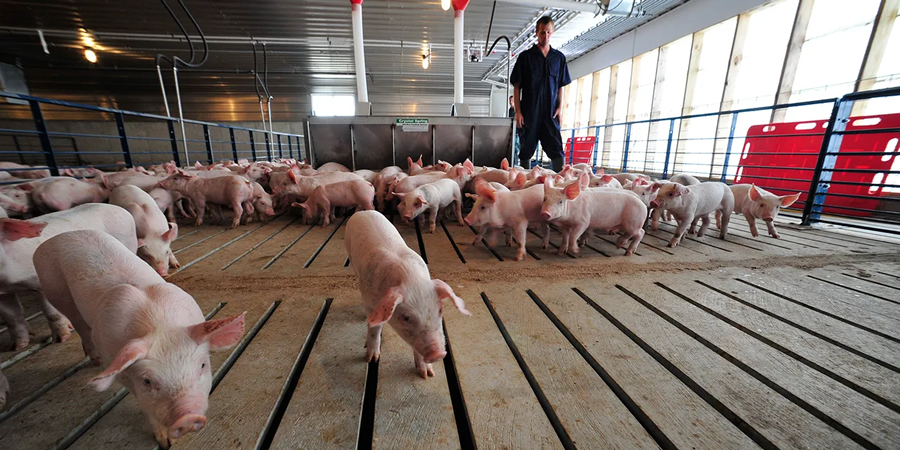
The Swine Health Information Centre (SHIC) in collaboration with the Foundation for Food & Agriculture Research (FFAR) and the Pork Checkoff, has recently funded 10 projects addressing research priorities and topics within its H5N1 Risk to Swine Research Programme.
The programme's goals are to enhance prevention, preparedness, mitigation and response capabilities for H5N1 influenza in the US swine herd. The priority areas addressed through the funded projects include vaccine development and cross-protection, clinical presentation of pigs across different production phases, potential for mammary transmission, diagnostic surveillance, introduction and transmission risks, and biosecurity practices.
The 10 new projects were initiated in summer 2025 and are 12 to 18 months in duration. Research outcomes from the funded projects will be shared with producers and veterinarians as soon as they become available.
The SHIC/FFAR/NPB (National Pork Board) H5N1 Risk to Swine Research Programme request for proposals was announced on Nov. 6, 2024, and received 51 proposals from 35 different institutions across six countries by the submission deadline of Dec. 31, 2024. Proposals underwent a competitive review process across the first several months of 2025 by subject matter experts on influenza and the swine industry. Funding awarded across the 10 new projects totals US$2.1 million of the US$4 million total available for this collaborative research programme. Funding timely research is an essential component of SHIC providing project outcomes that drive action for emerging disease prevention, preparedness, mitigation and response for the US swine industry.
SHIC/FFAR/NPB H5N1 Risk to Swine Research Programme projects funded and initiated in response to the RFP include:
Vaccine development and cross-protection
Development of a vaccine against highly pathogenic avian influenza viruses for use in pigs; Principal Investigator: Hiep Vu, University of Nebraska-Lincoln; Objective: To develop an innovative vaccine strategy for inducing a robust immune response and effectively controlling HPAI H5N1 influenza viruses in pigs.
Evaluation of cross-protective N1 swine antibodies against HPAI H5N1 clade 2.3.4.4b virus; Principal Investigator: Juan Mena, University of Minnesota; Objective: To evaluate whether natural infection with endemic swine influenza A virus strains or immunization with commercial swine IAV vaccines confer immune cross-protection against HPAI H5N1.
Role of prior immunity to endemic swine viruses on H5N1 infection in pigs; Principal Investigator: Daniela Rajao, University of Georgia; Objective: To investigate the effect of IAV vaccination and prior exposure to endemic swine IAV strains on infection susceptibility and transmission of HPAI H5N1 in swine.
Clinical presentation and mammary transmission in pigs
Preparing the US swine Industry for HPAI H5N1: Quantifying and comparing H5N1 vs H1N1 spreading, shedding and detection in groups with or without immunity to H1N1; Principal Investigator: Luis Gimenez-Lirola, Iowa State University; Objective: To quantify and compare the transmissibility, shedding, and detection of H5N1 versus H1N1 in swine and evaluate the impact of prior infection with H1N1 on the course of H5N1 infection and spread in pigs.
Pathogenesis and transmission studies in piglets and sows infected with different genotypes of 2.3.4.4b clade H5Nx viruses; Principal Investigator: Tamiru Alkie, Canadian Food Inspection Agency, National Centre for Foreign Animal Disease; Objective: To assess the pathogenesis of H5Nx (x denotes N1, N2 or N5) in weaned piglets following different virus exposure routes, as well as intramammary infection of lactating sows and suckling piglets.
Evaluating H5N1 risk to swine: mammary transmission and clinical presentation in lactating sows; Principal Investigator: Cody Warren, The Ohio State University; Objective: To evaluate the replication potential of diverse H5N1 strains in swine mammary tissue as well as assess clinical signs, shedding and transmission in lactating sows and suckling piglets.
Investigation of susceptibility of porcine mammary gland to highly pathogenic avian influenza (H5N1) virus infection and transmission risk of virus from sows to nursing piglets; Principal Investigator: Yan Zhou, University of Saskatchewan; Objective: To investigate whether HPAI H5N1 virus can replicate and transmit through the mammary route in pigs as well as examine pathogenesis of H5N1 in farrowing sows.
Diagnostic surveillance
An efficient and rapid automation workflow to detect influenza subtypes using RT-qPCR assay via 96-well Veriflex heat blocks on QuantStudio 7 Pro; Principal Investigator: Rahul Nelli, Iowa State University; Objective: To develop and validate the sensitivity of a multiplex PCR assay for IAV and its subtypes including H5N1 as well as establish a rapid workflow for simultaneous detection of IAV, PRRSV and Mycoplasma hyopneumoniae using robotic automation.
Introduction and transmission risks/biosecurity practices
Pathogenesis and interspecies transmission of H5N1 influenza virus in swine; Principal Investigator: Angela Bosco-Lauth, Colorado State University; Objective: To characterize the pathogenesis and shedding of poultry and dairy cattle H5N1 strains in infected swine, as well as the potential for interspecies transmission between swine and either birds or rodents.
Enhancing biosecurity in swine operations: Investigating wildlife interactions on swine farms; Principal Investigator: Igor Paploski, University of Minnesota; Objective: To characterize wildlife interactions with mortality management structures on swine farms, identify risk factors for wildlife interactions, and develop interventions to mitigate risk of H5N1 through wildlife.
Critical research investments are necessary to understand and prevent H5N1 incursion on swine farms, ensure rapid detection of H5N1 if introduced, protect animal and caretaker health, inform pork industry stakeholder response, mitigate production losses on farm, identify effective control measures, and develop clear messaging to consumers on the safety of pork. Outcomes from the funded projects will provide critical information that producers, veterinarians and industry stakeholders can use to better prevent incursion and develop preparedness plans if H5N1 is identified in US commercial swine herds.
- National Hog Farmer


