


July 20, 2026
Thailand's shrimp industry seeks 5.5 billion baht rescue plan as production sits at less than half its 2010 peak
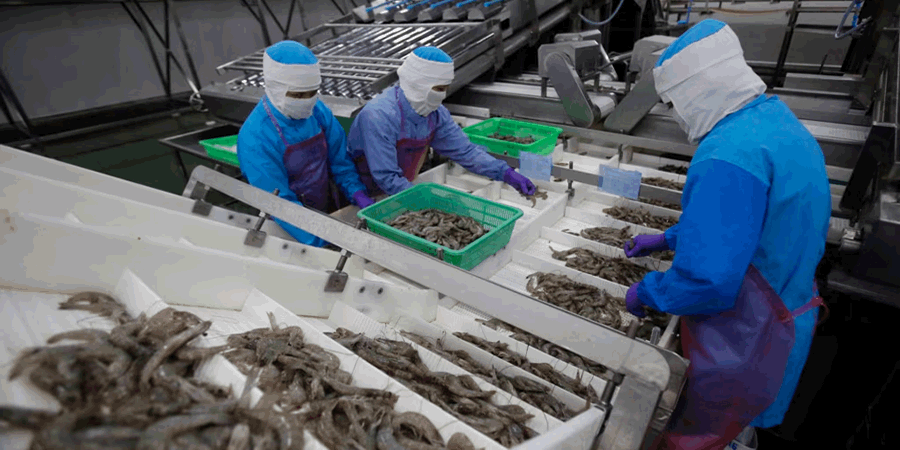
Disease outbreaks, a shortage of locally adapted breeds and intense global competition have pushed annual output down from 640,000 tonnes to around 270,000-280,000 tonnes over the past decade.
Thailand's shrimp industry is operating at less than half its peak production capacity and is calling on the government to approve a 5.5 billion baht (approximately US$160 million) national action plan to address persistent disease, competitiveness and structural challenges that have battered the sector since the early mortality syndrome outbreak of 2012.
Ekapoj Yodpinit, President of the Thai Shrimp Association, said Thailand was once the world's largest shrimp producer and exporter, with annual output peaking at 640,000 tonnes and export value exceeding 110 billion baht in 2010. Following the EMS outbreak, production has fallen to around 270,000-280,000 tonnes per year and export value has dropped to approximately 40 billion baht annually. The industry set a 2026 production target of 400,000 tonnes, which if achieved would allow exports to exceed 250,000 tonnes.
Disease remains the industry's primary challenge. White spot disease, EMS, white faeces syndrome and yellow head disease have driven production costs above those of competing countries, reducing farm-level profitability and forcing processing plants and cold storage operators to run below capacity. Ekapoj said Thailand also faces a shortage of shrimp breeds adapted to local conditions, requiring strains that combine disease resistance with rapid growth rates. He cited Ecuador as a model, noting the country recovered from similar disease setbacks by investing in R&D to develop locally adapted, disease-resistant strains.
The Malaysia trade dispute has added near-term pressure. Malaysia suspended imports of five species of Thai shrimp in June following a retaliatory measure after Thailand restricted Malaysian sea bass imports over chemical residue concerns. The ban affects approximately 3,000 tonnes per month - around 1% of Thailand's total shrimp exports according to Kasikorn Research Center - but has pushed farm-gate prices down by 50-60 baht per kilogram since it took effect, with a partial recovery of 20-30 baht per kg as southern harvest season supply declined. Both governments have agreed to expedite sanitary and phytosanitary inspections, with Thailand expecting exports to resume within 30 days.
The proposed National Action Plan for Addressing Challenges in the Marine Shrimp Industry (2026-2030) covers farm water management, broodstock and feed input controls, disease monitoring and prevention, productivity improvement, R&D, technology transfer, processing standards and international trade negotiations. Ekapoj called for the government to serve as a central coordinator, bringing together university researchers currently working in isolation to develop systematic solutions to disease and productivity challenges.
- Bangkok Post


