


July 20, 2026
Vietnam's Khanh Hoa targets 500,000-head Halal-certified goat and sheep herd by 2030 to tap Middle East and Muslim export markets
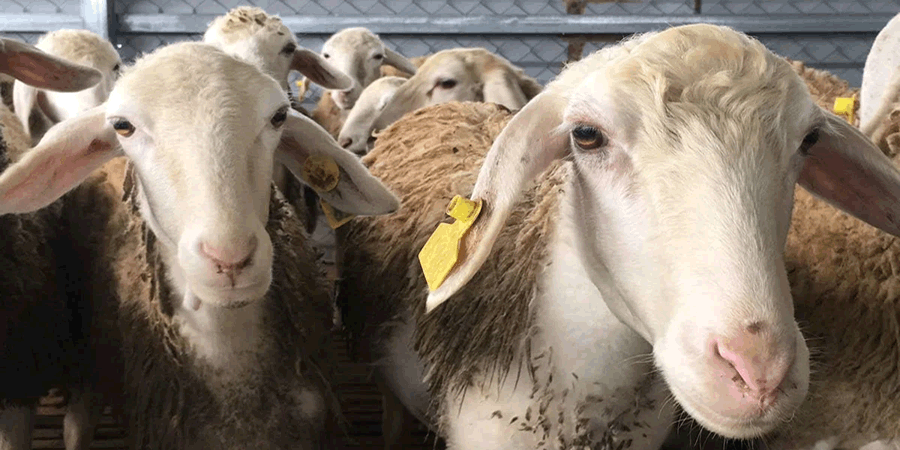
The province has allocated approximately VND200 billion for the programme, which aims for 60% of its goat and sheep herd to be raised under Halal-standard value chain linkages within five years.
Vietnam's Khanh Hoa province has issued a plan to develop its goat and sheep sector under Halal certification standards by 2030, targeting a total herd of approximately 500,000 head across at least 14 designated farming areas, with 60% raised under integrated value chain linkages meeting Halal requirements.
The programme carries an estimated budget of approximately VND200 billion (approximately US$7.8 million) and is targeting export markets in the Middle East, North Africa, South Asia and Southeast Asia, where goat and lamb meat are staple food groups among Muslim consumers. The global Halal food market is projected to exceed US$7.5 trillion by 2032, with the meat segment alone accounting for more than US$1.8 trillion.
Khanh Hoa - incorporating the formerly separate Ninh Thuan province - currently holds a goat and sheep population of over 200,000, raised in arid, low-rainfall conditions suited to the animals' growth requirements. The province is establishing concentrated, biosecure farming zones to support a four-party linkage model connecting the government, enterprises, cooperatives and individual farmers, with companies acting as the commercial core and contracting output from cooperative and household producers.
The initiative requires Halal compliance across three stages: livestock farming, slaughter, and feed production. Nguyen Dinh Ngoc, Director of Nbee Feed Company, which is involved in the programme, said Halal animal feed cannot include any blood-derived ingredients, adding a specific constraint to feed formulation alongside the livestock management and slaughter requirements.
Vietnam's bilateral trade with Muslim-majority countries reached nearly US$25 billion in 2025, with exports accounting for US$10 billion. Industry participants said the figure remains modest relative to the Halal market's scale, indicating significant room for growth if Vietnamese producers can meet certification requirements.


