


July 19, 2023
IoT technologies enable early diagnosis of bovine respiratory disease in dairy calves
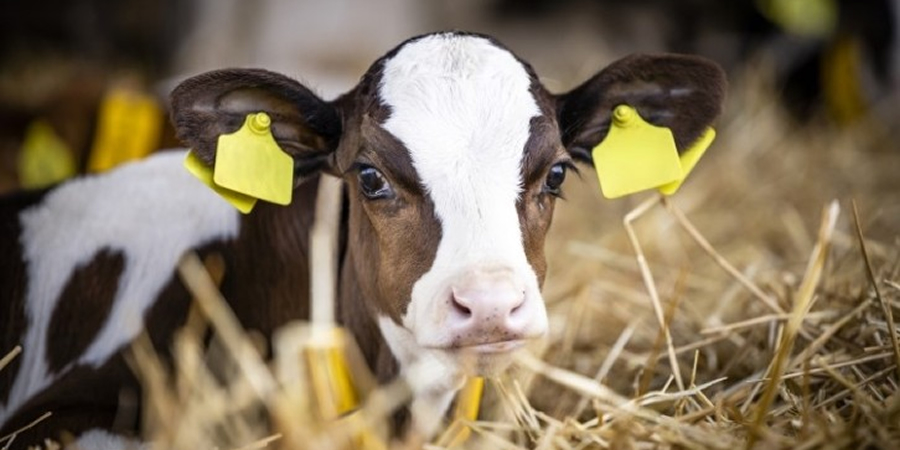
A study conducted by researchers from Penn State, University of Kentucky, and University of Vermont has demonstrated that the use of precision technologies based on the "internet of things" (IoT) can lead to the early detection of calf-killing bovine respiratory disease, News-Medical reported.
This approach, made possible through crosscutting collaboration, offers dairy producers a promising opportunity to enhance the economic viability of their farms.
Lead researcher Melissa Cantor, an assistant professor of precision dairy science in Penn State's College of Agricultural Sciences, highlights the transformative impact of new technology on the dairy farming industry.
The increasing affordability of IoT devices, including wearable sensors and automatic feeders, enables farmers to closely monitor and analyse the health condition of their calves. Such early detection allows for timely interventions, preserving the calves' lives and safeguarding the financial investment they represent.
The IoT technology employed in this study generates extensive data by closely monitoring the behaviour of the cows. To extract valuable insights and detect calf health problems, the researchers harnessed machine learning, a branch of artificial intelligence that discerns hidden patterns in data to distinguish between healthy and sick calves based on input from IoT devices.
Bovine respiratory disease, a respiratory tract infection, is a primary cause of antimicrobial use in dairy calves and accounts for 22% of calf mortalities. The significant costs and consequences of this ailment can profoundly impact a farm's economy, given that rearing dairy calves represents one of the largest financial investments.
The research involved data collection from 159 dairy calves using precision livestock technologies, along with daily physical health exams performed by researchers at the University of Kentucky. The comparison of automatic data-collection results with manual data-collection results yielded promising outcomes.
Published in IEEE Access, a peer-reviewed open-access scientific journal by the Institute of Electrical and Electronics Engineers, the study reports an impressive accuracy of 88% in labeling sick and healthy calves. Moreover, 70% of sick calves were predicted four days prior to diagnosis, while 80% of calves that developed a chronic case of the disease were detected within the first five days of sickness.
Those who played a crucial role in advancing this research were Enrico Casella from the Department of Animal and Dairy Science at the University of Wisconsin-Madison; Melissa Cantor, Department of Animal Science, Penn State University; Megan Woodrum Setser, Department of Animal and Food Sciences, University of Kentucky; Simone Silvestri, Department of Computer Science, University of Kentucky; and Joao Costa, Department of Animal and Veterinary Sciences, University of Vermont.
The study received support from the US Department of Agriculture and the National Science Foundation.
- News-Medical


