


July 18, 2025
Performance with Precision: Arm & Hammer's Approach to Sustainable Animal Nutrition
In a world where challenges like market volatilities, rising feed costs, and evolving industry standards are constant, Arm & Hammer™ Animal Nutrition is leading the charge in offering innovative solutions for the agriculture and animal nutrition sectors.
In this exclusive interview, Arm & Hammer's Sangita Jalukar, Ph.D., Senior Technical Service Manager, and Ramesh Subramonian, Eurasia Sales Director, share their insights on how the company's tailored, science-backed solutions are making a difference in the lives of farmers and animals alike. They also discuss the company's approach to collaboration, innovation, and navigating the future of animal nutrition in an increasingly digital world.
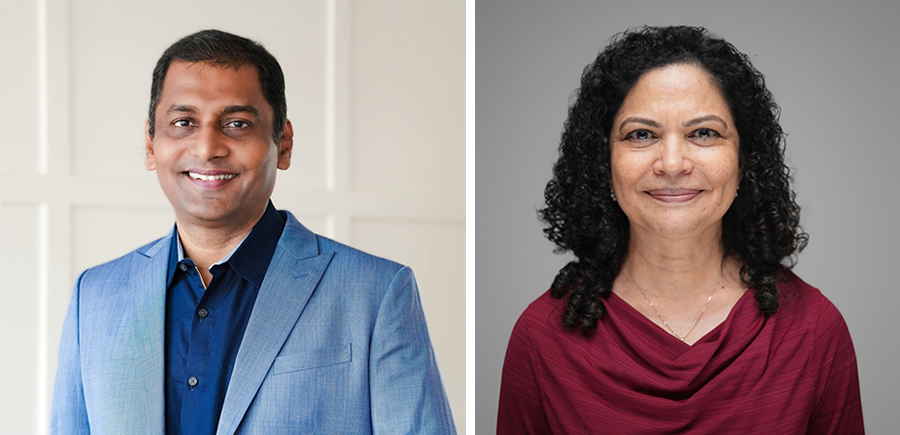
With the current market volatilities, trade wars, inflation, and high production costs—especially due to rising feed prices—how does Arm & Hammer navigate this situation? How do you support farmers in managing these challenges?
Sangita Jalukar: One key approach, which we have backed with multiple studies demonstrating its benefits, is improving production efficiency. Whether it's feed conversion, milk efficiency, or overall productivity, the aim is to get more output from the same input. For example, in swine farming, if a farmer is feeding a certain number of sows, we focus on improving their productivity by increasing the number of pigs produced per sow per year. This translates into a significant economic return for the farmer. The farmer is already invested in their population, so increasing output can help offset rising feed costs.
We also have products in our portfolio designed to extract more energy from the feed. For instance, with the higher costs of fat or oil in animal diets, our studies show that by reducing the oil or fat content in the ration, we can make the diet less expensive while still maintaining animal performance. This provides another way to address the rising costs.
Ultimately, most of our solutions are centred on improving efficiency—reducing mortality rates, boosting productivity, and helping farmers get more value from their resources.
Ramesh Subramonian: In addition to improving efficiency, we also focus on the quality of raw materials. Given that ingredients like corn are globally traded, with supplies coming from regions like Argentina, Brazil, or the US, it's essential to ensure their quality. One way we do this is through products like BG-Max™, which helps mitigate the challenges posed by mycotoxins.
As Sangita mentioned, we also aim to support animal efficiency. Every animal has genetic potential, and our goal is to maximize that potential through better nutrition. Instead of animals using their energy to fight diseases, we help them channel that energy towards growth and productivity.
Our products, such as Celmanax™ and our yeast-based solutions, are in the prebiotic and postbiotic space, which supports gut health, while probiotics help with resilience. Just like humans take probiotics to balance good and bad bacteria, animals benefit from the same balance, which enhances their overall resilience. This helps animals maintain health and productivity, which ultimately contributes to higher yields.
At the end of the day, we're all in the business of providing safe, nutritious food to consumers. We take our responsibility seriously, which is why sustainability is so important to us. If you look at our history, you'll see that we've been ahead of the curve.
Our company has been committed to sustainability since the late 1800s, using recycled paperboard for our sodium bicarbonate production back in 1907. We were also the first sponsors of Earth Day in the 1970s, and we continue to lead with proactive initiatives that go beyond market demands.
So, we're not just responding to current challenges—we're laying the groundwork for a sustainable future.
There are many companies offering probiotics, postbiotics, and natural feed additives. How does Arm & Hammer stand out in this crowded space? What sets your strategy and products apart from the rest?
Ramesh Subramonian: That's a great question. It all comes down to how you choose the right product. We have a unique technology that makes us different. I'd also like Sangita to talk about our Microbial Terroir™ programme.
Microbial Terroir is a term borrowed from the wine industry. When you select a wine, many factors influence the outcome: the soil it's grown in, the climate, and even the microclimates in different regions. For instance, hilly areas affect grape quality differently than flat plains, which, in turn, impacts the sugars and fermentation process of the wine.
We've applied this concept to animal production. Just as several factors can influence wine production and taste, the microbial ecosystem on a farm can influence animal productivity and health. We take a similar approach by going into farms—whether it's a feed mill, a breeding house, or a broiler layer house—and conducting a thorough study of the ecosystem's microbial challenges.
The unique part of our approach is identifying the specific challenges at each farm. We take samples from the gut, scrapings from the farm, and send them to our state of the art ScienceHearted Centre lab in Wisconsin, USA. There, we analyse the pathogens and identify inhibitory probiotic strains using our extensive probiotic library, which contains over 80,000 strains. This enables us to create a very targeted solution.
Unlike standard products that are sold across different markets, our probiotics are tailored to each specific microenvironment. The type of feed used and the local conditions all play a significant role in how the microbiome functions.
The microbiome itself is influenced by many factors, including genetics and feeding patterns. We aim to provide targeted solutions that address the unique challenges on a farm. This ensures that the solutions we offer lead to measurable results, thanks to our very focused approach.
Sangita Jalukar: To add to that, if you look at the probiotic solutions available in the animal nutrition market globally, they tend to be static. For example, a commercial probiotic product is often the same whether it's being sold in the US, Japan, Korea, Thailand, India, or Saudi Arabia.
In contrast, our probiotic formulation is dynamic. We don't use the same formula for the USA as we do for Thailand for example. Instead, our approach is region-specific, based on the unique challenges in each area. For instance, some regions still use antibiotics, which means their bird populations face a different pathogen profile than in markets like Europe, where antibiotics aren't used.
As Ramesh mentioned, we conduct analysis at the farm level to understand the specific challenges faced by each farm. Once we've identified these, we go back to our 80,000-strain library to find the best solution for that particular region or customer. In the US, we even have formulations customized by complex for customers. This level of customisation makes our probiotic portfolio truly unique.
What sets us apart even further is that our approach isn't limited to just pathogens. It's multi-faceted. We select strains based on their ability to improve gut barrier function. This is crucial because if the gut barrier is compromised, pathogens can enter the bloodstream, causing systemic issues. So, we focus on selecting strains that support gut barrier integrity, target pathogenicity, and promote early microbiome colonisation. By influencing the microbiome early in an animal's life, we set it up for long-term health and productivity.
Another key difference is that, thanks to our extensive probiotic library, we can tackle challenges based on pathogen type. Take poultry, for example. A common issue is Enterococcus, which can reduce hatchability or cause mobility issues in birds. This condition leads to birds being culled in late stage of growth stage due to spinal deformities. We have the capability to develop solutions specifically targeting such problems. Our approach can be tailored to either a specific customer or a specific issue.
Ramesh Subramonian: That's why many large integrators are keen to work with us—because of the customized solutions we offer. It's not a one-size-fits-all approach. The challenges are different for every farm. For example, when the raw material profiles change, or when you're dealing with challenges like AI, avian influenza, African swine fever, or viral and bacterial issues in the field, the situation becomes quite dynamic. It's not static.
Aquaculture is one of the areas we're particularly focused on. We see it as an exciting opportunity, and we're developing tailored solutions for those markets.
We have launched two new probiotic products in Malaysia. We have many partners eager to collaborate and learn more about our offerings, so these are very exciting times.
Sangita Jalukar: On the topic of how our postbiotic, prebiotic, and yeast-derived products differ, I agree that yeast technology is not new. Yeast has been used in animal nutrition in one form or another—whether as live yeast or inactivated yeast—for many years. It's been used because it provides clear benefits to the host animal. However, what we've done differently is develop a unique, proprietary enzymatic hydrolysis process to optimise and offer all the health benefits that yeast has to offer.
This process involves using a cocktail of enzymes to break down yeast cells into smaller molecular-weight carbohydrates. This gives us yeast carbohydrates that are far more bio-efficacious. For example, if you're looking at protection against Salmonella our process allows us to use a much lower concentration—sometimes as low as a tenth of the dosage recommended by traditional yeast cell wall products.
This processing method makes our product incredibly efficient at low concentrations, while also making it multifunctional. We've observed benefits across species, such as viral pathogen reduction. For instance, with our yeast postbiotic Celmanax™ , we see a reduction in rotavirus, salmonella, pathogenic E. coli, and even bovine respiratory disease. In addition, we've seen immunomodulatory effects, including improvements in vaccine titers. These varied benefits are due to our unique processing technology, which sets our products apart.
Ramesh Subramonian: As we've discussed prebiotics and probiotics, we're also now exploring the possibility of combining them into a symbiotic product. We've already launched this combined product in a few markets, such as Korea and Japan, and the results have been very encouraging. We're now working to gather more commercial data so we can expand the launch into wider markets.
With the rise of AI, the Internet of Things, and digitalisation, is Arm & Hammer embracing these technologies? Are you integrating them into your services and solutions?
Ramesh Subramonian: Absolutely. Data-driven decision-making is the way forward, right? Everyone is talking about data these days.
For us, the microbial terroir mapping process is a perfect example of how we're incorporating data. This process is entirely data-driven. We map farms, generate data, and use simulations to analyse that data. The ability to develop so many different strains relies on the data we collect and analyse.
So, data is a critical part of our mapping process and is essential in helping us identify targeted solutions. It plays a pivotal role in our product development and innovation efforts.
How do you foresee the future of the feed and livestock industries in the next few years, and what role will Arm & Hammer play in shaping that future?
Sangita Jalukar: One of the key things we focus on is being acutely aware of customer pain points. These challenges are constantly evolving, and as long as we stay attuned to them, it gives us a competitive edge. One of our guiding principles is "customers first," which is at the heart of everything we do. This mindset allows us to gain insight into emerging challenges in the industry, so we can develop solutions to address them.
Ramesh Subramonian: I believe we're well-positioned in terms of food safety and sustainability. One thing I'd like to highlight is that, we are very particular about substantiating any claims we make. Since we're a publicly listed company, we can't make unsupported claims. Everything we put forward is backed by solid data.
This emphasis on accountability and transparency is crucial to our operations. Looking ahead, I think the future of the industry will be driven by data and transparency. Consumers want to know what they're eating, and businesses like ours must provide that transparency and accountability.
One of the unique features that sets us apart from many of our competitors in the prebiotic and postbiotic space is the development of super-consumable products. People are now seeking nanoparticles and targeted nutrition. Our products, like A-MAX SCP and Celmanax Soluble Concentrated Powder (SCP), are super-concentrated, which is quite unique.
The advantage is twofold: first, they are cost-effective since we don't need to transport carriers across the sea. Our production facilities are based in the US, which gives us a significant cost and efficiency advantage. Second, they offer targeted product performance, which is a huge opportunity for us.
Another thing we're open to is collaboration. Our products are backed by science and data, and we're willing to work with companies that are looking for our technology or concentrated products.
Sangita Jalukar: It's all about providing science-backed solutions.
Ramesh Subramonian: Yes, exactly. Previously, companies are interested in partnering with us or using our technology, we are open to exploring different models for collaboration and business development.
In today's world, collaboration is key to growth. With a track record of 175–180 years in the business and a global presence, we have the confidence to work with any partners who want to align with us.
When you mention collaborations, are you referring to forming partnerships with other companies as well?
Ramesh Subramonian: Absolutely. It's not just about institutions; companies are also key collaborators. What was once viewed as competition between companies is now shifting towards forming partnerships.
Every company has its core competencies. For instance, a company involved in animal production focuses on farming, management, and nutrition. Our core competency, on the other hand, lies in providing targeted nutrition solutions.
By combining these areas of expertise, we can create a much more effective synergy. It's all about merging strengths to benefit both parties, especially the farmers.
Sangita Jalukar: It's about leveraging that combined expertise for mutual benefit.
Ramesh Subramonian: Our goal is to identify the pain points—the challenges. If you're not solving problems, then you're not really in this business. So, our mission is to understand the challenges our partners face and provide solutions. That's what drives us to develop the next set of products or pursue future acquisitions.
- Nicholas Yong and Gemma C. Delmo


