


Aviagen: Breeding for success – The rise of modern poultry genetics
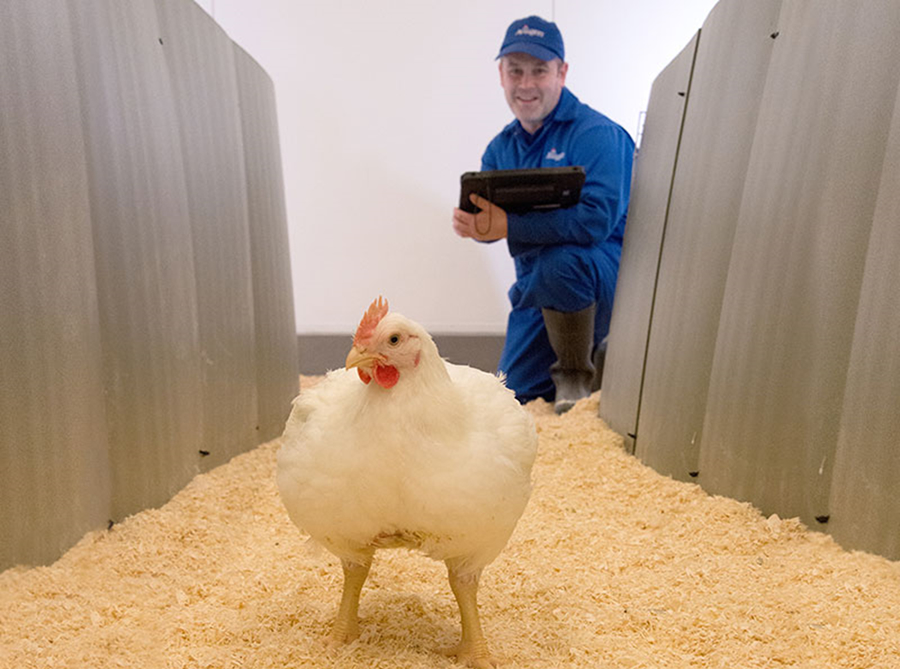
For more than 70 years, poultry breeding has steadily improved chickens.
Today’s broilers grow faster, use feed more efficiently, and produce more meat than previous generations. But the story of genetic progress is not only about size or growth rate. Behind these changes are decades of genetic selection, data collection, and technology development that have steadily reshaped poultry performance worldwide, while providing farmers and consumers with a greater range of options.
Early poultry breeding focused mainly on simple traits such as growth rate. Farmers selected the heaviest birds and used them as parents for the next generation. Over time, however, breeding became more scientific and organized.
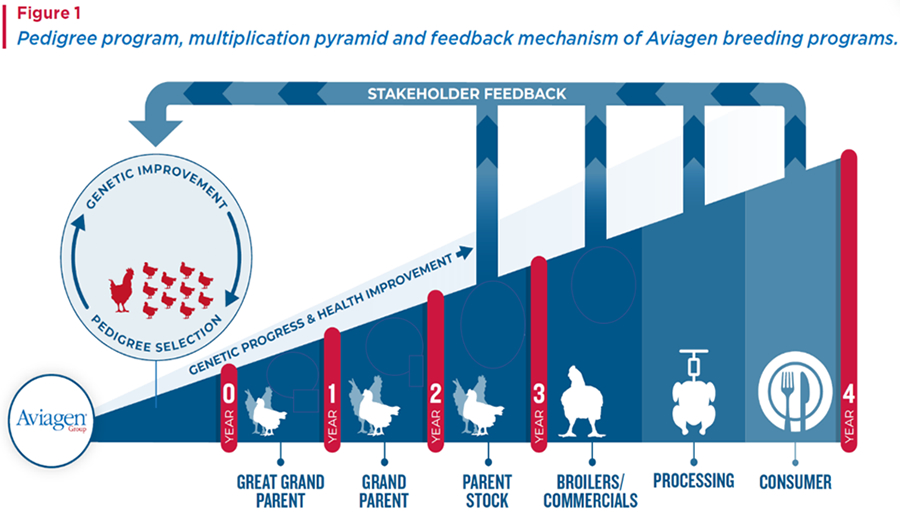
Modern breeding programmes only practice genetic selection at the pedigree generation. Birds will go through several generations of multiplication, beginning with pedigree birds and moving through great-grandparents, grandparents, and parent stock before reaching commercial broilers. The entire process takes about 4 years, from pedigree selection to the broiler generation (Fig. 1).
Breeding for sustainability
Since 1972, the volume of feed required to produce a given amount of weight has halved. This feed conversion ratio (FCR), which measures how efficiently birds convert feed into body mass, is important because feed remains the major cost in broiler production. FCR also has the most significant direct impact on the industry's environmental footprint. Historically, feed intake was measured in small pens, but since 2004, Aviagen has used automated feed stations to identify and record feed intake for individual birds housed in groups. Similar systems are now used to measure water intake and feeding behavior. These technologies help our geneticists identify birds that are naturally more efficient while still behaving normally in group environments. Poultry production is the most resource-efficient form of terrestrial meat production, with Aviagen's projections suggesting that the annual reduction in the carbon footprint should continue at about 1% for the foreseeable future, driven by improvements in feed efficiency.
Breeding for performance
Advances in data collection and imaging technology have also supported genetic progress. Over the years, breeding programmes introduced tools such as ultrasound, genomic selection, pulse oximeters, and CT scanning. Genomic selection, introduced into Aviagen's broiler breeding programme in 2014, improved the accuracy of selecting birds with desirable traits, especially traits such as egg production that cannot be measured in males.
Since 2000, Aviagen breeding programmes have used "multi-environment selection." Brothers and sisters of the pedigree birds are raised under more challenging farm conditions. This allows identification of robust families that can maintain good performance across a wide range of commercial systems. This process has helped create birds with better livability, improved uniformity, and greater environmental adaptability.
Breeding for welfare
Leg strength and walking ability have improved, even as birds have become heavier. Leg health became a formal part of poultry breeding programmes in the 1970s, starting with the removal of birds showing visible leg defects. In 1989, handheld X-ray devices called Lixiscopes were introduced to detect skeletal problems that could not be seen externally. Today, CT imaging allows our geneticists to examine skeletal structure, body composition, and internal organs in live birds. Every pedigree bird is carefully evaluated for gait, leg condition, contact dermatitis (e.g., footpad and hock health), and overall skeletal integrity.
Heart and lung fitness have also been part of genetic selection for decades. Pulse oximeters are used to measure blood oxygen levels, which identify families more likely to develop conditions such as ascites and sudden death syndrome. Ascites-related condemnations have fallen over the last three decades.
Breeding for choice
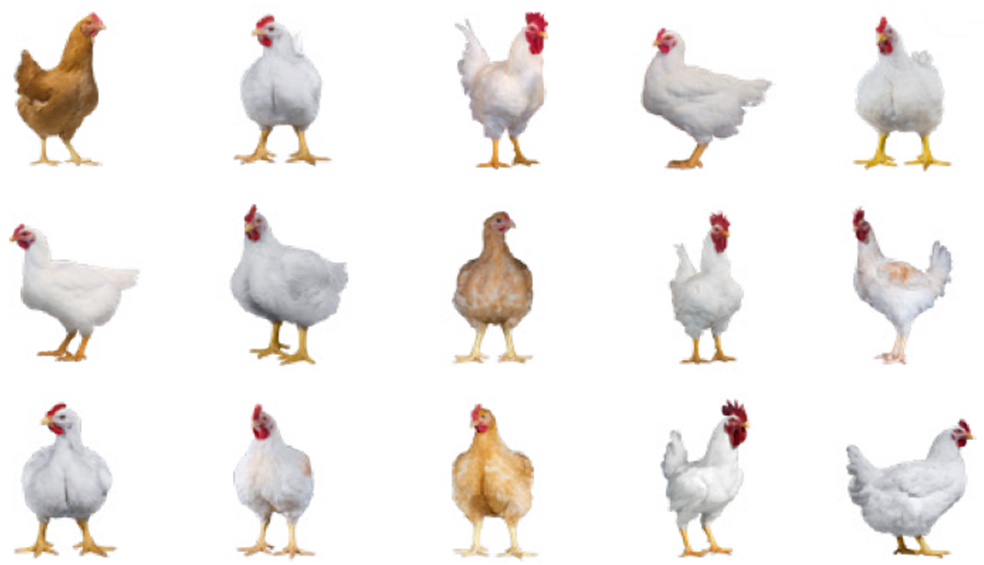 Over time, the industry has seen a divergence of management systems, end-product portfolios, and business strategies around the world. More recently, there has been a surge in certification schemes focused on welfare-related attributes. Both trends present an opportunity to build a more biodiverse genetic portfolio to meet stakeholders' needs. In specific regions, different strains are offered, ranging from those optimised for chick output and broiler efficiency, through those targeted for white meat production, to those with limited growth rates and colored feathers. Regardless of the specific selection emphasis, all genetic lines are managed to balance production and welfare outcomes.
Modern breeding programmes continue to evolve, using large datasets, advanced imaging tools, genomic and computer technologies. By 2032, it is projected that 41% of the world's terrestrial protein will be consumed as poultry. Long-term genetic success depends on "balanced breeding," improving performance, health, welfare, and sustainability concurrently.
For more of the article, please click here.


