


Hamlet Protein's Erik Visser: 'M&A is about combining assumptions, not just assets'
EXECUTIVE INTERVIEW SERIES
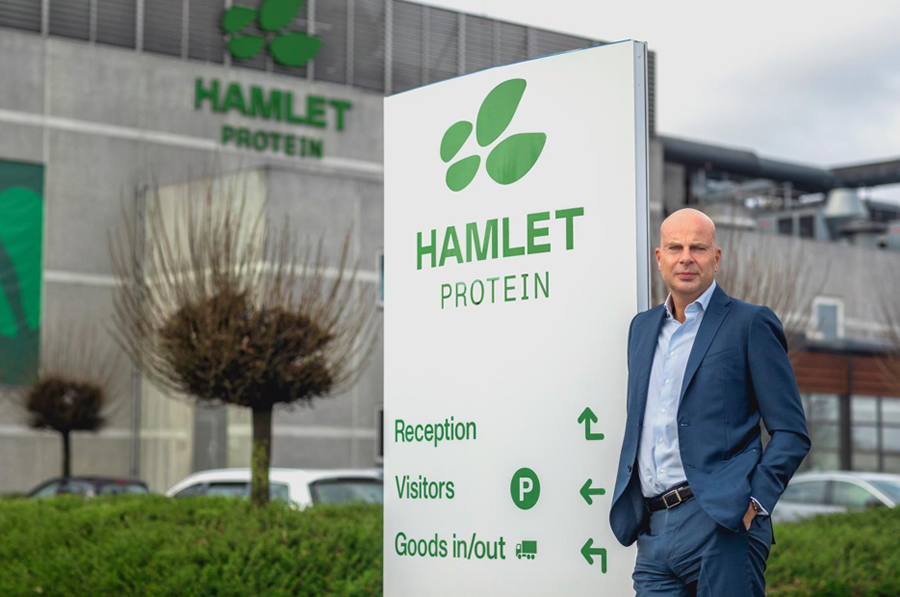
The Hamlet Protein CEO on why people are the key to integration success or failure, what the feed industry is underestimating, and where the real opportunities lie across Asia.
Erik Visser has led Hamlet Protein as CEO since 2019, building the specialist in soy-based young animal nutrition into a global supplier serving piglet, poultry and cattle producers from plants in Denmark and the United States. In May 2026 the company became part of Royal Agrifirm Group's Specialties business, continuing under its own name. In this eFeedLink Executive Interview, Visser discusses the discipline of integration, the leadership lessons that travel across cultures, and where he sees the next wave of value in animal nutrition.
Looking back over your career, what experiences have most shaped your leadership philosophy, and how do they influence the way you lead Hamlet Protein today?
I have built my career across several continents, starting in Latin America and spending most of my working life outside the Netherlands. Different cultures and business environments taught me one consistent lesson: success is always about people. Sustainable performance comes from building strong teams, investing in relationships and creating an environment of trust. When people feel supported, challenged and empowered, they develop genuine commitment, and strong results follow.
That is why I summarise my philosophy as 'people over processes'. Processes provide structure and consistency, but they should enable people, not constrain them. A leader's role is to bring together the right talent, set a clear direction and create the conditions in which teams can succeed. At Hamlet Protein, that has meant building the right leadership team, defining a clear roadmap, and giving colleagues the trust and accountability to perform at their best.
You have written that 'M&A is not primarily about combining assets, but combining assumptions.' What does that mean in practice, and why do so many acquisitions struggle after the deal closes?
The financial transaction is the easier part. The real work begins after the deal closes, and companies that are not prepared for that stage struggle to realise the value they are targeting. Every organisation has developed its own assumptions over many years: what success looks like, how decisions are made, how quickly change should happen, how people collaborate. None of these are written into the integration plan, yet they shape almost every interaction from day one.
That is why so many acquisitions fail to deliver, and it is rarely because the strategic rationale was wrong. More often, leaders underestimate the human dimension of integration. People do not resist change nearly as much as they resist uncertainty; if they understand where the organisation is going and what their role is, they are remarkably adaptable. That is why communication frequency often matters more than communication perfection.
Culture is also shaped by actions, not presentations. The first hundred leadership decisions after an acquisition, how leaders communicate, how quickly they decide, how conflicts are resolved, do more to shape the future culture than any town hall. Financial discipline and strategic rationale remain essential, but value is only realised when people from both organisations choose to move forward together, with shared purpose and mutual trust.
When leading through uncertainty, how do you balance acting decisively with staying open to changing course?
Leadership today requires both conviction and adaptability. You need a clear long-term vision of where the company is going, and that direction should provide stability even when the environment around you is changing. At the same time, you cannot ignore an increasingly volatile world. The key is to distinguish short-term disruptions from long-term structural trends.
Leaders who change course every time the market fluctuates create uncertainty and weaken execution. But when new information points to a lasting shift, whether in customer expectations, technology, regulation or supply chains, you have to be willing to adapt. That is not inconsistency; it is good leadership. The most successful organisations combine strategic clarity with organisational agility, staying focused on their destination while adjusting the route as conditions evolve.
Looking ahead five years, how will you personally judge whether the integration with Royal Agrifirm has been successful?
Financial performance and planned synergies will remain important measures, but I would judge success much more broadly. First, I would want to see a better experience for our customers. By combining our product portfolios, technical expertise, service capabilities and logistics networks, we should be able to offer greater value than either company could deliver alone. If customers see us as a stronger, more reliable and more innovative partner, we have achieved something meaningful.
Second, a successful integration should create opportunities for our people, opening new career paths and broadening expertise across a larger, more diverse international business. Finally, I would expect the combined company to be strategically stronger than the sum of its parts, and more resilient in markets shaped by changing customer needs, sustainability expectations and regulation. If, in a few years' time, our customers tell us we are easier to do business with and that we bring them more innovative solutions, our employees have more room to grow, and the business is better positioned than either company could have been alone, I will consider the integration a success.
Royal Agrifirm has said Hamlet Protein will keep operating under its own brand. How do you preserve the entrepreneurial culture that made Hamlet successful while gaining the scale of a much larger organisation?
Culture is one of the most important drivers of long-term success, and one of the few competitive advantages that is difficult to replicate, so it deserves as much attention during an integration as financial or operational planning. I believe Hamlet Protein was acquired not only for its products and manufacturing, but for its entrepreneurial, innovative and customer-focused culture. Despite being smaller in headcount and revenue, we make a significant contribution to the EBITDA of the Royal Agrifirm Specialties division, which shows the value of the way we work, not just what we produce.
Our aim is not to protect our culture by resisting change, but to keep the qualities that made us successful while embracing the strengths of a larger organisation: its global footprint, supply chain expertise and R&D capabilities. As our teams work together on the integration, we can learn from each other, rather than assuming the larger company always has the best way of working. The most successful integrations are not about one culture replacing another. They are about combining the best of both.
You describe the first hundred decisions after an acquisition as more telling than any playbook. In the Royal Agrifirm integration, what has that looked like in practice?
One of the very first decisions we made was not about systems, organisational charts or cost synergies. It was about people. We deliberately created time and space for colleagues from both companies to get to know one another, professionally and personally. It is easy to focus on processes when two organisations come together, but businesses are built by people. Before asking teams to redesign functions or take important decisions together, we wanted them to build relationships and understand each other's strengths, ways of working and cultures.
That reflects a principle we defined as 'quality over speed.' Royal Agrifirm has been around for more than a hundred years, and playing the long game is part of its success. There is always pressure to move quickly after a merger, but taking the time to make the right decisions creates far more value than making fast ones that have to be revisited later.
The second priority has been communication. During an integration, uncertainty fills any communication vacuum, so our view is that you cannot communicate too much. We have invested heavily in town halls, newsletters, leadership updates and, most importantly, time on-site with our teams, where people can ask questions, understand what the merger means for them and help shape our shared future.
That is what the first hundred decisions really are. Not just strategic or operational choices, but the many small daily choices about culture, transparency and trust. Get those right, and the operational integration becomes far easier, because people are moving in the same direction.
The feed and livestock industry faces disease pressure, geopolitical uncertainty, sustainability demands and rapid technological change at once. Which challenge is the industry underestimating most, and why?
The industry underestimates how quickly these pressures are converging. They rarely occur in isolation; they reinforce one another, and over the past few years we have seen that play out repeatedly.
Take diseases first. African swine fever fundamentally changed the global swine industry, reshaping production in Asia and parts of Europe, accelerating investment in biosecurity and driving a shift towards larger, more professional operations. As producers rebuilt, they focused far more on prevention, resilience and feed efficiency than on simply maximising output.
Regulation pulls in more than one direction. Restrictions on antibiotic growth promoters have increased demand for solutions that support gut health and animal resilience, which is a positive long-term growth driver for feed additive producers. But regulation can also add cost and complexity. The EU Deforestation Regulation, for example, brings new traceability and compliance requirements across agricultural supply chains, and there is a legitimate concern that European producers could be at a competitive disadvantage if trading partners are not held to comparable standards.
Geopolitics adds another layer. Trade tensions and tariffs, particularly between the United States and China, have disrupted established trade flows. At times that has affected exports from our US production facilities, requiring us to adjust sourcing, manufacturing and logistics to keep serving customers efficiently.
The common thread is complexity. Disease, regulation and geopolitics all demand that producers, and companies like ours, become more adaptable. That is where a global manufacturing footprint, diversified market exposure and science-based nutrition become real competitive strengths. The greatest challenge is not responding to any single event; it is building an organisation resilient enough to adapt continuously without losing strategic focus.
Young animal nutrition has long been one of the industry's more resilient segments. What will define the next generation of innovation, and where do you see the greatest opportunities?
The earliest stages of an animal's life have such a profound impact on its lifetime health, performance and productivity that young animal nutrition has always been innovation-driven. That will remain true, but the next generation of innovation will be broader than developing a new ingredient or additive. The greatest opportunities lie in combining nutritional science with data, technology and a deeper understanding of animal physiology, moving towards more precise, evidence-based solutions that support gut health, immunity and resilience from the earliest stages of life.
Sustainability will increasingly become part of the equation. The challenge is no longer to optimise animal performance alone, but to do so while improving resource efficiency and reducing environmental impact. Collaboration matters too: the most meaningful progress will come from partnerships across the value chain, with customers, universities and research institutes, to develop solutions that address real-world challenges. In the end, innovation is only valuable if it creates better outcomes for customers.
Asia remains one of the world's fastest-growing livestock regions, yet recurring ASF outbreaks, avian influenza, shifting trade flows and volatile margins keep reshaping demand. Where are the greatest long-term opportunities, and what will companies need to succeed?
Asia will remain one of the most important growth regions for animal nutrition. Despite the challenges, the long-term fundamentals are attractive: population growth, rising incomes and increasing demand for high-quality animal protein will continue to drive investment across many Asian markets. But Asia is not one homogeneous market. Opportunities and challenges differ significantly between countries, production systems and customer segments, so the companies that succeed will understand local dynamics while drawing on global expertise.
If I had to single out one market today, it would be Vietnam. It is one of the few markets in Asia where we see significant opportunities across aquaculture, poultry and swine, and that breadth makes it especially compelling. Vietnam is one of the world's leading aquaculture exporters and a rapidly modernising poultry producer, with producers under constant pressure to improve feed efficiency, animal health and antibiotic stewardship to stay competitive in export markets. Its swine sector, rebuilding after African swine fever with greater biosecurity and consolidation, is placing new emphasis on gut health and alternatives to antibiotic growth promoters. Vietnam's feed additives market is forecast to grow at more than 5% a year through the rest of the decade.
Indonesia is a very close second, with one of the largest poultry sectors in Southeast Asia and rapidly expanding aquaculture, though it is earlier in its development curve, which leaves significant headroom for future adoption of specialty nutrition. The Philippines is attractive too, particularly in poultry, but for now it is more of a steady-growth story than a transformational one. Over the next decade, Vietnam and Indonesia are likely to be the two markets that matter most.
The winners in Asia will be those companies that combine global innovation with local execution and stay close to their customers as conditions evolve.
Artificial intelligence and precision nutrition are among the most discussed topics in the industry. Where is genuine transformation taking place, and where are expectations running ahead of reality?
AI and precision nutrition have the potential to transform our industry, but it is important to separate genuine progress from unrealistic expectations. The real transformation is already taking place where technology helps us make better decisions. We are seeing feed formulations that integrate data on ingredient variability, animal genetics, health status and production performance to create more precise strategies, and, combined with sensors and advanced analytics, nutrition programmes that respond to the needs of specific animals or production systems. The result is better feed efficiency, animal health and use of resources. Beyond formulation, we also see clear gains in forecasting and supply-chain optimisation, where AI can process large volumes of information and help our teams and our customers make faster, better-informed decisions.
Where expectations run ahead of reality is the assumption that AI, by itself, will solve complex biological challenges. Animal nutrition will continue to be a biological science, and the quality of the outcome always depends on the quality of the data, the scientific models behind the algorithms and the expertise of the people interpreting the results. I do not see AI replacing nutritionists or technical experts; I see it making them more effective.
The wider shift is from supplying products to delivering outcomes. Customers want partners who help them improve feed efficiency, strengthen animal resilience and navigate an increasingly complex regulatory and market environment, which takes scientific expertise, digital capability and a deep understanding of each customer's business.
Finally, what is one widely accepted belief in the feed and livestock industry that deserves to be challenged, and if you could change one thing over the next decade, what would it be?
One belief that deserves to be challenged is that companies create the most value by keeping knowledge to themselves. Protecting intellectual property will always matter, but there is much more room for collaboration on scientific knowledge and practical experience that can move the whole industry forward. The challenges we face, improving animal health, feed efficiency and environmental impact, and producing safe, affordable protein for a growing population, are too complex for any one company to solve alone.
Too often, valuable information stays within individual organisations, limiting the collective insight that could accelerate innovation. Holding information others do not have can look like an advantage, and it may offer short-term differentiation, but our long-term success depends on raising the performance and sustainability of the entire sector. If we share more scientific knowledge, on-farm experience and practical learnings, we can respond faster to emerging challenges and deliver more value to producers and consumers.
If I could change one thing over the next decade, it would be to build a stronger culture of collaboration across the value chain, from nutrition companies and additive suppliers to producers, researchers and academia. The future will not be determined by who holds the most information, but by how effectively we turn knowledge into solutions that benefit customers, animals and society as a whole.
I remain optimistic about the future of animal nutrition. Our industry plays a fundamental role in one of society's greatest challenges: producing safe, affordable and sustainable protein for growing global demand. Increasingly, innovation will be measured not by the products we launch, but by the outcomes we help our customers achieve.
About Hamlet Protein
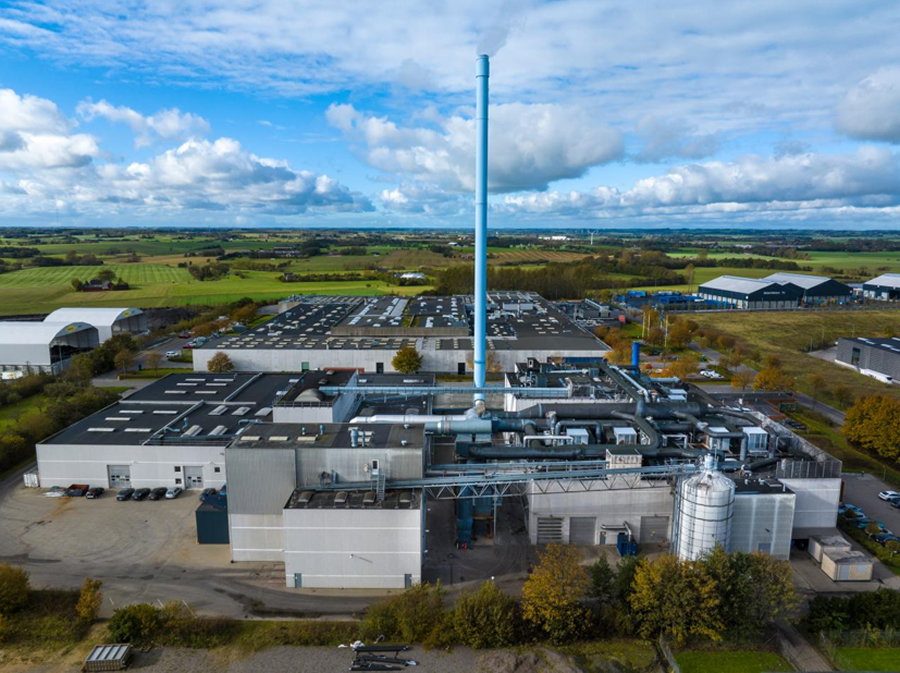
Hamlet Protein produces soy-based protein ingredients for young piglet, poultry and cattle feed at two production plants in Denmark and the United States, and serves customers worldwide through its own sales offices and a network of distributors. Erik Visser has been CEO since 2019. www.hamletprotein.com
- eFeedLink


