


July 15, 2026
EFL AG-DATA: Rebuilding the Philippines' swine herd in 2026
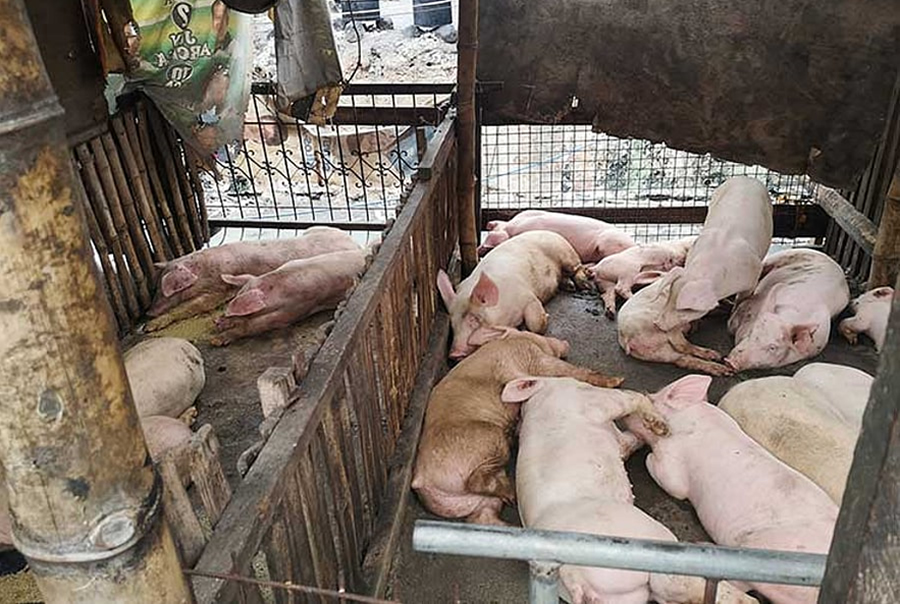
The Philippine swine-pork industry is operating in a state of high tension.
Seven years after African swine fever (ASF) first breached the country's borders in 2019, the sector remains caught in a tight squeeze between surging import volumes and a highly biosecure local repopulation campaign.
This market analysis breaks down the current state of the market, the forces driving its trajectory, the timeline for recovery, and how industry players are adapting.
The current state of Philippine swine-pork market
The domestic market is defined by a deep supply deficit and a subsequent dependence on imports to supplement local production still constrained by ASF.
Depleted swine inventory: The national pig herd has yet to recover to its pre-ASF high of approximately 13 million head in 2019. According to the Philippine Statistics Authority (PSA), the national swine inventory stood at 8.75 million head in 2025, a contraction from the 9.57 million head recorded a year earlier. Smallholder farms make up the majority of this inventory at 6.09 million head.
Declining local slaughter: The number of hogs slaughtered domestically last year dipped to 20.74 million head, down from 21.61 million in 2024 and 25.36 million in 2020.
The import surge: Because of the domestic shortfall, total meat imports hit 726,936 metric tonnes between January and May 2026—a 22% increase year-on-year. Pork remains the single largest imported meat commodity, rising over 23% to 395,022 tonnes (up from 319,665 tonnes a year earlier). Brazil dominates this space, supplying around 396,600 tonnes, or 55% of total meat imports.
Sticky retail inflation: The supply gap has kept retail pork prices elevated, causing high localised inflation in regions like Cebu, where inflation stands at 13.6%. According to the Department of Agriculture's (DA) Bantay Presyo monitoring system, prevailing prices in Metro Manila markets sit at ₱340 (US$5.95) per kilogramme for pork ham and ₱390 (US$6.82) per kilogramme for pork belly. Imported frozen counterparts offer a cheaper alternative, priced at ₱250 (US$4.37) per kilogramme for frozen kasim and ₱300 (US$5.25) per kilogramme for frozen liempo.
Growth catalysts
Science-based repopulation: The DA is accelerating recovery in ASF-free areas through an expanded repopulation programme, starting with the procurement of approximately 32,000 gilts (young female pigs).
Commercial modernisation: Major private operators are investing billions to scale up operations. In Cebu, Virginia Farms Inc. has inaugurated a new breeder farm facility in Aloguinsan carrying a phase investment of about ₱2.8 billion (US$45.7 million) designed to produce breeder stocks for commercial hog operations.
Advanced genetics: Commercial breeders are partnering with advanced global genetic hubs. The Aloguinsan facility is sourcing high-grade breeding stock from South Dakota, the United States, to optimize herd health and production efficiency.
Inhibitors of growth
The persistence of ASF: The virus continues to linger as a structural constraint, preventing domestic livestock output from catching up with demand and keeping the national herd size depressed.
Import reliance vulnerabilities: Over-reliance on foreign meat leaves the local supply chain exposed to external logistical breakdowns, rising freight costs, and geopolitical disruptions.
Market outlook and recovery timelines
The timeline for recovery is mapped across distinct short- and long-term milestones:
Short-term outlook (12 to 24 months): high import reliance & regional expansion: Pork, chicken, and beef imports are all rising by double digits to fill the immediate vacuum. However, local private players are targeting a tipping point within one to two years where locally produced pork could become more affordable and competitive than imported meat as production scales up and eliminates international freight costs.
Long-term outlook (by 2028), the national target: The DA's official target is to add six million hogs to the national herd by 2028 through close collaboration with local governments and industry groups.
Why recovery takes time: Rebuilding the herd is biologically and logistically constrained. Repopulation requires strict biosecurity infrastructure and a phased rollout; for example, major breeder facilities are scaling up incrementally (e.g., establishing an initial 2,500-sow capacity before expanding to a final 5,000-sow capacity by the middle of next year).
Primary concerns of industry players
Industry stakeholders, from local hog raisers to corporate executives, are highly focused on three critical issues:
Outsourcing food security: Industry leaders warn that relying on external supply chains leaves the population vulnerable. If geopolitical tensions or wars disrupt shipping lanes, the country faces immediate protein shortages. Food sustainability is viewed as something that "cannot be outsourced."
Dilution of modernisation funds: Tighter national fiscal space has raised concerns. As of May 2026, the Bureau of Customs collected ₱10.47 billion (US$183 million) in tariff and VAT revenues from pork, chicken, and beef imports, which is part of the livestock, poultry, and dairy import revenue used to finance the Animal Competitiveness Enhancement Fund (AnCEF). AnCEF is mandated to strengthen the local livestock, poultry, and dairy sectors through a guaranteed annual allocation of ₱20 billion (US$350 million) over 10 years. However, Agriculture Secretary Francisco Tiu Laurel Jr. indicated that this fund will likely be folded directly into the DA's 2027 budget rather than remain separate due to tighter fiscal space, signaling a change in financial management that worries local producers.
High regional consumption pressures: Supply pressures are intensified in regions with distinct cultural demand. Cebu eats more pork than any other province, with a per capita intake of 20 kilogrammes compared to the national average of 15 kilogrammes, putting immense strain on local distribution networks.
Industry strategy and sentiment
Rather than retreating, the Philippine swine industry is executing a highly defensive, technology-driven expansion strategy that includes:
Strong biosecurity protocols: New facilities are building advanced physical barriers against disease. The latest commercial designs feature a strict three-layer fencing system to control entry points and completely avoid planting fruit-bearing trees or vegetation that could attract birds and other wild animal disease carriers.
Scaling regional output: Local companies are working to capture dominant regional market shares to stabilise local economies. Currently, the swine industry in Cebu has expanded significantly from a previous value of ₱11 billion (US$179.4 million) to a minimum assessment of about ₱25 billion (US$407.7 million), driven by rising investments and higher production costs. Virginia Farms alone harvests 1.3 million hogs annually (producing 39 million kilogrammes of pork), which covers roughly 55% of Cebu’s total pork consumption. Replicating this commercial scale is seen as the primary pathway to stabilising market prices.
Overall industry sentiment
The mood of the sector is resilient and aggressively proactive.
While industry leaders acknowledge the vulnerability of the current system, there is strong confidence that adopting upgraded production systems, modern technology, and improved global genetics will allow local pork to outcompete imports in both quality and price in the coming years.
Government leadership echoes this sentiment, viewing commercial expansion as the vital anchor for a stronger rural economy and long-term national food security.
- EFL AG-DATA


