


CORPORATE NEWS
FORMI® AND AQUAFORM®
ADDCON registers swine, aquaculture growth-promoting products in S. Korea

ADDCON's diformates have been successfully registered in South Korea with the help of Mr. Seungyong Lee of Juho Co. Ltd.
Following its global expansion strategy, ADDCON keeps on expanding in Asia, as the growth promoters Formi® for swine and Aquaform® for the aquaculture industry have been successfully registered in one of Asia's most important markets, South Korea, which was among the first countries in the region to ban the use of in-feed antibiotic growth promoters.
ADDCON and its local partner, Juho Co. Ltd., can now offer the patented diformate molecule, for use in swine and aquaculture, under the commercial names of Formi® and Aquaform®, respectively.
Diformate products from ADDCON have acidifying and antibacterial effects in the GI tract that promote enzyme activity and intestinal health. As a result, nutrient digestibility is enhanced and the animals are healthier, with stronger immune systems. Both products are effective alternatives to the use of antibiotics as growth promoters, which have been banned in the EU since January 2006.
"We believe in the success of the products in South Korea. Formi® and Aquaform® will help the industry in the post-antibiotic era. Global and local demand for sustainable farmed animals is a fact. We can help the industry now to fulfill this demand", said Dr. Lückstädt, technical director, FEED, at ADDCON.
ADDCON's sustainable solutions pay for themselves and increase profits on farms, which are responsible for feeding the world's growing population!
For more information on the products and product availability, you may contact Technical Application Manager Ryan Von de Leon at ryanvon.deleon@addcon.com.
IN NORWAY
Cargill opens new fish nutrition research laboratory

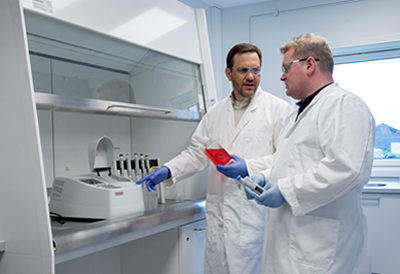
Cargill has opened an aquaculture research laboratory in Dirdal, Norway, which is dedicated to developing new diets for the fish farming industry.
The commodities trader said the cutting-edge laboratory brings together the best lab, nutrition and raw material knowledge of Cargill and EWOS, a fish-feed supplier acquired by Cargill in 2015 and is now integrated into Cargill Animal Nutrition as a business called Cargill Aqua Nutrition representing the EWOS brand.
The new $1.25-million nutrition laboratory, Cargill said, furthers its commitment to strengthening its aquaculture research and development capabilities. It was built on the Cargill (formerly EWOS) Innovation Centre grounds, where research has been conducted for more than 30 years.
"We are delighted to open our new laboratory in Dirdal. Having world-class laboratory capabilities sitting right next to our fish trial units and our feed processing research center will strengthen the performance of our products by giving us greater abilities to understand the interaction of raw materials, nutrients and feed manufacturing", said Daniel Barziza, Global Aqua R&D director.
"It will also enhance our raw material development work and build on our leading knowledge in this area, allowing us to accelerate our product development programmes and introduce new solutions to market more quickly," he added.
Cargill has a long-term commitment to investments in R&D, and this represents an important milestone in Cargill's ambition to be the leading force in fish nutrition research. The new facility builds on Cargill's existing competence on fish nutrition research and leading analytical capabilities that has earned the company a global reputation as the innovator in the salmon feed industry. The Dirdal lab joins cutting-edge facilities across the globe, including a $10.5 million fish health center opened in Chile less than 6 months ago. Cargill's R&D success in the aqua space is dependent on close cooperation and knowledge transfer between personnel and scientists across laboratory, pilot plant and fish trials.
|
The new $1.25-million nutrition laboratory furthers Cargill's commitment to strengthening its aquaculture research and development capabilities. CARGILL PHOTO |
FROM NATURAL MARINE ALGAE
DSM, Evonik to produce breakthrough omega-3 in Nebraska

Evonik and Royal DSM will locate the commercial-scale production facility for their omega-3 fatty acids from natural marine algae for animal nutrition in Blair, Nebraska. DSM Nutritional Products and Evonik Nutrition & Care plan to invest around US$ 200 million in the facility ($ 100 million by each party over circa two years).
The initial annual production capacity will meet roughly 15% of the current total annual demand for EPA and DHA by the salmon aquaculture industry. The facility is expected to come on stream in 2019. The establishment of the joint venture, to be named Veramaris® and headquartered in The Netherlands, will be finalized subject to regulatory approvals.
Blair, Nebraska was chosen as it takes advantage of Evonik's decades of operational experience for large-scale biotechnology operations. The company has been operating a facility there for the fermentative production of Biolys®—the amino acid L-lysine—for almost 20 years. As an investor and employer Evonik has built a consistent reputation in the local community. The new plant will be located adjacent to Evonik's current facility on Cargill's site, with established access to the raw materials needed to produce the high value and pure EPA+DHA omega-3 fatty acid oil.
Both companies announced in March 2017 the start of a joint venture for this purpose. It will, for the first time, allow for the production of omega-3 fatty acids for animal nutrition without using any fish oil from wild caught fish, a finite resource. Initial applications will be in salmon aquaculture and pet food.
DSM's and Evonik's highly concentrated algal oil will enable the animal nutrition industry to keep up with the increasing demand for these two essential omega-3 fatty acids without endangering fish stocks, helping to contribute to healthy animal nutrition as well as to the ecological balance and biodiversity of the oceans.
Until the facility in Blair opens, DSM and Evonik will produce pilot-scale quantities of the algal oil at DSM's production facility in Kingstree, South Carolina, USA. Customers will be able to receive sizeable quantities of the product for market development while the construction of the new manufacturing plant gets underway.
NEW SOFTWARE TOOL
Evonik launches AMINOTilapia® for aquaculture
Evonik is to launch the new software tool AMINOTilapia® enabling the aquaculture industry to improve efficiency in tilapia farming through optimal feed formulation.
AMINOTilapia® calculates the ideal amino acid recommendations for different growth stages of tilapia considering various production features. The software helps nutritionists to formulate diets that optimally meet the animals' needs and improve feed conversion rate, that is the efficiency with which animals utlize nutrients.
The tool is a step torward modern diets that are formulated to balance amino acids and reduce excess dietary protein, which is usually the most costly component in feed. Balanced diets not only increase efficiency, but also contribute to protecting the environment thanks to a reduced nitrogen excretion.
Aquaculture is one of the fastest-growing industries and tilapia is currently the second most produced fish worldwide, just after carp. The global production of farmed tilapia amounted to more than 5 million tonnes in 2015. Among different tilapia species, the most popular one is Nile Tilapia, which makes up about 75 percent of farmed tilapia in total.
To meet the increasing demand for healthy and nutritious fish, Evonik is supporting the aquaculture industry with a set of unique and reliable solutions. Evonik can build on the experience in the production of essential amino acids from over 60 years.
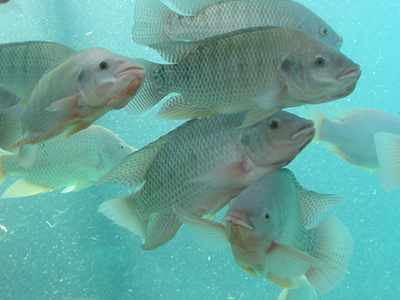
| Among different tilapia species, the most popular one is Nile Tilapia, which makes up about 75% of farmed tilapia in total. © iStock/paulrdunn |
US$65M FACILITY
Skretting to build state-of-art shrimp feed plant in Ecuador
Aquaculture feed maker Skretting is set to build a new state-of-the-art shrimp-feed mill worth US$65 million in Duran, Ecuador.
The facility will have an annual capacity of 470,000 tonnes of feed, Skretting said, adding that construction is scheduled for completion in 2019.
Ecuador is one of the world's leading shrimp producers with an increasing export trade to many key markets including the US, Asia and Europe.
"We were the first company to provide Ecuador with an aquaculture-specific feed plant. Alongside this industry commitment, Skretting has also benefitted from more than 25 years of health and nutrition research and development and is working closely with many of the country's shrimp farmers, which has given us invaluable local insight into the market's particular needs and ambitions", said Carlos Miranda, general manager of Skretting Ecuador.
He said the new plant comes at the ideal time for the country's booming shrimp farming industry, which continues to capitalise on the unprecedented demand for high-quality, responsibly produced shrimp products.
The 3.5-hectare plant will be constructed in phases—incorporating the latest technological and environmental advancements—that will gradually scale up Skretting Ecuador's shrimp feed production. The first phase is expected to be finished within the first half of 2018.
The facility, the Nutreco-owned company said, will ensure that Skretting can continue to meet the fast-growing demand in both Ecuador and Peru for premium-quality shrimp feeds.
Miranda said that farmed shrimp is Ecuador's second-largest non-oil export and plays a vital role in the country´s economy. "The increasing professionalism of the industry is mirrored by the steady rise in its demand for higher quality feeds and the introduction of new, automated feeding system technologies that Skretting is promoting in Ecuador and its export markets".
SEAFOOD FIRMS' INITIATIVE
Thai Union commits to SeaBOS pledge

Thai Union Group PCL has signed a groundbreaking pledge as part of its membership in the Seafood Business for Ocean Stewardship (SeaBOS), committing to improve operations as well as challenge the rest of the seafood industry to follow suit.
These developments are all within the goal of helping the world achieve the United Nations Sustainable Development Goals (SDGs).
SeaBOS is a unique initiative that brings together some of the largest seafood companies in the world to identify science-based solutions to issues the industry faces.
In 2016, eight of the world's largest seafood companies, including Thai Union, joined together to form this initiative.
"The companies which make up SeaBOS operate on every continent and in all segments of seafood production, from wild capture fisheries to aquaculture businesses. By building trust and adopting science-based approaches, it creates positive change for our companies, our industry and the world," said Dr. Darian McBain, Thai Union's global director for sustainable development. "Thai Union is committed to doing its part to ensure the oceans are healthy for current and future generations."
The signatories specifically pledge to: work diligently to eliminate IUU products and any form of modern slavery in our supply chains; actively use and develop fish health management systems and health prevention methods before treatments make efficient use of aquaculture feeds, and to use fish feed resources from sustainably harvested stocks; and, together with governments, actively improve existing regulations for fisheries, aquaculture, and the ocean.
The SeaBOS pledge comes the same week in which Thai Union released its fourth annual sustainability report, publicly detailing the company's performance against key indicators and targets outlined in SeaChange®, Thai Union's sustainability strategy.
Additionally, Thai Union recently committed to the World Economic Forum's Tuna 2020 Traceability Declaration.
SeaBOS started as dialogue between scientists and business leaders that led to the signing of a 10-point commitment to action on ocean stewardship by two of the largest tuna companies in the world- namely Thai Union and Dongwon Industries; two of the largest companies by revenues (Maruha Nichiro Corporation and Nippon Suisan Kaisha, Ltd); the two largest salmon farmers (Marine Harvest ASA and Cermaq); and the two largest aqua feeds companies (Skretting and Cargill Aqua Nutrition).
The initiative is supported by numerous stakeholders including the Stockholm Resilience Centre, the Beijer Institute on Ecological Economics, and the Royal Swedish Academy of Science, amongst others.


