


July 12, 2024
Nigeria faces potential collapse of poultry industry, farmers say
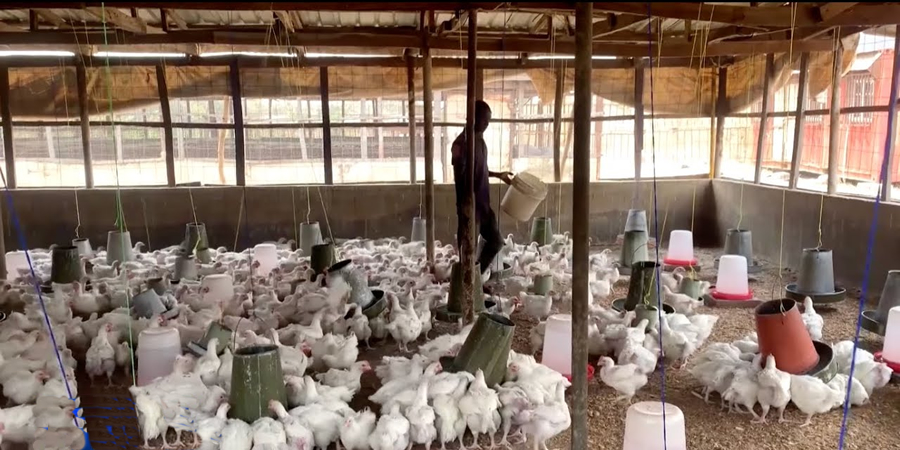
Poultry farmers in Nigeria said that several poultry farms are shutting down operations due to skyrocketing prices of poultry feed and unsustainable cost of production, among other challenges in the sector.
The farmers, who spoke with Premium Times, said the worrying trend could soon lead to a total collapse of Nigeria's poultry industry if not addressed by authorities.
Rising prices of essential livestock feed ingredients such as corn and soybeans and the growing spate of insecurity across farming communities are negatively affecting poultry output.
The farmers lamented that general price levels have impacted the purchasing power of most Nigerians, with an attendant effect on the poor sale of poultry products such as eggs and broilers.
The situation exacerbated in the past year after Nigerian President Bola Tinubu, upon assuming power in May 2023, announced subsidy removal alongside other policies that triggered an economic crisis. In less than two months after Tinubu took office, he declared a state of emergency on food insecurity, with the hope of addressing the increase in food prices.
Consequently, the prices of major staple food items and livestock feed ingredients have also spiked. The rising cost of poultry products left the prices of basic protein, such as eggs, less affordable for residents.
The continuous increase in the prices of goods and services over the past year has made some farm owners shut down their business, poultry farmers said.
Nigeria's inflation rate has risen since Tinubu became president. According to the National Bureau of Statistics (NBS), inflation rose to 33.95% in May 2024 from 22.41% in May last year. Food inflation followed a similar trend, climbing to 40.66% in May 2024 from 24.82% last year in May.
According to the latest NBS National Agricultural Sample Census (NASC) Report 2022, there are about 40.2 million agricultural households in Nigeria. Of this figure, the report states only about 42.5% (approximately 17.1 million) of agricultural households raise birds, most commonly chicken.
"While chicken is the most common poultry type raised by more than 95% of poultry-raising households in most of the (Nigerian) states, turkey is raised by only 5.4% of those households," the NBS said.
Speaking on the recent development, the former president of the Kaduna State chapter of the Poultry Association of Nigeria (PAN), Timothy Okunade, said people are exiting the poultry industry due to the continuous increase in the prices of poultry feeds and day old chicks (pullets).
"There is no money in circulation. The purchasing power has dropped to an unimaginable level," Okunade said.
Jolayemi Christopher, who runs a poultry farm in Abuja, explained that the rising cost of poultry feed in the market has affected his business over the past year. This, he said, was triggered by the persisting increase in the prices of corn and soybeans in the market.
Some feed mills, are only using 30% of corn, instead of 50%, in their feed, Christopher noted. The increase in the prices of corn and soy is making feed millers compromise some components of poultry feed in favour of profit, he said.
"This is the rainy season. It is the best time for these birds to produce because the weather is cold, but because of the compromise in the feed, production is just about 70% for well-managed farms," Christopher added. "Other average farms, of which they are the majority in the country, are just managing 50-50%."
Onallo Akpa, director general of the Poultry Association of Nigeria, described the challenges poultry farmers in Nigeria face as "very bad".
"The situation is such that has never been witnessed in the last 13 years of my being in the industry," he said. "Poultry farms, especially… the small and medium scale farms, are shutting down."
Akpa said farms that are still operating, particularly industrial and integrated poultry farms, also face the risk of shutdown due to operational hazards.
- Premium Times


