


July 10, 2023
Akvafuture looks to apply for licences for closed barrier system salmon farm in British Columbia, Canada
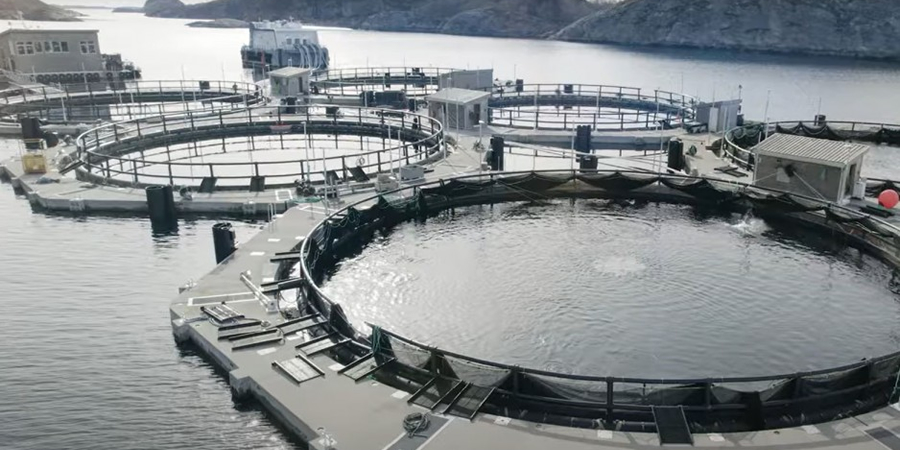
A Norwegian company that claims to have fixed the problem of farmed salmon interacting with wild salmon — and sharing viruses and sea lice — hopes to soon apply for licences and tenures for its first closed barrier system salmon farm in British Columbia, Canada.
Akvafuture, a small Norwegian salmon farming innovator, developed a closed barrier system that looks like an open-net salmon farm but which completely isolates the farmed fish from the wild in containment "pods.”
These systems have been operating in Norway for several years now.
Dean Trethewey, a former production director for Marine Harvest and Grieg Seafood in BC, is Akvafuture's Canadian managing director. He said he has been working with BC First Nations to find a partner. Once it has secured a partnership agreement with First Nations, the company will apply for provincial tenure and a federal aquaculture licence.
"We have some First Nation partners that want to go forward and now, because of their blessing, we can put the tenure application in,” Trethewey said.
Those licences and tenures are getting hard to come by lately in BC, at least for conventional open-net salmon farmers. Due to public pressure and perceptions that farmed salmon pose a risk to wild salmon, the Canadian government aims to phase out open-net salmon farming in BC.
Trethewey said the Akvafuture design should satisfy the concerns the federal government has over the perceived threat that farmed salmon pose to wild salmon through open-net pens.
"It's a closed barrier system that floats in the ocean,” he said.
The system sits in the ocean and uses a pump system to draw in seawater, and collects and reuses waste so no pollution enters the ocean.
"We capture all the solids,” Trethewey said. "But onsite we actually process that. In Norway, we actually use that as biofuels to power the buses in Bergen. …we (also) sell it to terrestrial farmers for re-nutrifying their fields.
"As you collect the solids, you're still releasing some of the nutrients back into the environment. But because of the high nutrients, we're doing things with the veterinarian institution where we can grow kelp and mussels on the same farm. So it's a full circular economy.”
The systems are more expensive to build than open-net salmon farms, but cheaper and less energy intensive than land-based recirculating aquaculture systems (RAS). They can also be more productive as there is lower mortality, Trethewey said. He said the survival rate for salmon raised in Akvafuture's system is about 95%.
The system requires about three megawatts of electricity, compared to 15MW for a similar volume land-based system.
One Akvafuture farm with 10 to 12 pods, producing 4,000 tonnes of salmon every 16 to 18 months, would cost about $20 million. Akvafuture would like to build three or four of these farms in BC.
- BIV


