


July 9, 2024
Animal welfare group disputes claims by European poultry trade organisation
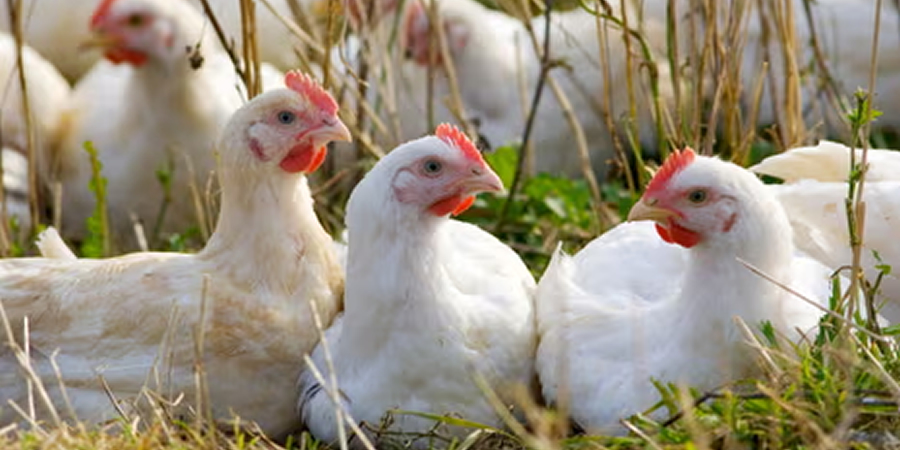
Animal welfare group Compassion in World Farming has responded to claims by the Association of Poultry Producers and Poultry Trade in EU Countries (AVEC) regarding the additional costs linked to the European Chicken Commitment, Poultry World reported.
In a report by UK consultants ADAS, AVEC stated that fully transitioning to European Chicken Commitment standards would result in significant increases in production costs and resource consumption.
The report outlined an additional production cost of 37.5% per kg of meat, a 35.4% increase in water consumption, amounting to an extra 12.44 million cubic metres annually, a 35.5% increase in feed consumption, totalling an additional 7.3 million tonnes, and 24.4% rise in greenhouse gas emissions per kg of meat produced.
The report also showed a reduction of 44% in total meat produced compared to current standard production methods within existing EU growing spaces (>30kg/m²), and the need to construct 9,692 new poultry houses at an estimated cost of EUR 8.24 billion (US$8.9 billion) to maintain current production levels.
AVEC's president, Gert-Jan Oplaat, emphasised the importance of consumer choice and informed decision-making, stating that while the European Chicken Commitment aims to improve animal welfare, these improvements come with significant economic and environmental implications.
Compassion in World Farming challenged the report, arguing that it failed to account for the benefits associated with higher welfare production. These benefits include lower mortality rates, reduced antibiotic use, and better meat quality, which could offset some of the economic and environmental impacts.
The European Chicken Commitment aims to improve broiler welfare in Europe. Despite potential cost and environmental impacts, Compassion in World Farming argues that successful strategies such as feed reformulation, full carcass utilisation, and innovative product development can make higher welfare production commercially and environmentally viable.
Dr Tracey Jones, Global Director of Food Business at Compassion in World Farming, highlighted the scientific and public support for enhanced welfare standards in chicken production. She noted that the European Food Safety Authority (EFSA) released a significant scientific opinion in 2023 calling for substantial shifts in production systems to better align with the welfare needs of chickens. These recommendations will inform revisions to EU animal welfare legislation, including updates to the 'Broiler Directive' (Council Directive 2007/43/EC).
The public's concern for animal welfare is also reflected in the latest Eurobarometer on animal welfare, which shows that 84% of Europeans want better protection for farmed animals in their country.
The European Chicken Commitment provides a framework for producers and companies to deliver better welfare for broiler chickens, enabling them to respond to consumer demand for higher welfare and anticipate potential legislative changes in the EU. Over 380 companies have signed up to the European Chicken Commitment, with many actively working towards implementing higher welfare criteria.
Despite the journey to delivering higher welfare being challenging, Dr Jones emphasised the importance of mitigating the negative impacts through practice adjustments. She stressed that while transitioning to higher welfare production typically increases costs and environmental impact, these can be offset by strategies such as better carcass utilisation, menu reformulation, and innovative product development.
Compassion in World Farming also criticised the AVEC report for not considering the broader positive impacts of higher welfare production on animal and human health and welfare. The report overlooked areas where European Chicken Commitment systems can outperform conventional systems, such as better productivity of parent stock, lower rejection rates in slaughterhouses, and fewer carcass downgrades due to meat quality issues.
- Poultry World


