


July 6, 2026
Vietnam's swine sector risks oversupply as herd expansion accelerates
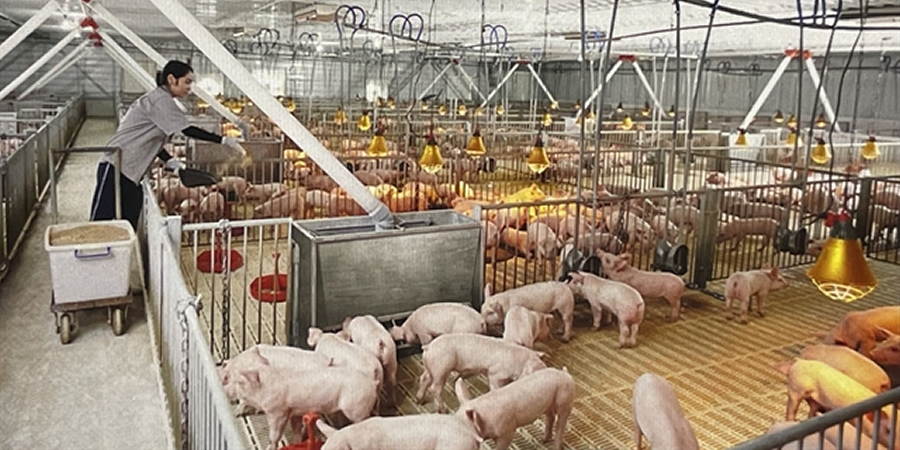
China's deepening pork glut offers a cautionary parallel as Vietnam's pig population grows and domestic prices soften.
Vietnam's national pig herd grew approximately 2.8% year-on-year as of mid-2026, raising concerns among industry analysts that rapid capacity expansion could tip the sector into oversupply - mirroring conditions that have driven Chinese pork prices to a 16-year low.
In China, pork prices have fallen to around 9.59 yuan per kilogram (approximately 35,000 VND/kg), below average production costs, after years of aggressive herd rebuilding following African swine fever (ASF) outbreaks. Last year, China slaughtered 720 million pigs, with fourth-quarter 2025 pork output reaching 15.7 million tonnes - its highest Q4 figure since 2018. Even the country's largest producer, Muyuan, recorded an average selling price decline of nearly 20% year-on-year.
Vietnam's situation differs in degree but not in direction. Several provinces are recording particularly strong herd growth: Gia Lai and An Giang are each up 7.5%, Lam Dong by 6.9%, and Thai Nguyen by 6%. The expansion is being driven primarily by large-scale industrial farms, which now account for 70% of national production - up from roughly 50% five years ago as household farming has declined by 15-20% as a share of output.
By early 2026, 29 large-scale pig farming enterprises held a combined herd of approximately 9.58 million pigs, representing 30.5% of the national total. These enterprises shipped 25.74 million pigs in 2025, equivalent to around 44.4% of total national pig production.
Domestic pork prices have begun to reflect the supply pressure. After holding firm at the start of 2026, prices fell below 70,000 VND/kg in early June and continued declining, with the market currently trading at 64,000-68,000 VND/kg. Analysts cite structural oversupply rather than seasonal softness as the primary cause, noting that revenue at listed livestock companies is rising while after-tax profits are falling due to escalating input costs.
Vietnam remains a significant pork importer despite its large domestic herd. In the first four months of 2026, imports of fresh, chilled, or frozen pork reached 43,100 tonnes valued at US$93.11 million - a decline of 3.6% in volume and 21.7% in value compared with the same period in 2025. The average import price fell 19.3% year-on-year to US$2,143 per tonne. Russia was the largest supplier at 32.56% of import volume, followed by Spain at 29.43% and Brazil at 19.18%.
Vietnam currently ranks fifth globally by pig herd size and sixth in pork production. Live pig prices in Vietnam remain approximately 1.5 times higher than those in China, providing a margin buffer for producers who can control disease and input costs. However, analysts warn that the price gap also creates an incentive for further herd expansion, potentially accelerating the oversupply dynamic.
On the export side, Vietnam shipped meat and meat products to 25 markets in the first four months of 2026. Hong Kong was the largest destination, accounting for 37.25% of export volume and 46.4% of value at 2,100 tonnes worth US$18.93 million - though this represented a decline of 41.6% in volume and 24.7% in value compared with the same period in 2025.
- Báo Dân Việt


