


July 5, 2023
Investing in five countries can help tackle climate crisis by transforming livestock industry, study states
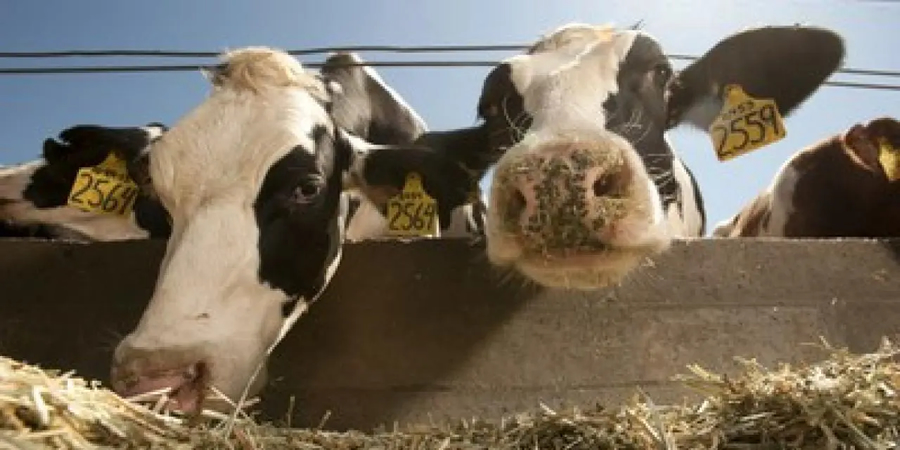
In a new paper published on June 29 in the journal, Nature Sustainability, researchers from the CGIAR's Livestock and Climate Initiative and Wageningen University found that investments in only a handful of countries—India, China, Brazil, Pakistan, and Sudan—can make a huge global impact in terms of transforming the livestock industry to address the climate crisis.
Globally, changes to the livestock sector have great potential to both mitigate the climate crisis and help people adapt, the paper’s authors stated.
Livestock production contributes to climate change and is vulnerable to it at the same time. Ruminant animals' burps and manure release the greenhouse gas methane into the atmosphere, and there are other carbon emissions associated with animal farming as well.
Livestock production directly accounts for 5.8% of global annual greenhouse gas emissions — and closer to 23% including associated deforestation and soil degradation. Animal-based foods represent about one-third of food systems' contribution to global emissions.
But the climate footprint of most livestock-dependent communities in the developing world is vastly smaller than the intensified systems common in developed countries —while climate hazards like droughts, heatwaves and floods disproportionately affect small-scale farmers in the Global South.
"We really don't see a future without livestock," said Jacobo Arango from the Alliance of the Bioversity International and the International Center for Tropical Agriculture (CIAT). "The current livestock systems need to be improved, not gotten rid of. Investors need to start directing money into solutions to transform them."
Any investment in improving these systems needs to consider both climate mitigation and adaptation, said Julian Ramirez-Villegas from CIAT and Wageningen University —something that most investors and countries are not yet doing. "You can't separate the cow that is emitting the greenhouse gas from the cow whose production is affected by climate stress," said the researchers. Interventions and policies focused solely on mitigating greenhouse gas emissions could have negative consequences for the ability of smallholders to adapt to changing climate conditions and vice versa.
In their paper, Arango, Ramirez-Villegas and co-authors analysed both the livestock emissions and climate risks of 132 low- and middle-income countries, and found that almost everywhere, mitigation and adaptation were entangled. They identified India, China, Brazil, Pakistan and Sudan as top-five investment priorities — places with both high emissions and large numbers of people and animals exposed to climate stress.
Combined, these five countries account for 46% of the total value of livestock production, 35% of the total rural population exposed to climate hazards and 51% of livestock greenhouse-gas emissions.
"A handful of countries disproportionately contribute to global livestock emissions," mainly because of their size and large populations, explained co-author Todd S. Rosenstock from CIAT. "These act as critical leverage points for the livestock sector's interactions with the climate system, land and livelihoods. Effective mitigation strategies must prioritise investments in sustainable livestock practices in these high-impact regions."
That doesn't let high-income countries off the hook for their farming emissions, or mean investment shouldn't occur in other low-income countries, cautioned Ramirez-Villegas. Kenya and Ethiopia, for instance, both scored highly. "It's just that if you transform the way livestock is produced in these five countries, you have the potential to make a very, very big difference in the climate system."
Research already suggested pathways for such transformation. At the most basic level, livestock production must be decoupled from deforestation, said Arango. "We have enough land. Deforestation needs to stop, period. There is no justification for livestock production to come at the expense of forests."
Boosting technical assistance to help farmers to implement rotational grazing systems is also another way to tackle challenges.
Shifting animals' diets to locally-adapted forage plants is more climate-smart than buying commercial feed. And there's potential for methane emissions-reductions without slashing herd sizes as well. CGIAR researchers in Colombia have found that adding forage legumes to traditional grass monocultures can reduce cows' methane emissions by 15%.
Planting trees within pastural systems — or silvopasture — also has multiple climate benefits. Shrubs and trees can improve carbon storage and soil health, increase productivity, boost biodiversity and provide shade to animals during heatwaves.
In Colombia, government investment has helped to spur the expansion of silvopastoral systems by 35,000 hectares in 2023 alone, with the aim of reaching 300,000 hectares by 2026.
In Brazil, several reforestation programmes are also scaling silvopasture across the country.
In Ethiopia, a CGIAR Research project brings together remote sensing technology, satellite imagery and on-ground sensors to capture essential data about water levels, flow rates and water source conditions to provide pastoralists with nearly real-time information to help them make smart decisions about where to bring their herds — and hard decisions about when to cull or sell animals in the case of persistent drought.
"Having 10 weak animals is much worse in terms of mitigation and adaptation than having five okay ones," said Ramirez-Villegas. If proven, scaling this system across Africa — where 268 million climate-vulnerable people herd animals across 43% of the continent — could have enormous impact.
"These kinds of analyses are critical for us to focus scarce resources in the places and on the topics with maximum potential for impact," said Andy Jarvis, director of the Future of Food programme at Bezos Earth Fund. "The results published here will certainly inform our investments on making livestock more sustainable, reducing emissions from the sector and making it kinder on nature."
Interventions will need to be tailored to the specific country context, said Arango. But the opportunities for transformation are immense — and underfunded.
"If livestock producers across the Global South could improve their grazing management and plant trees, and gain access to safety nets, information and resources to help them make climate-smart decisions, then I think we would make a dramatic change in both carbon emissions and productivity."
- International Livestock Research Institute


