


July 3, 2026
Philippines pork industry leader pushes for stronger domestic production
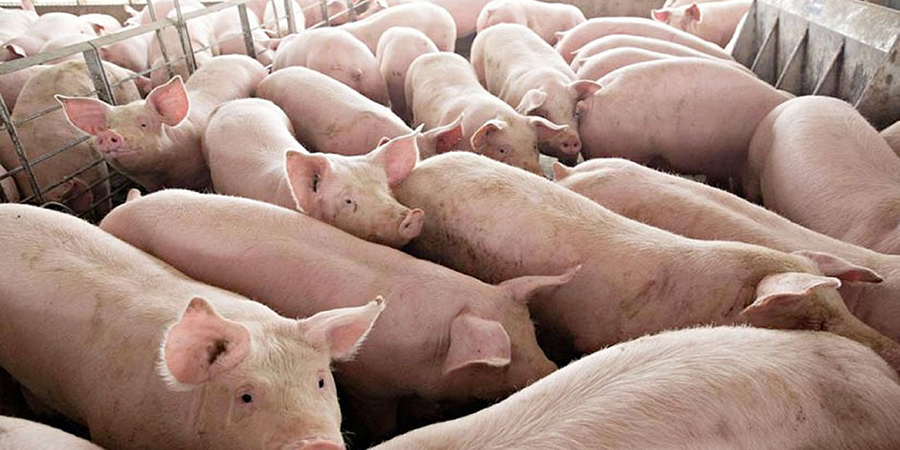
A pork industry leader in the Philippines is pushing for stronger domestic production and reduced dependence on imports, warning that limited local output continues to expose the country to supply risks and price instability, as efforts intensify to bolster Cebu's existing multibillion-peso pork industry.
Rolando Tambago, president of Virginia Farms Inc. and chairman of the Pork Producers Federation of the Philippines, said reliance on imported pork leaves the country vulnerable to global supply disruptions and rising logistics costs.
This comes as Cebu continues to grapple with high inflation, which stood at 13.6%, driven by limited local supply.
Tambago said on June 18 that food security cannot depend on external supply chains, especially amid geopolitical tensions and logistical breakdowns.
"When there is war, no boats, we cannot eat pork anymore," he said, highlighting the risk of import-dependent systems.
He stressed that food security and sustainability "is something that you cannot outsource," adding that production must be anchored locally to ensure stable and continuous supply.
He said expanding domestic production is expected to stabilise supply and gradually ease market prices once output catches up with demand.
Tambago added that local pork prices could eventually decline as efficiency improves and production scales up, noting that imported meat carries additional freight and logistics costs that local supply can offset over time.
He said the industry is targeting a point where locally produced pork could become more affordable than imported meat within one to two years.
Tambago also said local pork is expected to become more competitive against imported products in terms of both quality and pricing in the coming years, as farms adopt improved genetics, modern technology, and upgraded production systems.
He noted Cebu's relatively high pork consumption, estimating per capita intake at around 20 kilogrammes compared to about 15 kilogrammes nationally, underscoring stronger demand patterns in the province.
"Especially Cebu, that Cebu eats more pork than any other province," he said, adding that Cebuanos commonly consume pork dishes such as lechon, grilled pork, and humba.
He said pork industry in Cebu was previously estimated at around ₱11 billion (US$179.4 million) in value but has since expanded significantly and is now assessed at a minimum of about ₱25 billion (US$407.7 million), driven by rising investments, higher production costs, and continued growth in commercial livestock operations.
Tambago made the remarks during the inauguration of a new piggery facility in Barangay Saksak, Aloguinsan town, southwest Cebu.The Aloguinsan facility, operated by Virginia Farms Inc., is part of efforts to strengthen Cebu's existing multibillion-peso pork industry. The new breeder farm carries an investment of about ₱2.8 billion (US$45.7 million) for its current phase of operations in the province's hog sector. It is designed to produce breeder stocks for commercial hog operations, complementing other expansion sites, including in Asturias town. The facility features a high level of biosecurity, including a three-layer fencing system designed to strictly control entry points and reduce contamination risks.
Tambago said the design is intended to protect herd health and ensure stable production output. He also said the farm does not plant fruit-bearing trees or vegetation that could attract birds and other animals, reducing the risk of disease carriers entering the area. The controlled environment is part of a broader system aimed at maintaining strict biosecurity and consistent production performance.
Tambago said the expansion is anchored on improved global genetics, noting that the company will source breeding stock from South Dakota in the United States, which he identified as among the most advanced genetics hubs worldwide. He said the first shipment of breeder stock is expected around July, followed by deliveries every two months until full capacity is reached.
He added that the facility will eventually operate at a 5,000-sow capacity, with an initial rollout of 2,500 sows, and further expansion planned to continue into the middle of next year. He emphasised that the investment forms part of a long-term push to modernise local pork production and strengthen supply stability in the province.
Tambago said Virginia Farms currently harvests about 1.3 million hogs annually, producing roughly 39 million kilogrammes of pork, or equivalent to about 55% of Cebu's total pork consumption.
Department of Agriculture Central Visayas Director Angel Enriquez, who attended the inauguration, said the continued expansion of commercial farms strengthens the region's livestock sector and supports food security objectives.
- The Manila Times


