


June 30, 2023
Concentrated livestock production threatens human health, planet, researcher tells Iowa, US farmers
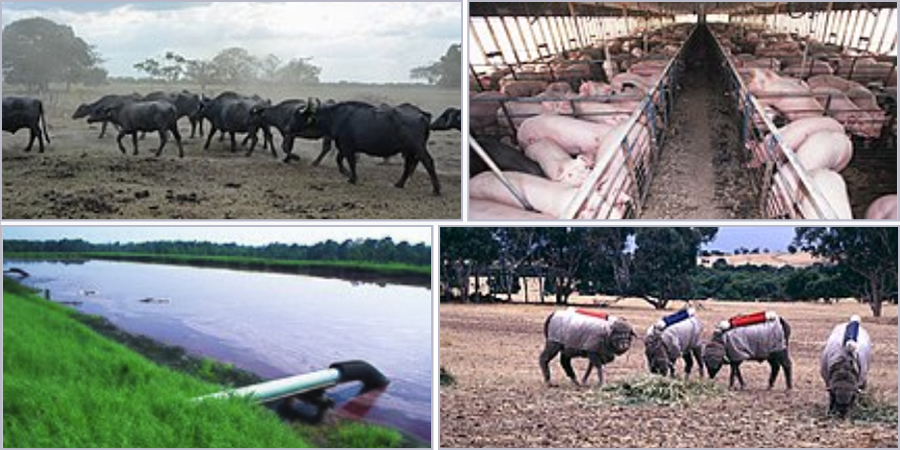
A researcher told a group of Iowa, US farmers on June 29 that concentrated livestock production is putting their health at risk and endangering the planet.
Researcher Elise Pohl, who works in public health and holds a master's degree in global public health from Queen Mary University of London, told attendees of an Iowa Farmers Union meeting there are health implications for livestock producers, people surrounding animal production sites and around the globe due to emissions from concentrated animal feeding operations (CAFOs).
Pohl believes biodiversity is a driving factor in her research. When asked about what drives her to continue to work in this area, Pohl responded: "The massive loss of biodiversity that we see and soon that's going to be us, or it is us, with heat domes, this is really about extinction."
"A CAFO is a specific type of large-scale industrial agricultural facility that raises animals, usually at high-density, for the consumption of meat, eggs, or milk," according to the Center for Disease Control and Prevention.
The United States has more than 25,000 CAFOs while Iowa is home to more than 4,000 CAFOs. One large CAFO can produce 1.6 million tonnes of waste annually.
Pohl's dissertation, which has been peer reviewed but is yet to be published, is based on information collected from 2016 to 2022. It included studies in six US states — Washington, Nebraska, Wisconsin, Missouri, Illinois and North Carolina — and included dairy cattle, beef cattle and swine CAFOs.
She said research shows that people working in CAFO sites risk respiratory conditions, campylobacteriosis and cryptosporidiosis infections, both causes of diarrhea, and symptoms such as headaches, nausea, muscle pain, burning eyes and exposures to MRSA and MDRSA.
Studies also have found that residents in regions with a high livestock density may be at higher risk for respiratory conditions and symptoms, allergies, uterine cancer, all-cause mortality, neonatal mortality, multi-morbidity mortality, anemia, tuberculosis and low birth weight.
Globally, Pohl said CAFO sites pose a potential threat to public health due to risks antimicrobial resistance, climate change, risks of MRSA, MDRSA and tuberculosis, as well as breakouts of diseases like avian influenza.
Atmospheric and airborne emissions of CAFO waste include ammonia, methane, endotoxins, nitrous oxide, hydrogen sulfide, carbon dioxide, volatile organic compounds, bioaerosols, dust and particulate matter, Pohl reported.
"In such enormous quantities, waste has significant emissions," Pohl said. "Not only in the facility and on site of the CAFO, but also as all of you know, entering nearby communities and permeating neighborhoods, homes, schools, hospitals, churches, indoor and outdoor recreation areas and into the atmosphere."
The waste the emissions come from, typically spread on fields as fertiliser or discharged into waterways, is made up of manure, urine, blood, ammonia, antibiotics, disinfectant cleaning chemicals and feedstock pesticides, among other substances.
During Pohl's session with the Iowa Farmers' Union, she also briefly mentioned methane production contributing to climate change.
"We know what's happening with climate change," Pohl said. "There's just so many health impacts from climate change anyway."
In addition to posing potential health risks through air, CAFOs have been a discussion point regarding water safety.
National Pollutant Discharge Elimination System (NPDES) permits are required for facilities planning to send waste to federally regulated waterways, though the number of federally regulated waterways decreased greatly due to a recent US Supreme Court ruling.
Additionally, the permit process and regulation of the permits has been surrounded by controversy.
- Iowa Capital Dispatch


