


June 29, 2026
Vietnam's shrimp farmers squeezed by rising feed costs and falling farmgate prices
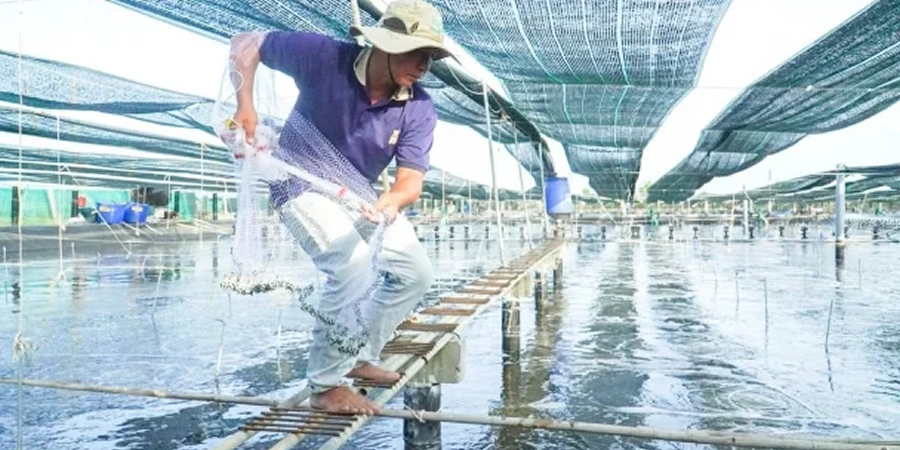
Fuel-driven cost pressures are pushing aquafeed prices up 7-10% even as a seasonal supply glut drives shrimp prices to record lows in the Mekong Delta.
Vietnamese shrimp farmers are facing simultaneous pressure from rising input costs and collapsing farmgate prices, with authorities urging long-term supply contracts and technical adjustments to help producers manage the squeeze.
Tran Cong Khoi, Head of the Aquatic Animal Breeding and Feed Department at the Ministry of Agriculture and Environment's Fisheries and Fisheries Inspection Department, said that elevated fuel prices have driven up logistics and raw material import costs across the aquafeed supply chain. Key feed ingredients including corn, soybeans, fishmeal and wheat have all been affected, with the knock-on impact expected to push aquatic animal feed prices up by 7-10% and raise overall farming costs by a further 5-10%. Prices of chemicals, biological products, microorganisms and broodstock are also trending 10-15% higher due to increased production and transportation costs.
"Rising operating costs pose challenges for both businesses and farmers in balancing capital, managing cash flow, and maintaining production efficiency," Khoi said.
At the farm level, conditions in Vietnam's Mekong Delta are already deteriorating. Ngo Minh Tuan, Director of Tuan Hien Aquaculture Co., Ltd. in Dong Thap province's Tan Phu Dong commune, described sustained price weakness throughout the region's peak harvesting season. Commercial shrimp at 30 pieces per kilogramme is selling at VND118,000-120,000/kg (US$4.63-4.71/kg), while larger size-25 product is fetching around VND128,000/kg (US$5.02/kg). Size-40 shrimp has fallen below VND100,000/kg, trading at just over VND90,000/kg (US$3.53/kg).
Tuan attributed the weakness to low purchasing activity at export processing facilities coinciding with peak harvest volumes, creating an oversupply that has pushed prices down continuously for more than three months. His company has been forced to sell ready-to-harvest shrimp at depressed prices rather than hold stock in ponds, as extended grow-out periods increase both feed expenditure and disease risk.
In response, the ministry is advising farmers and local authorities to develop contingency plans for input cost volatility, optimise logistics and energy use, and adjust stocking densities and production schedules to suit market conditions. Regulators are also directing feed and input suppliers to comply with price declaration requirements under the Law on Prices, while strengthening inspections to deter hoarding and speculative pricing.
Khoi said the most durable solution for shrimp producers is to secure long-term supply contracts for feed, seed and other inputs, which would help stabilise costs and reduce exposure to short-term market swings. Authorities are also encouraging greater use of locally sourced alternative raw materials, including agricultural and food-processing by-products, to reduce dependence on imported feed ingredients.


