


June 29, 2026
USDA FAS cuts Philippines corn and rice output forecasts as El Niño risk and input costs mount
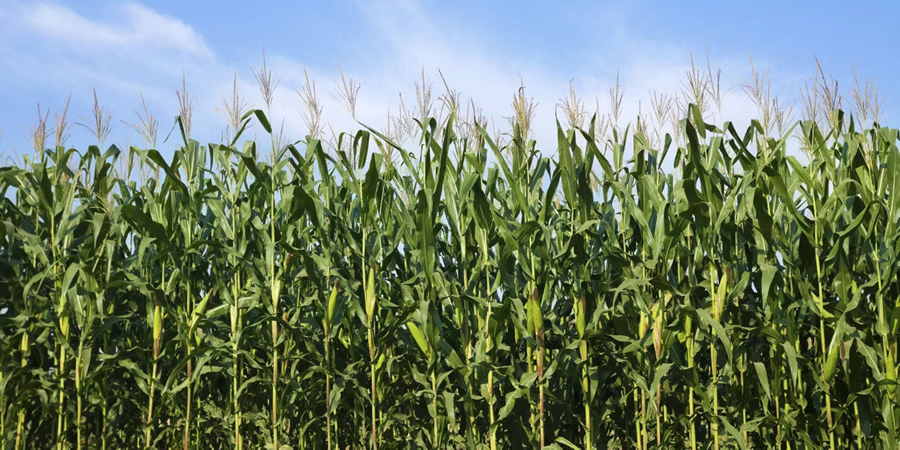
Feed-sector demand is set to push corn consumption to 10.4 million tonnes in MY2026/27 even as domestic production falls, driving a 15% upward revision in import requirements.
The US Department of Agriculture's Foreign Agricultural Service (USDA FAS) has lowered its corn and milled rice production forecasts for the Philippines in Marketing Year (MY) 2026/27, citing rising input costs, significantly reduced dam water levels, and weak planting intentions, while warning that the emerging El Niño could push output further below current estimates.
Corn production is now forecast at 8.10 million metric tonnes (MMT) for MY2026/27, a 2.2% reduction from FAS Manila's previous estimate of 8.28 MMT, with area harvested revised down 3.2% to 2.40 million hectares. The same pressures - elevated fuel and fertiliser costs and tightening irrigation supply from depleted dam reservoirs - apply across both the corn and rice sectors. Yield is forecast to decline marginally to 3.375 MT per hectare from 3.396 MT/ha in MY2025/26.
Despite the production cut, total corn consumption is projected to rise 1.5% to 10.40 MMT, driven by sustained expansion of the broiler, layer, and aquaculture industries. Feed and residual consumption is forecast to increase 4.3% to 6.05 MMT. As of April 2026, broiler inventory stood at 77.1 million birds and layer inventory at 57.3 million birds, both above the same period in 2025. Swine inventory remained at 8.70 million head, still below pre-African Swine Fever (ASF) levels. To bridge the supply gap, corn imports are forecast to rise 15% to 2.30 MMT, with Brazil, Myanmar, Argentina and the United States the leading suppliers. Corn ending stocks are expected to fall 13.4% to 322,000 MT as consumption growth outpaces combined production and import gains.
The Philippine DA is separately proposing to expand the Minimum Access Volume (MAV) for corn to 500,000 MT from the current 216,940 MT, though this proposal has not yet been implemented and was not factored into FAS Manila's MY2026/27 forecasts.
Milled rice production has been revised down 0.8% to 12.30 MMT from a previous Post forecast of 12.40 MMT, with harvested area cut 1.1% to 4.65 million hectares. Urea prices surged more than 55% in June 2026 compared with the same month a year earlier, reducing farmer profitability and limiting planted area expansion. All four major irrigation dams supplying key rice and corn producing regions recorded significant deficits against their Normal High-Water Levels as of 15 June 2026, with San Roque and Angat running 50.74 and 42.50 metres below normal, respectively. Rice consumption is maintained at 17.65 MMT, with imports forecast to increase to 5.20 MMT to offset the supply shortfall, while ending stocks are projected to fall 5.4% to 2.64 MMT.
An El Niño risk adds further downside. PAGASA has placed an 82% probability on El Niño emerging in the May-June-July 2026 season, strengthening to a strong El Niño between October and December 2026 and persisting into early 2027. The Philippine DA has projected a potential 700,000 MT decrease in rice output under a severe El Niño scenario. FAS Manila noted its current forecasts assume prevailing rainfall and dam water levels, and may be revised further downward as conditions develop.
On wheat, the Philippines does not produce the commodity domestically and imports are forecast to rise 2.9% to 7.20 MMT in MY2026/27, driven entirely by higher milling wheat demand. FSI consumption is raised 2.6% to 4.00 MMT, supported by population growth and continued dietary diversification towards bread, noodles and pasta, with the CPI for flour and bakery products reaching 136.1 in April 2026 from 132.8 in July 2025. Feed wheat use is maintained at 3.15 MMT, sustained by poultry, aquaculture and pet food industry growth, though the volatile price relationship between feed wheat and corn throughout MY2025/26 - during which feed wheat lost its price advantage over corn for extended periods - is expected to moderate feed wheat demand and lead millers to continue adjusting formulations based on relative prices. The United States supplied more than 79% of milling wheat imports in the July 2025 to April 2026 period.
- USDA FAS (GAIN Report RP2026-0017)


