


June 28, 2024
Seminar in Rwanda highlights need for stronger China-Africa partnership in agricultural modernisation
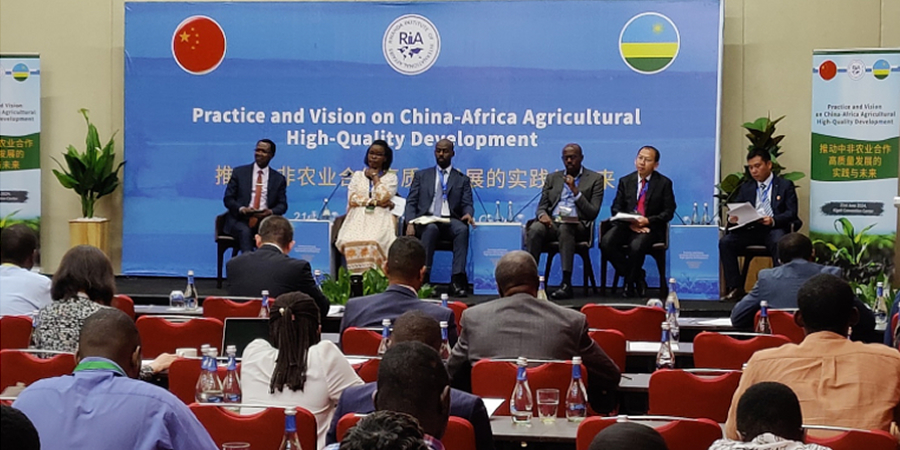
A seminar on China-Africa agriculture development was held on June 21 in Rwanda, with participants emphasising the need to strengthen partnership with China in agricultural modernisation aimed at addressing the challenge of low food production on the African continent.
The one-day event in Kigali was organised by the Rwanda Institute of International Affairs (RIIA), in collaboration with the Chinese Embassy in Rwanda, themed "Practice and vision on China-Africa agricultural high-quality development: Food security, improve added value and facilitate trade of agricultural products."
Speaking at the opening, Ildephonse Musafiri, Rwanda's minister of agriculture and animal resources, said there is a need for more food in both Rwanda and Africa. He spoke of the need for healthy diets and a sustainable way of food production and noted that partnerships with China can be an opportunity to address the challenge of low food production on the continent.
Musafiri also called on China to make more investments in Rwanda's agriculture, saying the sector remains open for investors across all the value chain.
The meeting discussed important strategies that can improve Africa's agricultural productivity, food security and trade.
Ma Youxiang, Chinese vice minister of agriculture and rural affairs, said in a video message that food security and agricultural development have been priorities for both China and Africa and remain so under various collaboration deals.
Chinese Ambassador to Rwanda Wang Xuekun noted that developing agriculture is essential to people's lives and national growth. "Modernised agriculture is no longer something like subsistence farming. It requires efforts from all sectors of the society and integration of labor, capital, technology, and industry chain," he said, pointing to a need for a coordinated national strategy and policy, innovative technology and scientific approach, extended value chain along with boosted investment and unimpeded trade.
Africa remains a net importer of food despite having 60% of the world's uncultivated arable land, with an import bill of US$35 billion a year.
Experts believe most of the imported food could be produced locally, creating much-needed jobs and incomes for youth and smallholder farmers.
Ismael Buchanan, chief executive officer and founder of the Rwanda Institute of International Affairs, said "working together and sharing best practices would help address the challenges in the agriculture sector."
- Xinhua


