


June 27, 2023
Aquaculture producers worldwide vulnerable to environmental change, study finds
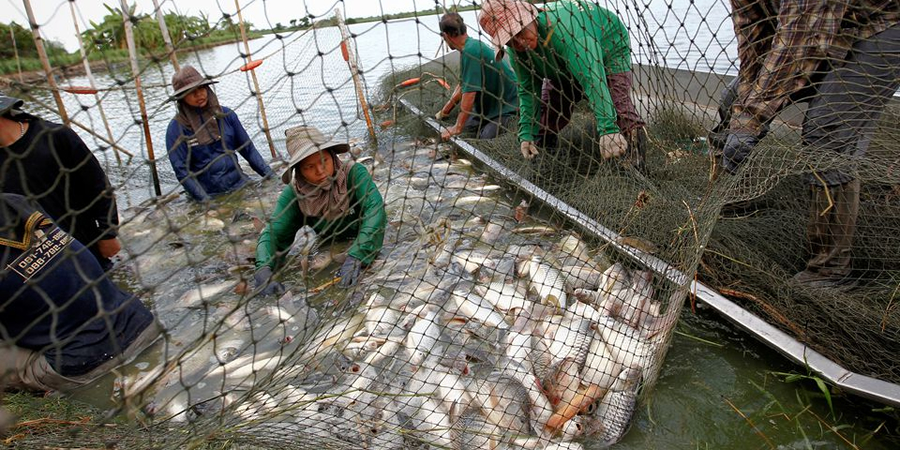
A study has revealed that many of the world's largest aquaculture producers are at high risk from human-induced environmental change, particularly in Asia, Latin America, and Africa, where countries with the lowest capacity for adaptation are located, Phys.org reported.
The study, titled "Vulnerability of Blue Foods to Human-induced Environmental Change" which examined global "blue" food production encompassing capture fisheries and aquaculture, disclosed that over 90% of such production faces significant risks from environmental change. Notably, leading countries in Asia and the US are projected to encounter the greatest threats to their production.
The authors of this comprehensive research conducted the first-ever global analysis of environmental stressors affecting the quantity and safety of blue foods worldwide. They ranked countries based on their exposure to key stressors, examining a total of 17 factors including algal blooms, sea level rise, changing temperatures, and pesticide exposure.
Ben Halpern, co-lead author and professor at UC Santa Barbara and director of the National Center for Ecological Analysis and Synthesis, said that environmental stressors transcend national borders, as they are carried by air, water, species, and humans, connecting diverse ecosystems.
Published in Nature Sustainability, the report is part of the Blue Food Assessment (BFA), a global initiative aimed at informing the future sustainability of aquatic food.
In addition to climate change, the study underscores the prevalence of highly vulnerable blue food production systems across all continents, including major producers such as Norway, China, and the United States. It also highlights the need for a deeper understanding of the complex stressors causing environmental change.
Ling Cao, co-lead author and professor at the State Key Laboratory of Marine Environmental Science at Xiamen University, said that our comprehension of the interconnectedness of environmental stressors and their adverse effects on the production and safety of blue foods is still limited.
The research identifies species invasion, inland eutrophication or algal blooms, ocean warming, and sea level rise as the primary threats to blue food production in the US, with freshwater and marine fisheries facing disproportionately high risks.
China, being the largest producer of blue food, exhibits a high vulnerability of its freshwater aquaculture to inland eutrophication and severe weather events, according to the study's findings.
- Phys.org


