


June 26, 2026
Norwegian initiative using gene-editing tech to identify genetic mechanisms behind sea lice resistance
A Norwegian research initiative is using CRISPR gene-editing technology to identify the genetic mechanisms behind sea lice resistance, with the goal of improving Atlantic salmon health, welfare and sustainability.
Sea lice remain one of the most significant biological and economic challenges facing the Norwegian salmon farming industry. Researchers now believe that part of the solution may lie within the salmon's own genetics.
The CrispResist project, funded by the Norwegian Fisheries and Aquaculture Industry Research Fund (FHF), is investigating the genetic basis of natural resistance to sea lice using CRISPR-Cas9 technology. The research brings together scientists from Mowi Genetics, the Institute of Marine Research and Nofima to better understand how salmon respond to parasite infestations and how that knowledge could be applied to future aquaculture production.
Sea lice are estimated to cost the seafood industry more than US$721 million annually through production losses, treatment costs and reduced fish welfare. They also pose a risk to wild salmon populations.
At Mowi's broodstock facility in Tveitevågen on Askøy, researchers collect eggs and milt that form the starting point for the project. Fertilised eggs are then transferred to the Institute of Marine Research's facility in Matre, where CRISPR technology is used to investigate the function of specific genes involved in immune responses and parasite resistance.
According to Matt Baranski, Head of Genetics at Mowi Genetics, the project represents a shift toward understanding the biological mechanisms behind resistance rather than relying solely on treatments.
One of the most promising aspects of the research comes from Pacific salmon species such as coho and pink salmon, which are known to eliminate sea lice shortly after infestation.
"We know that Pacific salmon have a natural ability to get rid of lice in a short time," explained Tone-Kari Østbye, senior researcher at Nofima.
Unlike Atlantic salmon, these species rapidly activate immune cells at the site of infection, preventing lice from establishing themselves. Researchers have identified approximately 40 candidate genes that may play a role in this response.
CRISPR is being used to determine which of these genes are involved in resistance. The knowledge gained could later support selective breeding programs, vaccine development or, potentially, future gene-editing applications.
"We are using CRISPR as a research tool to find out which genes are important in this response," said Østbye. "Knowledge of which genes control lice resistance can be useful in breeding, vaccine development or the possible use of gene editing in the future."
Sterility and environmental safety
Anna Wargelius, Research Director at the Institute of Marine Research, has led gene-editing research in salmon for more than a decade. Her team has successfully switched off genes required for the development of reproductive cells, producing fish that do not reach sexual maturity.
According to Wargelius, sterile salmon could significantly reduce the risk of genetic interaction between escaped farmed salmon and wild populations. Sterility may also improve fish welfare by preventing the health issues often associated with early sexual maturation in farmed salmon.
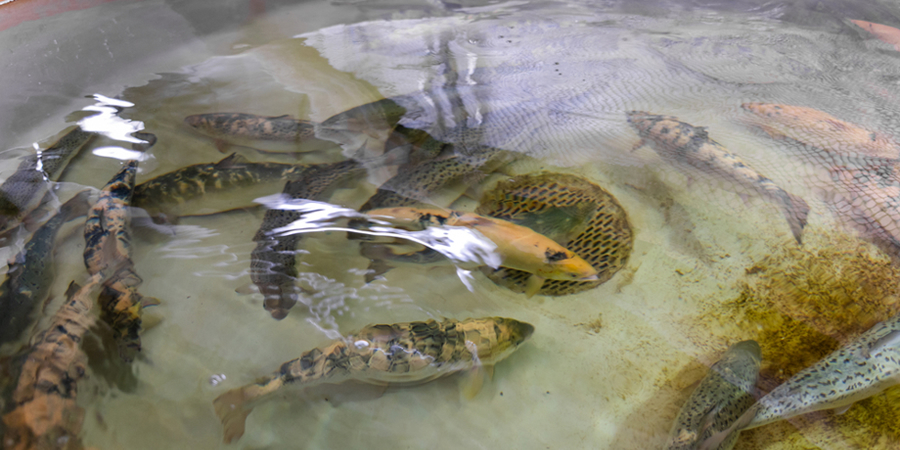
To verify successful gene editing, researchers use an albino marker gene that causes the fish to develop a yellow coloration.
"The yellow color serves as visible proof that the gene editing has worked," Wargelius explained.
Despite rapid scientific progress, commercial application remains uncertain.
In Norway and the European Union, gene-edited organisms are generally regulated as genetically modified organisms (GMOs), even when no foreign DNA is introduced. This subjects gene-edited fish to strict approval requirements under existing legislation.
Regulatory approaches differ globally. Countries including Japan, Australia, Canada and the United States have adopted more flexible frameworks for certain gene-edited organisms that do not contain foreign genetic material.
Researchers caution that regulatory uncertainty may influence how quickly these technologies can be adopted in European aquaculture.
For the salmon industry, the long-term objective is to move away from reliance on mechanical and chemical sea lice treatments toward more sustainable biological solutions.
Baranski emphasised that the project is not primarily focused on creating commercial gene-edited salmon. Instead, the immediate goal is to understand the genetic basis of resistance and use that knowledge to strengthen natural biological defenses.
The findings could eventually be incorporated into conventional breeding programmes, allowing producers to select fish with greater natural resistance to sea lice while improving fish welfare and reducing treatment requirements.
FHF has invested US$7.74 million) in the project on behalf of the aquaculture industry, but researchers stress that the work remains at an early stage.
Even if resistance genes are successfully identified, widespread commercial use will depend on scientific validation, regulatory approval, industry acceptance and consumer confidence.
Nevertheless, researchers believe the knowledge generated could fundamentally change how sea lice are managed in the future.
- Aquafeed.com


