


June 23, 2026
Indonesia eyes 1.3 million cattle integration in palm oil estates to close 400,000-tonne meat deficit
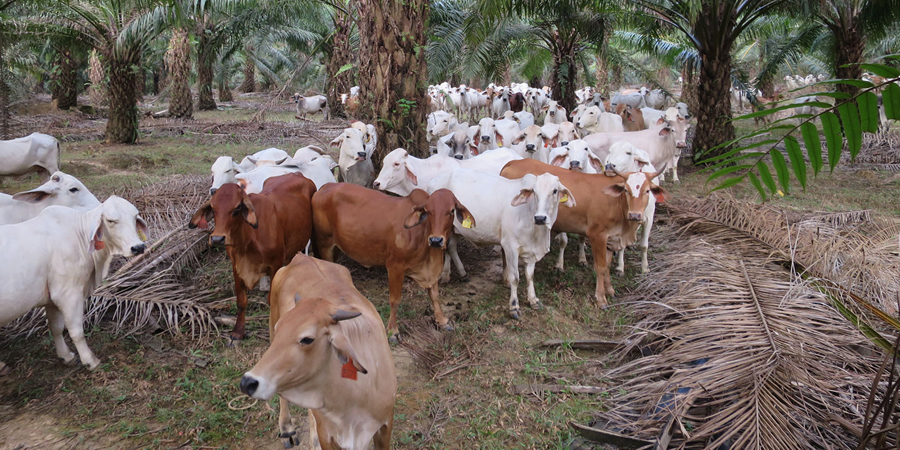
Deputy Coordinating Minister Hanif Faisol Nurofiq says the palm oil-cattle integration model could meet national beef needs if scaled across Indonesia's 17 million hectares of oil palm plantations.
Indonesia's Deputy Coordinating Minister for Food, Hanif Faisol Nurofiq, has highlighted the integration of cattle farming within oil palm plantations as a strategic solution to the country's national meat deficit, estimating the model could support up to 1.3 million cattle if applied across Indonesia's oil palm estate base.
Nurofiq made the remarks during a review of the Palm Oil-Cattle Integration System (SISKA) programme at a PT Buana Karya Bhakti plantation in Tanah Bumbu Regency, South Kalimantan, on 19 June. He said Indonesia's annual beef requirements stand at approximately 800,000 tonnes, while domestic production reaches only around 400,000 tonnes, leaving a shortfall currently met through imports.
At the PT Buana Karya Bhakti site, the cattle herd has grown from an initial 300 head to nearly 1,500 head across nearly 16,000 hectares of plantation. Nurofiq said that with a ratio of approximately one cow per 13 hectares, South Kalimantan's roughly 250,000 hectares of suitable oil palm area could support around 20,000 cattle - enough to help address the province's current slaughter cattle shortfall of more than 20,000 head, against local demand of 56,000-57,000 head and current production capacity of only around 33,000 head.
Nationally, Nurofiq said Indonesia has more than 17 million hectares of oil palm plantations. On the basis of one cow per 13-15 hectares, the national integration potential is estimated at around 1.3 million cattle. He said the presence of cattle within plantations also delivers productivity benefits for the palm oil sector, reducing weed management costs by 50-70% while livestock manure supports soil fertility and oil palm growth. A rotational grazing system, moving cattle daily between zones, is used to limit land degradation.
The government said it will hold further discussions with the ministries of agriculture and trade to formulate regulations and build a sustainable business climate for the SISKA programme, in line with Presidential Instruction No. 14 of 2025 on food, energy and water self-sufficiency.
- Antara


