


June 23, 2026
Ingham locks down chicken farms in Western Australia following bird flu cases
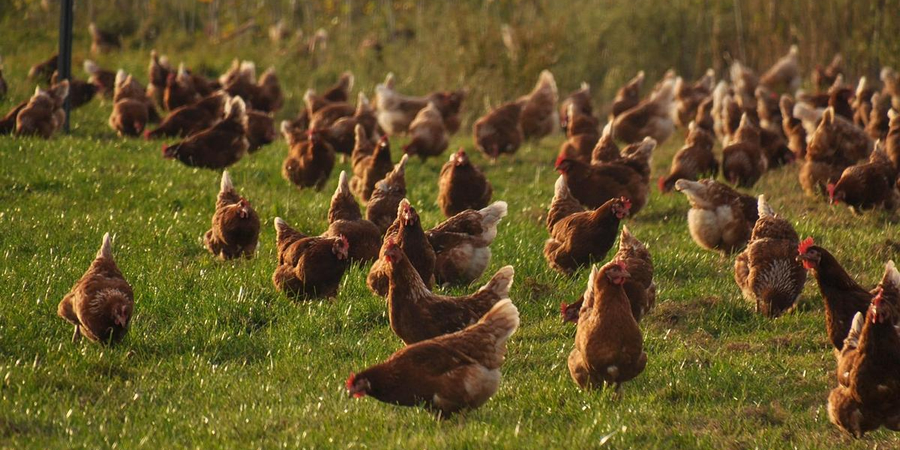
Poultry giant Ingham's locked down chicken farms in Western Australia after at least two cases of H5N1 bird flu were confirmed on the state's remote south coast and authorities raced to work out whether the virus is spreading nationwide through vulnerable wildlife.
Federal Agriculture Minister Julie Collins on June 22 confirmed a northern giant petrel found near Esperance was the second case of avian influenza, just days after another seabird found on a nearby beach became the first known case of the disease that has swept across most of the rest of the world.
A skua found sick on a beach near Esperance in WA is the first Australian case of the deadly H5N1 variant.
The arrival in Australia of the strain, which has damaged poultry and livestock industries and torn through wild bird populations worldwide, prompted Ingham's to lock down its West Australian operations and put the nation's dairy industry on high alert.
In a statement to the Australian Securities Exchange, Ingham's said it was moving to a state of "heightened biosecurity vigilance" and preventing all non-essential access to west coast farms and processing operations in a bid to protect its flock.
The company's West Australian operations are scattered around Gingin and Mogumber, north of Perth, about 700 kilometres north of where the two infected seabirds were found.
The H5N1 strain of the virus has already spread through bird populations on every other continent, killing hundreds of millions of animals and wreaking havoc on the agricultural sector, including dairy.
Premier Roger Cook said his state was preparing for the worst and warned its vast coastline was uniquely exposed to migratory birds that could carry the virus.
Federal Environment Minister Murray Watt said the strain's arrival in Australia was not unexpected but still posed a risk for the country's agricultural sector. The H5N1 virus can also infect some mammals, including cows.
"We are the only continent in the world that, until now, has not had this strain on our shores and ... that has given us time as a country to ensure that we are as well-prepared as we possibly can be," he said.
"We don't underplay the threat that this poses to wildlife and our agriculture sector in Australia should this become a wider outbreak."
State and territory environment ministers met to discuss the outbreak, while Collins said departmental staff in WA were investigating whether bird flu had established a firm foothold.
"We are working to determine whether or not the H5 bird flu has established in the wildlife or established in Australia, other than these two isolated birds," she said.
Collins said while Australia had successfully contained a different variant of bird flu before, the H7 virus, the H5N1 variant posed a much bigger problem for the nation's agricultural sector.
"We do know that the H5 virus is much harder to eradicate if it gets into our agricultural system," she said.
There was no evidence to suggest the virus had spread to other populations yet and there was no current danger to Australians eating chicken or eggs.
A further 16 sick or dead birds had been reported to WA authorities over the weekend, which were being tested for the virus.
Australian Farmers Federation president Hamish McIntyre, who supplies chickens to Ingham's from his farm in south-east Queensland, warned that a localised outbreak could reduce supply of chicken meat and eggs in some cities.
"If it got into our egg producing flocks and our meat chickens, we will have to cull those animals and isolate those sheds. It means fewer products available from an egg or a chicken meat point of view," he said.
McIntyre said the industry had spent years preparing for the potential of an outbreak and learnt from the responses of other countries.
He said the dairy industry would likely prove more resilient to the virus, which in most cases does not kill cattle, and could temporarily reduce milk production of sick cows.
Australian Dairy Farmers president Ben Bennett said the risk to local dairy herds remained low.
"While global experience tells us it is possible for the disease to transmit into dairy herds, this has been restricted to the United States, nowhere else," he said.
Some of Australia's native bird population, including the black swan, are extremely vulnerable to the virus and experts warned the virus could decimate local populations if it spreads north to Perth.
- Financial Review


