


June 23, 2026
Indonesia's WMU targets 500,000-hen cage-free flock by 2027 in Southeast Asia expansion
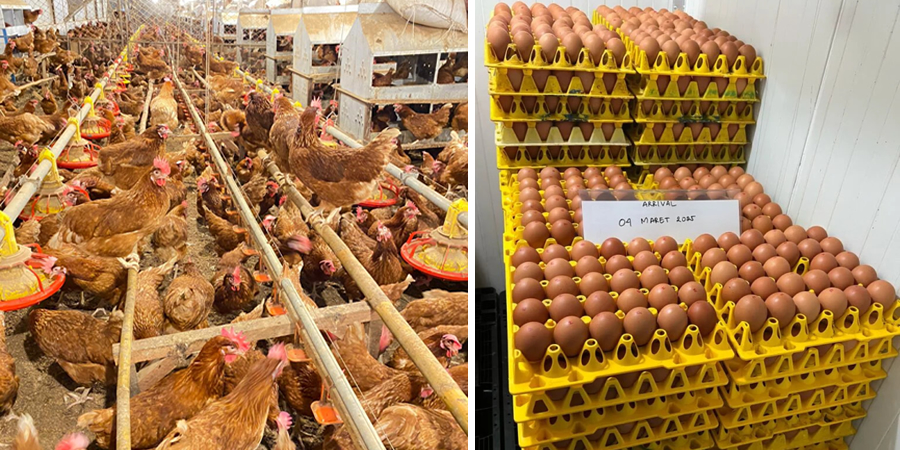
The publicly listed poultry producer is scaling up from 200,000 laying hens as demand from hotel, restaurant and foodservice customers continues to grow, alongside a planned retail brand launch.
PT Widodo Makmur Unggas Tbk (WMU) is expanding its cage-free egg production capacity from approximately 200,000 laying hens to 500,000 birds, with completion targeted by 2027, in a move that could position the company as the largest cage-free egg producer in Southeast Asia.
Tri Mahawijaya Herlambang, Marketing Director of WMU, said growth in the cage-free egg market in Indonesia is being driven not only by multinational food companies but also by a growing number of domestic businesses beginning to source cage-free eggs. WMU currently markets its cage-free eggs through a business-to-business model serving catering companies, hotel chains, restaurants and quick-service restaurant operators, and is preparing to launch its own cage-free egg brand for the retail market.
"This expansion is not intended to replace existing markets, but rather to create a new, higher-value segment while responding to increasing consumer interest in sustainability, food safety, and animal welfare," said Mahawijaya. "As a publicly listed company, WMU is also committed to sustainability. Implementing animal welfare practices through cage-free farming is one tangible example of that commitment."
Sandi Dwiyanto, Sustainable Poultry Programme Manager at Lever Foundation, said more than 2,000 food companies worldwide have committed to sourcing 100% cage-free eggs, including major international brands operating in Indonesia such as KFC, Burger King, Hyatt, Marriott and Swiss-Belhotel International. Domestic companies including Super Indo, Ismaya Group and Bali Buda are also adopting or transitioning towards cage-free egg sourcing policies.
Consumer research by GMO Research found that 55% of Indonesian consumers prefer purchasing from brands that use cage-free eggs exclusively, while 72% agreed that eggs used by food companies should come from farms implementing animal welfare standards. A multi-country study by the European Food Safety Authority found that cage-free egg farms have up to 25 times lower risk of contamination from certain Salmonella strains compared with conventional cage systems.
WMU's expansion is also aligned with Indonesia's Minister of Agriculture Regulation No. 32 of 2025 on Animal Welfare Implementation.
- WMU / Lever Foundation


