


June 21, 2023
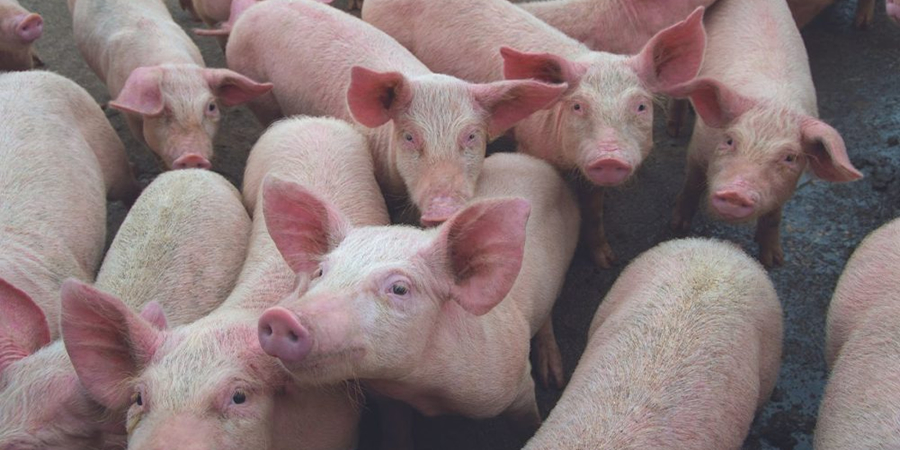
The Philippines continues to witness a spate of African swine fever (ASF) cases, with its situation — to a certain degree — affecting how other local livestock productions (specifically, poultry) are conducted in some areas.
Confirmed and potential cases were reported in June in the following developments:
- Victorias City in northern Negros Occidental province reported nine ASF cases on June 6;
- Two barangays (small territorial and administrative districts) in Hinigaran, a municipality in Negros Occidental, had been placed under lockdown where pig deaths were found on June 7;
- Over in Dumaguete City, Negros Island, southern Philippines, authorities began monitoring and surveillance for ASF following one case reported in barangay on the city outskirts;
- Veterinarians in Malay town, Aklan province, confirmed an ASF in Barangay Caticlan. ASF infection in the province increased to cover nine of 17 towns.
Taking into consideration ASF outbreaks in the Central and Western Visayas regions, including Negros Occidental, Negros Oriental and Aklan, the United States Department of Agriculture (USDA) estimated that the Philippines' pork production will reach 925,000 tonnes this year, a 5.13% drop from its previous forecast of 975,000 tonnes.
As of June 1, the Philippines Bureau's of Animal Industry (BAI) reported active ASF cases in 15 provinces, mainly confined to the Visayas region (with few cases in Luzon and Mindanao).
Last year, the Central and Western Visayas regions became the first and third-largest pork producers in the Philippines following swine inventory losses in other parts of the country, according to the USDA. Central Visayas, which accounted for 13.2% of overall pork output, experienced a 7% increase to 2.78 million tonnes in 2022, BusinessWorld reported. Pork output from Western Visayas rose by 12.4% to 2.61 million tonnes.
An unfortunate event, in light of ASF outbreaks in the Philippines, is errant traders trying to get hog producers to sell animals at lower prices following a suspected ASF case in the municipality of Hamtic, Antique province. Provincial Veterinary (ProVet) Public Health Division chief Dr. Marco Rafael Ardamil said in an interview on June 14 that traders or middlemen were reportedly attempting to buy live weight for only ₱70 (US$1.25) per kilo or half the price of the ₱130-140 (US$2.33-2.50) buying price.
For now, ASF has not appeared to throw the Philippines into a frenzy over meeting local pork demand through imports — in the manner that has been seen in China. The USDA had, for instance, lowered its projection for pork imports to 500,000 tonnes from an initial forecast of 525,000 tonnes. According to BAI data, pork imports declined by 17% to 114,820 tonnes in the first quarter of 2023. The Philippines has increased frozen inventories to support the supply chain and started rebuilding stocks in line with historical precedent, BusinessWorld reported.
Last April, Ruth Miclat-Sonaco, director of the Department of Agriculture's National Livestock Program (DA-NLP), expressed hope that the Philippines' would overcome ASF's impact in one to two years. However, lapses in implementing measures and protocols were blamed for the disease's spread.
Another factor behind ASF's movement in the Philippines is a lack of accountability from the parties concerned. For example, Hinigaran mayor Nadie Acreo blamed hog producers for hiding "the fact that there were (pig) deaths" in Anahaw after seven ASF-positive pigs were found to have come from the barangay in Hinigaran.
Responses and actions
Perhaps, out of concern for local farmers' income being affected, the local government and a private hog producer organisation in Aklan province have called for a temporary switch to poultry production. Such a move still needs financial and technical support for at least 341 affected households, according to Rappler.
Furthermore, whether the shift to poultry production may help farmers stabilise their income, is another issue warranting serious thought. The Philippines' poultry market has already been hit by an oversupply, leading to falling revenues and broiler farmers urging the Department of Agriculture to slow down the import of frozen chicken meat. While the shift can provide local authorities breathing space to implement best practices to push back ASF, how developments in Aklan's poultry production are (in any way) influenced by the Philippines' poultry supply glut is a matter that requires scrutiny. Smaller-scale producers may eventually shut down in the end, which may facilitate the consolidation of bigger players in local pig/pork production.
A more viable solution would be insurance benefits — which local government units (LGUs) in Negros Occidental are preparing — for ASF-affected hog producers. According to Insurance Business, the government in Negros Occidental had reserved ₱10 million (US$180,000) as cash indemnification for backyard producers, while those in Bago City can get a share of ₱16 million (US$285,000) in cash aid. For its part, Aklan, through its provincial board, has permitted the use of funds from a 'calamity fund,' that would provide ₱7 million (US$125,538) in financial assistance for affected hog producers.
As for industry consolidation, although the DA had revealed the Integrated National Swine Production Initiatives for Recovery and Expansion programme in February 2021 to drive calibrated repopulation and production expansion through farm clustering and consolidation, the programme has ran into an obstacle. DA official Ruth Miclat-Sonaco told the Philippine Daily Inquirer in April that there were unsuccessful attempts to obtain ₱33 billion to implement the initiatives. The fund would have helped the Philippines' swine industry get back 25% of its breeder base.
On a side note, the BAI has now recommended the Vietnam-produced AVAC ASF vaccine, with a letter of recommendation sent to the Philippines' Food and Drug Administration for approval. The vaccine had shown safety and efficacy in clinical trials held across six farms in Luzon. It should be noted that data concerning the vaccine has yet to be reviewed by the USDA. Therefore, it could be premature to assume AVAC would turn the tide against ASF in the Philippines.
Against the backdrop of ASF vaccines nearing approval in Vietnam and thus, a possible reversal of an animal health crisis, there is no guarantee that AVAC can help prop up the Philippines' pork production to a good level this year. In fact, the USDA is skeptical of the substantial impact an ASF vaccine would have on 2023 production.
Animal health intervention is possibly best assured with coordinated government actions across the Philippines (the COVID pandemic can be a strong example for this context, albeit being a human health matter). According to Alfred Ng, vice president of the National Federation of Hog Farmers Inc., the Philippines has trouble getting LGUs to cooperate.
"We have seen in the past, some LGUs are cooperative while others have their own way of managing outbreaks," Ng told the Philippine Daily Inquirer. "That's the reason why there is a breakdown and sometimes, ASF continues to spread. On one hand, some LGUs may think it's not economically viable to cull all animals, especially if the animals appear to be healthy."
Nevertheless, some progress is apparent when it comes to coordinated government actions. The Inquirer reported this month that the government has established the Special Task Force on Animal Health to combat the spread of animal transboundary diseases.
The task force will coordinate with the Department of the Interior and Local Government (DILG) to develop solutions that harmonise the guidelines of national and local government units.
- Terry Tan, eFeedLink


