


June 18, 2026
Increased temperatures could drive corn pest's geographic range, scientists found
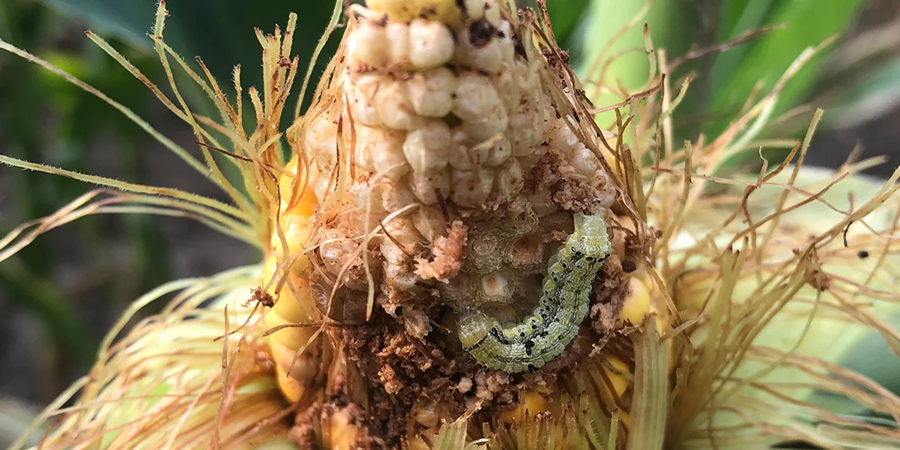
Climate change could accelerate the spread of Blissus leucopterus, a corn pest that researchers say poses growing risks to crop production, food security, and agricultural livelihoods in Mexico.
A study by scientists from UNAM and the INIFAP found that rising temperatures and climate variability could expand the pest's geographic range and generate economic losses exceeding US$1.2 billion by 2070.
The findings were published in the study, "A Threat to Food Security in Mexico: Climate-Driven Expansion of Corn Devastating Pest and Its Economic Impact," authored by Bernardo Bastien and Carolina Ureta of the Institute of Atmospheric Sciences and Climate Change (UNAM), together with Jesús Cruz López and Luis A. Gálvez-Marroquín, researchers at INIFAP.
The specialists said the study is among the first in Mexico to integrate climate, ecological, and economic models to evaluate the potential impact of an agricultural pest under future climate scenarios. Using ecological niche modeling and climate projections for 2030, 2050 and 2070, the team assessed which regions could become more vulnerable to the expansion of Blissus leucopterus.
Climate change is already altering agricultural systems around the world. In addition to increasing the frequency of droughts, floods and changes in rainfall patterns, it is affecting the behavior, distribution and population dynamics of agricultural pests. Higher temperatures and greater climate variability can create favorable conditions for insects and pathogens to reproduce more quickly, survive in new environments and expand into previously unsuitable regions.
Researchers pointed to examples from other countries that illustrate this trend. In Chile, the spotted-wing drosophila (Drosophila suzukii) has become more aggressive as warmer temperatures support its development, causing losses in cherry and blackberry crops. Likewise, the fall armyworm (Spodoptera frugiperda) has spread beyond the Americas and now affects corn production in Africa, Asia and Oceania.
For Mexico, the issue is particularly important because corn plays a central role in the country's economy, food system, and cultural identity. The study found that climate suitability for Blissus leucopterus could increase from 12% of Mexico's territory today to between 15% and 16% by the middle of the century. As a result, regions that currently face limited exposure to the pest could become increasingly vulnerable.
The researchers identified Oaxaca, Veracruz, Chiapas, and Tabasco as areas of concern. In these states, the pest can complete reproductive cycles in as little as 15 days, allowing populations to grow rapidly. Such short life cycles reduce the effectiveness of conventional insecticide-based control methods because new generations emerge soon after treatments are applied.
The study also warned that the pest could establish itself in parts of Sinaloa, one of Mexico's largest corn-producing states and a major contributor to national food supplies. According to the researchers, the pest's expansion is being driven not only by favorable climate conditions but also by changes in its feeding and reproductive behavior, making management efforts more challenging.
The economic consequences could be significant. The study estimates that corn production losses linked to the pest could reach approximately US$600 million by 2030 and exceed US$1.2 billion by 2070 under high-risk climate scenarios. Researchers calculated that these losses would represent roughly 0.025% of Mexico's gross domestic product.
"In economic terms, this means the country could face losses equivalent to a recurring catastrophic event. However, the study worked under a conservative scenario, since not all associated indirect costs were included, which could further increase the figure," said Olvera.
The researchers compared the potential impact to damages caused by major natural disasters such as Hurricane Otis. While the effects would be felt across the country, small-scale farmers are expected to face the greatest challenges. Many rural households depend on corn both as a source of income and as a staple food crop. In communities with limited resources, crop losses could threaten household food security and economic stability.
Beyond economic and food security concerns, researchers warned that the pest's expansion could threaten Mexico's agricultural biodiversity. The country is recognised as the center of origin and diversification of corn and is home to 59 native corn races developed by Indigenous and farming communities over generations. This diversity contributes to agricultural resilience and supports traditional farming knowledge.
According to the researchers, persistent crop losses could lead some farmers to abandon agricultural activities. Olvera said that climate change, recurring pest outbreaks, and economic uncertainty may contribute to rural migration, affecting local economies and reducing the transmission of traditional agricultural practices.
"Not only agricultural land is at risk, but also cultural practices, forms of social organisation and traditional knowledge that are fundamental for preserving Mexico's agricultural diversity," said Ureta
The study also identified health risks associated with increased pesticide use. Cruz warned that prolonged exposure to agricultural chemicals can cause respiratory problems, poisoning and other health impacts, particularly when protective measures are insufficient.
To address these challenges, the researchers called for stronger public policies and improved access to agricultural pest data. They noted that existing information is often fragmented, limiting the development of predictive models and risk assessments.
Among the recommendations are the creation of monitoring and early warning systems that combine climate, biological, and economic information, as well as expanded phytosanitary surveillance programs and sustainable pest management strategies. The researchers also emphasised reducing dependence on intensive agrochemical use and incorporating traditional farming practices that have proven effective in pest control.
The study concludes that addressing the threat posed by Blissus leucopterus will require a coordinated approach that combines scientific research, public policy, and local agricultural knowledge to strengthen the resilience of Mexico's farming sector as climate conditions continue to change.
- Mexico Business News


