


June 18, 2024
Canadian court upholds decision on salmon farming licenses in Discovery Islands
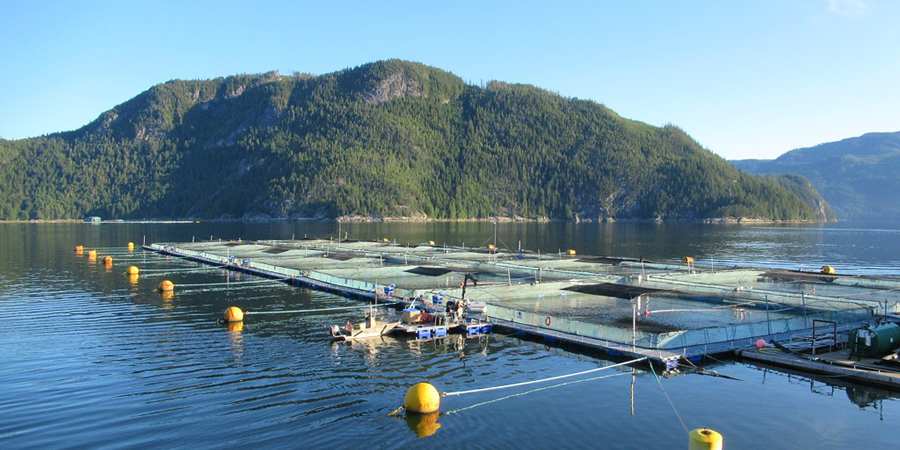
A recent ruling by a Canadian federal court has affirmed the decision not to renew salmon farming licenses in the Discovery Islands, British Columbia (BC), stating that the government adhered to necessary standards in its decision-making process, SeafoodSource reported.
In February 2023, Canada's Department of Fisheries and Oceans (DFO) announced the non-renewal of licenses for 15 open net-pen Atlantic salmon farms in the Discovery Islands. The decision, declared by Joyce Murray during her tenure as Minister of Fisheries, Oceans, and the Canadian Coast Guard, followed extensive consultations with First Nations, industry stakeholders, and other interested parties.
Subsequently, First Nations groups such as Wei Wai Kum and We Wai Kai, alongside salmon farm operators Grieg Seafood, Cermaq Canada, and Mowi Canada West, sought judicial review of the decision. Recently, Canadian Federal Judge Paul Favel ruled that the decision met the duty to consult requirement and did not infringe upon the operators' procedural fairness rights, as reported by the Canadian Press.
The legal proceedings stemmed from a December 2020 announcement by the DFO aiming to phase out ocean-based salmon farming in the Discovery Islands, initially met with opposition and legal challenges. An earlier court ruling in 2022 sent the decision back to the DFO for reconsideration, leading to the 2023 determination not to renew licenses after a subsequent consultation process, which the court found compliant with governmental standards.
Advocates for removing salmon farms from ocean waters, including Wild First and the First Nation Wild Salmon Alliance (FNWSA), welcomed the court's decision as a crucial step toward protecting wild Pacific salmon populations and advancing reconciliation efforts with First Nations throughout British Columbia.
"This decision affirms the federal government's commitment to consult with First Nations across British Columbia in line with the direction set by the Supreme Court of Canada," remarked FNWSA Chair Bob Chamberlin. "The majority of First Nations in the province support the removal of fish farms from our ocean environments."
The DFO's actions align with Canada's Prime Minister Justin Trudeau's mandate to phase out net-pen salmon farming in BC, shifting the industry toward land-based aquaculture. However, local salmon-farming companies argue that transitioning to land-based systems is impractical and economically unfeasible.
During a recent webinar hosted by the Global Seafood Alliance, Amanda Luxton of Mowi Canada West highlighted the challenges of land-based aquaculture, citing higher costs, energy demands, and space requirements compared to traditional net-pen farming.
Luxton said the infrastructure and operational demands of land-based recirculating aquaculture systems (RAS) significantly increase costs and operational complexity, potentially impacting the affordability and accessibility of seafood products.
A report commissioned by the British Columbia Ministry of Agriculture and Food, conducted by Counterpoint Consulting, further underscored the economic challenges of transitioning from net-pen salmon farming to land-based systems in the region.
The report estimated a required investment of CAD 1.8 billion (US$1.3 billion) for such a transition, potentially diverting economic benefits away from local communities due to the need for RAS facilities to be located near densely populated areas.
The next steps in the regulatory landscape concerning salmon farming are anticipated as the DFO continues to navigate consultations and policy adjustments in line with environmental and economic considerations.
- SeafoodSource


