


June 14, 2023
Schothorst Feed Research conducts feed course in Netherlands for international participants
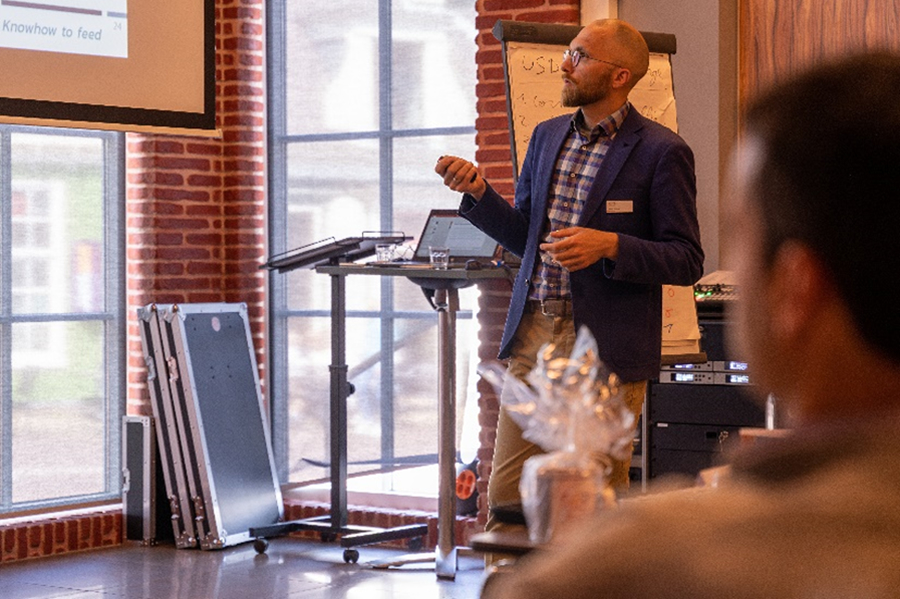
International participants recently attended the Feeds and Nutrition Course organised by Schothorst Feed Research (SFR) in Zaandam, the Netherlands, this month.
In one week, the course offered a full overview of nutrient evaluation, animal requirements, feed and ingredient composition, processing, nutritional management and feed formulation for dairy, poultry and swine.
The course was divided into many different modules. "This setup enables each participant to ‘mix and match' modules, compose their own programme and design their own tailor-made course," said Francesc Molist, R&D manager at SFR.
In each module, SFR experts share their knowledge and expertise. As group sizes are small (10 to 20 attendees), interactive discussions with the course leader are encouraged.
The first modules focused on raw materials used in livestock nutrition (in terms of nutrient composition, digestibility and optimal processing), and diet formulation in relation to the requirements of the target animal.
In other modules, animal species-specific information is provided. The latest scientific research findings were discussed, as well as feed evaluation systems.
"We need to fulfil the nutritional needs of all animal species in all stages of life, and that is quite a challenge," said Molist. "The ongoing genetic progress in performance of livestock animals changes their requirements; we learn more about feed ingredient composition and variation, and new raw materials become available for the feed sector. Continuous updating of feeding values is, therefore, a must." Implications of new insights for practical feeding management on the farm are also a theme in the various modules.
A unique aspect of the course is that the species-specific modules for pigs and poultry were concluded each day with a live feed formulation session conducted by SFR consultants. This provided immediate visibility of the effects of the topics discussed on the animal's ration composition.
In this 12th edition of the course, special attention was focused on hot topics, like animal welfare and environmental impact of livestock and animal nutrition. As an example of these topics, slower growing broilers, laying hens with intact beaks and piglets with intact tails require additional attention.
Furthermore, livestock has an impact on the environment, for example, through the emissions of greenhouse gases and minerals (nitrogen and phosphorus), SFR noted. The livestock industry is therefore encouraged to decrease emissions to the environment. Adaptations of diet composition, or the use of specific feed additives may help to fulfil these demands from the public and policy makers. These modern challenges for the livestock and feed industry were also tackled and discussed in the course.
- SFR


