


June 13, 2023
Aquaculture's integration into sustainable food systems key to future development, says study
A study in the Journal of the World Aquaculture Society argues that the integration of aquaculture into local nutrition-sensitive, circular and sustainable food systems should become the major driver for future aquaculture system development.
The review article summarises the development of aquaculture between 2000 and today, and how the sector developed considering the large differences that exist in system requirements to produce fish, crustaceans, mollusks and seaweed.
According to the study, for aquaculture to fully contribute its share to the production of food for a growing human population and optimise its contribution to society and nature through the responsible use of resources, it must be integrated into local nutrition-sensitive, circular and sustainable food systems.
Written by Verdegem et al., the paper discusses current issues and challenges facing the industry today, including harmful and positive impacts of aquaculture production systems on the environment, society and the ability to produce within planetary boundaries. Finally, it addresses priorities for future aquaculture development.
Fed and extractive (non-fed) aquaculture both need to pay more attention to scaling, site selection and the health of the wider production environment. In terms of land use, aquaculture is more efficient than terrestrial animal production.
Still, water use remains a challenge, the authors say, urging that more attention should be given to water recycling in land-based systems, reducing water consumption and facilitating nutrient recovery and reuse. Future development should focus on making aquaculture climate neutral and on reducing environmental impacts, both inland and at sea.
Aquaculture systems are highly diverse with around 425 species in production, with each able to be cultured in different production systems ranging from extensive to super-intensive and on various scales with a wide range of technologies. Therefore, the authors defined an "aquaculture production system" as a "production environment in which interventions aim to enhance the value and/or the amount of biomass produced, to the benefit of the people and communities organising and executing these actions."
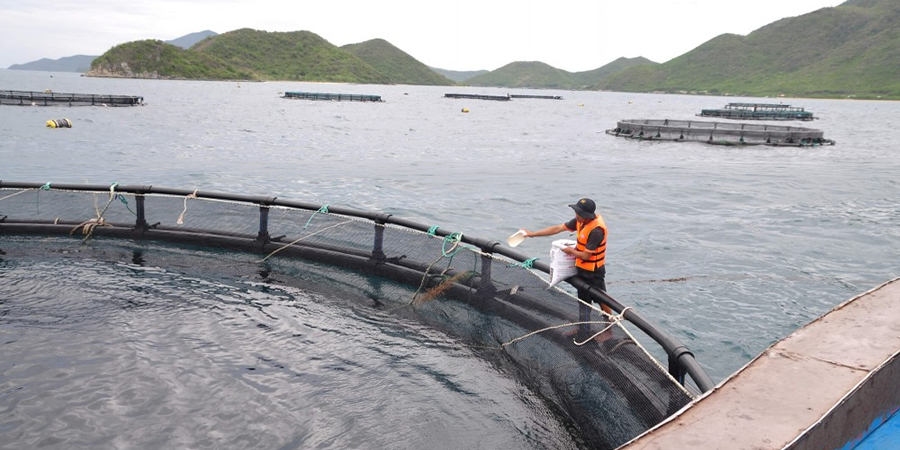
The "interventions" range from stimulating recruitment of desired species to stocking fast-growing strains, protecting against disease, fertilisation, feeding and creating production environments like ponds, rafts supporting hanging or floating ropes or long lines, cages, pens, raceways and recirculating aquaculture systems (RAS) that allow control on resource use efficiency to a higher degree than in natural systems.
"Criteria to judge aquaculture development during the next decade should not focus primarily on global growth, except for extractive species," wrote corresponding author Dr. Marc Verdegem. "The industry found ways to improve its environmental performance during the last decades, and as societal pressure to improve upon environmental performance will increase further, the aquaculture sector will continue to improve its environmental performance."
- Global Seafood Alliance


