


June 11, 2026
Romania's agriculture ministry strengthens cooperation with food safety authority to tackle ASF
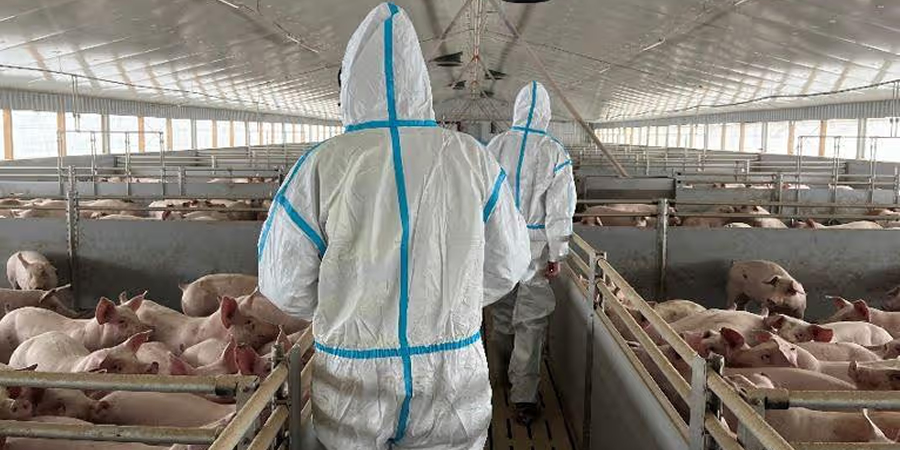
The Romanian Ministry of Agriculture has intensified its cooperation with the National Sanitary Veterinary and Food Safety Authority (ANSVSA) in order to better tackle the threat of African swine fever.
The disease has been affecting the Romanian pig sector since 2017.
The seizure of undocumented swine shipments - along with the vehicles transporting them - is among the measures proposed to combat ASF, acting Agriculture Minister Tanczos Barna said in a recent press conference.
He announced that the National Sanitary Veterinary and Food Safety Authority (ANSVSA) would soon launch a draft emergency ordinance for public debate, giving specialists the opportunity to comment.
"We have worked on a package to combat swine fever. We resumed discussions with hunting associations - on wild boar - and with farmers who operate fattening and breeding units, as well as with ANSVSA," the minister said. "We now have a draft emergency ordinance that will be put into public debate... We tried to introduce new principles, mainly limiting the movement of animals from authorised breeding farms and from household backyard farms. I do not believe anyone in Romania can prohibit backyard pig raising. Starting from this reality, we must find a way to limit movement as much as possible."
The minister considers limiting pig movements within the sanitary-veterinary district - whether from households or registered breeding units - to be a sound measure.
Barna also highlighted the need to eliminate intermediaries and confirmed that the draft ordinance includes the confiscation of transport vehicles and pigs moved without legal documents, a measure he believes will "significantly reduce the risk of (disease) transmission."
Another proposal concerns decentralising decisions to Local and National Disease Control Committees and financing interventions from the Government's Reserve Fund. This would cover hunting-association interventions, carcass removal, and additional subsidies for veterinarians working in outbreak areas.
Tánczos said veterinarians working in outbreak areas should be financially compensated, noting that many have so far received nothing for their additional work.
Also, "when a national emergency decision is taken, the government should allocate funds within a week to finance interventions and reduce risks. The main goal is to create those zones or regions - as ANSVSA calls them - from which we can resume exports to third countries or EU states," the minister said.
At the moment, Romanian vets are on high alert due to the recent first outbreak of ASF in domestic pigs in Hungary. ANSVSA has just announced the immediate activation of a strict set of biosecurity protocols in Satu Mare County (north-west Romania). This decision was made following the validation by the Satu Mare Local Disease Control Center (CLCB) of the Action Plan, developed after Hungarian authorities confirmed the presence of the ASF virus at a pig farm in the immediate vicinity of the border with Romania.
Depending on the evolution of the epidemiological situation in Hungary, these measures could be extended to the entire region bordering Hungary, in order to protect Romanian farmers. In 2025, Romania reported 228 ASF outbreaks in domestic pigs, accounting for the vast majority of all outbreaks across the European Union.
According to statistics, Romania counts around three million pigs, about half of them raised in household farms. Romania ranks 9th in the European Union by the number of pigs, however it is on the last places in terms of density (only 39 pigs / 100 ha of arable land, compared to the Netherlands (940 pigs/100 ha), Belgium (604 pigs/100 ha) and Denmark (522 pigs/100 ha). Actually, a similar low density is also recorded for bovines (less than 15 bovines/100 ha).
Despite efforts and subsidies, livestock numbers have continued to decline over the years, Romania counting in 2025 only 48% of the pigs it had in 2006 right before EU accession and 62% of the bovines it had then. Only the number of sheep and goats increased by almost 46% compared to 2006.
The underdevelopment of the livestock sector keeps Romania in the position of a large meat importer and a big exporter of raw materials such as cereals and oilseeds. A situation which has proven so far difficult to reverse.
- Ministry of Agriculture, Fisheries, Food Security and Nature


