


June 8, 2026
Bangladesh sets $3 billion shrimp export target as sector battles decade-long decline
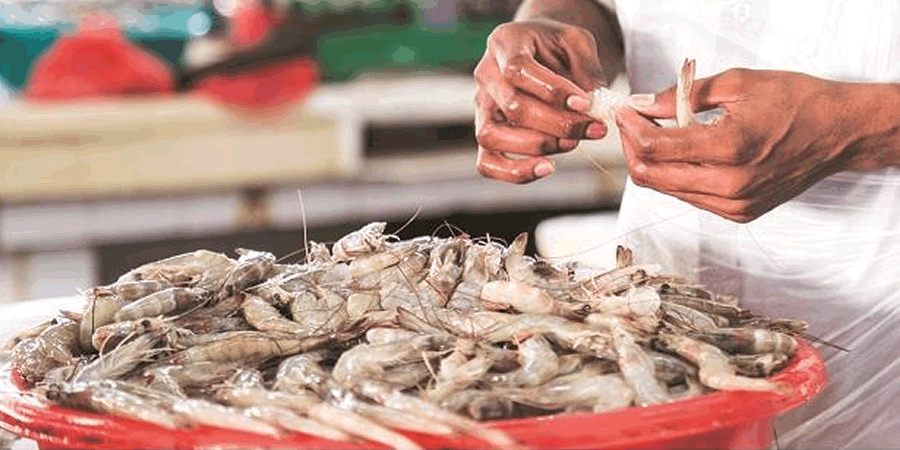
A government-backed strategy paper calls for dedicated Shrimp Economic Zones, intensive aquaculture technology and a shift to value-added processing to reverse a collapse that has seen export earnings fall from nearly $1 billion to below $300 million.
Bangladesh has set a target of $3 billion in annual shrimp export earnings by 2030, as industry stakeholders and a government development authority outline a recovery plan for a sector that once ranked as the country's second-largest export earner but has shed more than two-thirds of its peak export value over the past three decades.
Shrimp export earnings fell to $296.29 million in FY2024–25 from a peak approaching $1 billion in the 1990s, with $448.56 million recorded as recently as FY2016. The sector, long known domestically as "White Gold," still accounts for around 76% of Bangladesh's total frozen fish and shrimp export earnings and supports more than 300,000 direct jobs across approximately 262,000 hectares of cultivation area — the fifth-largest shrimp farming base in the world.
The Maheshkhali Integrated Development Authority (Mida) recently presented a strategy paper to industry stakeholders identifying technology adoption, dedicated Shrimp Economic Zones and value-added processing as the central pillars of any revival. Tanzim Faruq, Mida Member for Port, Fisheries and Marine Affairs, said Bangladesh should follow the lead of China, Thailand and Vietnam in transitioning from traditional to indoor and intensive aquaculture systems, adding that a shift to value-added exports could increase per-kilogram earnings by five times or more.
The productivity gap with competing nations is stark. Bangladesh's average shrimp yield stands at around 400kg per hectare, against approximately 6,800kg in Ecuador, 5,500kg in India and 4,500kg in Vietnam under semi-intensive systems, according to Mida data. Md Tariqul Islam Zaheer, acting president of the Bangladesh Frozen Foods Exporters Association and managing director of Achia Sea Foods Limited, attributed the gap largely to continued reliance on traditional farming methods and the delayed adoption of Vannamei shrimp, which now accounts for more than 80% of global shrimp trade because of its higher yields and lower production risk.
Bangladesh Frozen Foods Exporters Association Adviser Syed M Ishtiaq estimated that modernising at least 30,000 hectares of the existing cultivation base could support annual export earnings of between $2 billion and $2.5 billion. He noted that traditional ponds are typically only one to one-and-a-half feet deep, against a recommended four to five feet, making stock more vulnerable to heat stress and disease.
Mida has proposed locating Shrimp Economic Zones in Khulna, Satkhira, Bagerhat, Cox's Bazar, Maheshkhali, Chakaria and Teknaf. The zones would integrate hatcheries, feed mills, laboratories, processing plants and cold storage, and are intended to facilitate the electronic traceability systems increasingly required by European buyers. Technologies including Recirculating Aquaculture Systems and Biofloc Technology are central to the plan, with Faruq saying adoption could raise post-larvae survival rates above 85%.
Industry representatives also identified high feed costs, expensive electricity, post-larvae supply shortages and weak transport infrastructure as persistent constraints. Zaheer noted that domestic shrimp prices have risen to levels that undercut export competitiveness before processing and freight costs are added. Ishtiaq pointed to the loss of air freight services for post-larvae between Cox's Bazar and the Khulna region, with road transport now taking 10 to 12 hours and elevating stress-related mortality.
- The Business Standard (Bangladesh)


