


June 8, 2026
Chulalongkorn researchers develop cocoa waste supplement that cuts cattle methane emissions and improves meat grade
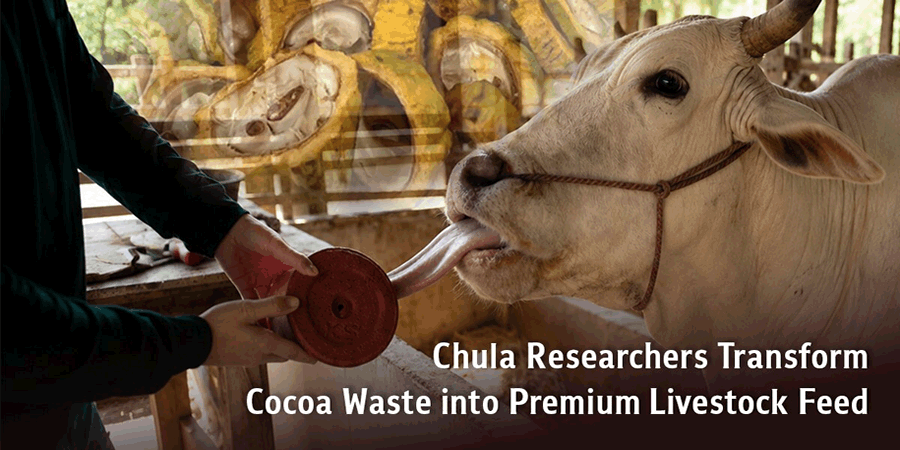
Compounds including theobromine and tannins found in cocoa husks and low-grade cocoa reduced rumen methane by up to 44% in trials while lifting beef cattle to premium A3 and A4 grades and cutting dairy mastitis indicators by more than 70%.
Researchers at Chulalongkorn University in Thailand have developed a livestock feed supplement derived from cocoa waste that demonstrated reductions in methane emissions of up to 44%, significant improvements in beef marbling grade and a more than 70% reduction in somatic cell counts linked to mastitis in dairy cattle during field trials.
The project was led by Assistant Professor Dr Tansiphorn Na Nan, Acting Assistant Dean for Research and Academic Services at the university's Faculty of Integrated Agriculture and Director of the Innovation Center for Research and Development of Sustainable Cocoa Thailand, based in Nan province. The supplement was developed in response to climate-related cocoa crop losses of 80 to 90% that have left farmers with large volumes of unsellable cocoa waste, while prolonged drought has simultaneously driven up livestock feed costs.
The research team produced two formulations: a compressed lick block suited to small-scale farms and a powdered version for larger feed-mixing operations. Both can incorporate cocoa waste — including low-grade cocoa and discarded husks — at up to 30% of the total ingredient mix.
The performance outcomes centre on naturally occurring cocoa compounds. Theobromine was found to improve cattle welfare, reduce inflammation and enhance feed conversion efficiency. Tannins were shown to suppress methane-producing bacteria in the rumen, reducing emissions by up to 44% while redirecting energy toward muscle and fat deposition, improving marbling. In dairy cattle, the supplement reduced somatic cell counts associated with mastitis by more than 70% and increased milk fat content by up to 15%.
Results in beef cattle were commercially significant. Farmers who had previously sold animals for THB 20,000 to THB 30,000 (approximately US$556 to US$834) per head reported that some cattle reached premium A3 and A4 grades valued at more than THB 100,000 (approximately US$2,780) following supplementation.
The research programme is being extended to poultry, goat and shrimp production. The team is also investigating applications in aquafeed, consistent with the project's objective of finding productive uses for all cocoa by-products across multiple livestock sectors.
- Chulalongkorn University


