


June 8, 2026
FAO study warns livestock antibiotic use heading for 30% rise by 2040 as Asia leads consumption
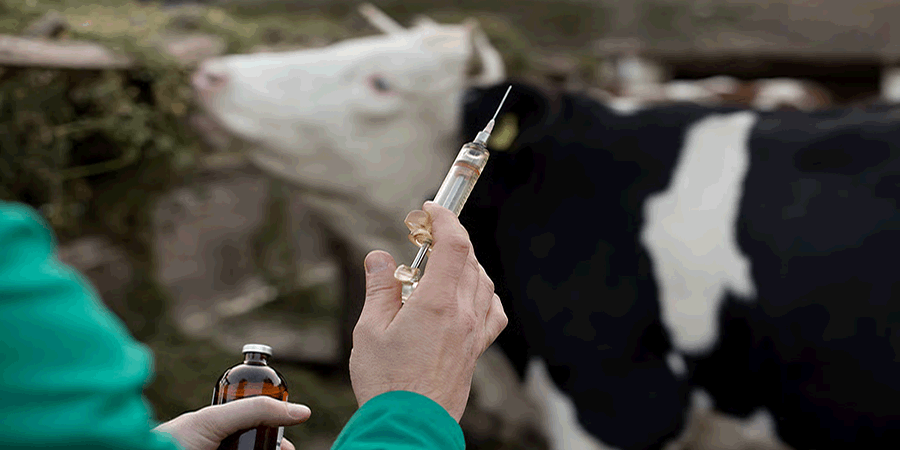
Improving farm productivity rather than tightening drug controls alone could reduce global antimicrobial use by up to 57%, researchers say, with cumulative resistance-driven production losses projected to far outweigh the cost of intervention.
Global antimicrobial use in livestock is projected to reach 143,481 tonnes by 2040, a 29.5% increase from the 2019 baseline of 110,777 tonnes, unless coordinated policy action and productivity improvements are implemented, according to a new FAO-led study published in Nature Communications.
The report, presented at the Fourth Session of the COAG Sub-Committee on Livestock at FAO headquarters in Rome, finds that growing demand for animal-source foods and continued production intensification are the primary drivers of rising antimicrobial use. Asia is projected to remain the largest contributor, accounting for approximately two-thirds of global livestock antibiotic consumption. Africa is expected to see the highest rate of growth, with a 40.8% increase from 2019 to 2040, while North America and Europe are forecast to record only minimal increases.
The economic case for action is clear-cut. Under a high-resistance pathway, cumulative livestock production losses could reach approximately $318 billion by 2040. By contrast, even a full phase-out of antimicrobial growth promoters under the most severe scenario is estimated to cost around $53 billion in total — a fraction of the projected losses from inaction.
The study introduces a Livestock Biomass Conversion method, which the authors say improves on earlier population correction unit approaches by incorporating live weight data and reflecting differences across species, production systems and herd sizes. Using this methodology, the team modelled a range of intervention scenarios and found that optimising livestock productivity — improving animal health, management practices and production efficiency — could reduce global antibiotic use to approximately 62,000 tonnes by 2040, a reduction of more than 57% against the business-as-usual projection.
"Enhancing livestock production efficiency is key to curbing antibiotic use," said Alejandro Acosta, FAO livestock economist and lead study author. "By producing more animal-sourced food with the same or fewer animals, we can reduce the need for antibiotics on farmed animals while strengthening global food security."
Thanawat Tiensin, FAO Assistant Director-General and Chief Veterinarian, framed antibiotic effectiveness as a shared resource requiring collective stewardship. "The costs of reducing unnecessary antimicrobial use are often immediate and concentrated, while the benefits of preserving antimicrobial effectiveness are long-term and widely shared," he said. "This is why antimicrobial effectiveness should be treated as a global public good."
The FAO noted that 47 countries have pledged to reduce antimicrobial use in food-producing animals by 30% to 50% by 2030, and that additional governments have endorsed the 79th UN General Assembly declaration committing to significant reductions in food animal antibiotic use. The report calls for coordinated efforts combining tighter regulation with investment in biosecurity, vaccination programmes and alternative health management solutions to close the gap between pledges and projected outcomes.
- FAO / Nature Communications / CIDRAP


