


June 5, 2025
Stronger supply chains and market expansion key to boosting Vietnam's poultry exports
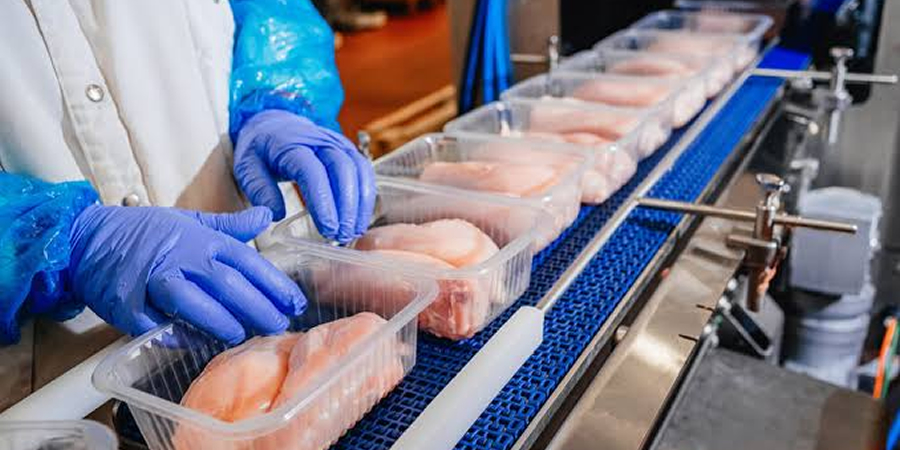
Poultry industry stakeholders in Vietnam are calling for stronger supply chain linkages and broader market access to enhance the country's poultry export potentials.
According to Associate Professor Dr. Nguyen Thanh Son, chairman of the Vietnam Poultry Association, the Vietnamese poultry industry gradually shifting towards industrialisation and modernisation as it aims to improve its poultry international trade aside from its existing markets of Japan, Singapore and Taiwan. However, the poultry industry is entering a period of crisis with excess output, sharp price drops, and market saturation.
Assessing the current state of the livestock sector, Mr. Pham Kim Dang, Deputy Director of the Department of Livestock under the Ministry of Agriculture and Environment, emphasised that poultry farming is one of Vietnam's three key livestock industries, alongside pig and cattle farming. He noted that these sectors play a vital role in socio-economic development, contributing to national food security and safety while meeting the consumption needs of over 100 million citizens and millions of tourists.
Originally focused on small-scale, self-sufficient farming, the Vietnamese poultry industry has transitioned significantly towards concentrated, large-scale farming while incorporating advanced technology. In 2024, poultry meat production is projected to reach 2.4 million tonnes, and egg production is expected to exceed 20 billion. This output will not only meet domestic demand but also support exports.
Vietnam ranks among the top ten countries in the world with the largest poultry population, and it has the second-largest waterfowl population. From 2020 to 2024, the poultry population is projected to grow significantly, increasing from 512.675 million to 584.414 million, with an average annual growth rate of 3.3%.
Its total poultry meat output in 2024 will reach 2.458 million tonnes, an average annual increase of 6.9% in the 2020-2024 period. During this period, chicken meat output will grow at an average rate of 7.8% per year, faster than waterfowl meat output of 3.5% per year. The reason is that the waterfowl meat market has decreased sharply in recent times. Goose meat output in the past year decreased by an average of 2% per year, from 2.05 thousand tonnes in 2020 to 1.89 thousand tonnes in 2024.
According to Dang, who also serves as the deputy director of the Department of Animal Husbandry and Veterinary Medicine, Vietnam exports about 5.8 - 6.1 million poultry breeds annually. At the same time, it exports about 4.6 - 5.1 thousand tonnes of poultry meat of all kinds. With these developments, the poultry industry is facing favourable opportunities such as a complete, unified, integrated, and transparent institution; a potential consumer market; and reduced animal feed prices. At the same time, the integration process and investment attraction as well as opportunities to access new technology and management are promoting the development of the poultry industry.
Despite its great potential, the poultry industry is facing dual difficulties from low consumption market, disease and increased import of breeds.
Chain linkages in Vietnam's livestock farming remain weak, with only a limited number of integrated supply chains established by large enterprises. There is a lack of coordination across key stages such as breeding, rearing, slaughtering, processing, and distribution. As a result, farmers are often vulnerable to pressure from traders, while food safety standards and supply chain transparency remain insufficient—posing significant challenges for exports. Additionally, the adoption of high technology and digital transformation is still slow, particularly among small and medium-sized farms and household operations, leading to low production efficiency, significant losses, and limited competitiveness compared to countries with more advanced livestock industries.
In addition, fragmented consumption patterns, limited distribution networks that hinder disease control, inaccurate supply and demand forecasts, along with an unstable global landscape, climate change, and the emergence of complex diseases, all contribute to heightened risks for Vietnam's poultry industry.
According to Vietnam's livestock development strategy through 2030, poultry meat is expected to make up 28–30% of total meat production, with an annual output of 22–23 billion eggs. The plan targets exporting 20–25% of total poultry meat and egg production. Additionally, the proportion of processed poultry meat is set to reach 25–30% by 2025, increasing to 40–50% by 2030.
To achieve the above goal, the representative of the Department of Animal Husbandry and Veterinary Medicine proposed to increase vaccination, disease surveillance and apply biosafety thoroughly. At the same time, it is necessary to expand the market, promote the export of advantageous products, tighten control of smuggling, promote chain linkages between enterprises, associations and localities. Connection and transparent information sharing are emphasized to ensure harmonious interests.
In the long term, it is necessary to re-plan production, focus on investment in key areas, build a value chain from livestock farming - processing - consumption with disease control according to international standards. Preferential credit policies for farmers and businesses also need to be considered to improve access to capital.
To advance the livestock industry, Deputy Minister of Agriculture and Environment, Phung Duc Tien, emphasised the urgent need to streamline administrative procedures and implement updated standards that align with current conditions. He highlighted the importance of prioritizing science and technology, particularly in breeding practices.
Additionally, he called for stronger efforts in processing and deep processing, along with improved management of small-scale slaughtering to ensure food safety. Tien also stressed the necessity of developing a comprehensive value chain—from breeding, feed, and farming methods to processing and trade promotion—to enhance the overall efficiency and competitiveness of the sector.
.
- Finance Magazine (Vietnam)


