


June 5, 2024
Canadian meat industry calls for reversal of foreign worker rule changes
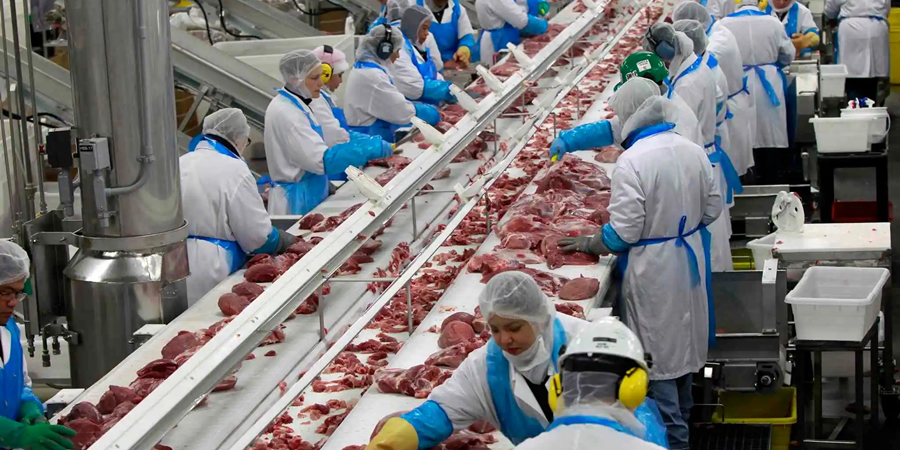
Recent changes to Canada's foreign worker rules are disproportionately impacting the rural economy, prompting national meat industry organisations to call on the government to reconsider these changes, Farm Journal's Pork reported.
The Canadian Meat Council, the Canadian Cattle Association, the National Cattle Feeders' Association, and the Canadian Pork Council are urging the government to restore the Temporary Foreign Worker Program's Workforce Solution Roadmap, which was introduced in 2022 to address the industry's critical labour shortage.
"While we understand the federal government is concerned with a housing shortage, temporary foreign workers are not the problem, representing only 9% of the temporary resident population. Meanwhile, the decision to reduce temporary foreign worker numbers is having the precise opposite impact the government says it wants on food affordability in Canada," the Canadian Pork Council stated in a release.
As of May 1, producers and processors are facing not only the reduction of the 30% cap but also a reduction in the time limit for labour market impact assessments (LMIA). These changes, made without industry consultation, are impacting productivity, competitiveness, and levels of food production in Canada, according to the Canadian Pork Council.
"Every job unfilled in our barns, processing facilities, and supply chains has an outsized impact on rural areas because Canada does not have additional people living in these areas who can fill these jobs," said Rene Roy, chair of the Canadian Pork Council. "If there's a shortage of workers in the processing sector, producers can't ship their product to market, causing uncertainty for producers and consumers alike. We need to help recruit more new Canadians to rural areas, and creating uncertainty defeats our efforts to convince people to join our industry."
Agriculture accounts for nearly 10% of Canada's gross domestic product and provides one in nine jobs in the Canadian economy.
"Beef producers are integral to Canada's rural economy, and changes to the temporary foreign worker program will increase pressures on our labour challenges," said Nathan Phinney, president of the Canadian Cattle Association. "It is essential that we have a reliable supply chain for our economic sustainability and ability to produce for Canadians and global consumers. Our trade partners need steady, consistent supply—any disruption can impact our ability to compete on a global scale while keeping costs down at home."
The Canadian meat industry urges the government to address these issues through advanced consultation and dialogue.
"Industry has proven its case time and again to government. The decision to reduce the cap did not consider the impact on food security but was instead a knee-jerk reaction to a housing challenge that our industry is not responsible for," said Chris White, president and CEO of the Canadian Meat Council. "Our industry is mostly located in rural communities, and those communities still depend on these workers to keep our operations going so we can feed Canadians at an affordable price and bring quality Canadian products to the world."
- Farm Journal's Pork


