


June 3, 2024
ASF virus discovered in feed under very specific circumstances, EFSA project found
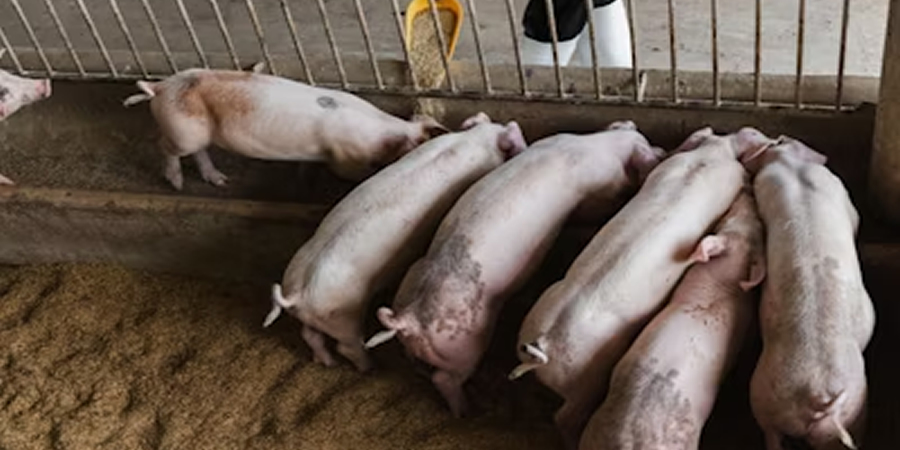
The European Food Safety Authority (EFSA) initiated an international research project in which it found that the spread of the African swine fever virus through animal feed is only to be expected in exceptional cases.
The German Federal Institute for Risk Assessment and the Friedrich-Loeffler-Institute (FLI) also participated in the project.
"Even after adding large amounts of the infectious virus to various feed and bedding materials, no infectious virus was detectable after a short time," said project coordinator Sandra Blome of the FLI. "Only in cold-stored fodder beet and potatoes was infectious virus still found in some samples, even after a longer storage period."
"This is probably due to the fact that ASF viruses are particularly stable in cold and humid environments," explained BfR president Professor Andreas Hensel. "In principle, ASF viruses are not transmissible to humans. However, with this project, we are closing an important knowledge gap regarding the role of feed in the transmissibility of the ASF virus."
Due to the lack of empirical data, the FLI, together with the Swedish Statens Veterinärmedicinska Anstalt and the BfR, worked on the EFSA-funded project (start 2022) to fill the existing knowledge gaps. The aim was to investigate the stability of ASF viruses on feed, bedding and mechanical vectors under practical storage conditions. For this purpose, 14 relevant agricultural feed and bedding materials were used: Grass, grass silage, hay, bark, peat, wood shavings, maize silage, rape, barley, wheat, oats, straw, potatoes and fodder beet.
All materials were contaminated with the ASF virus and stored at five different ambient temperatures for up to nine months. The samples were analysed at different times for infectious virus and virus genome residues.
The researchers also looked at the possible role of three different species of blood-sucking arthropods (arthropods such as seiners) to find out how long the arthropods studied could harbour the virus genome and infectious virus after ingesting infectious blood.
- National Hog Farmer


