


May 29, 2025
New campaign aims to rebrand US pork beyond the "other" meat label
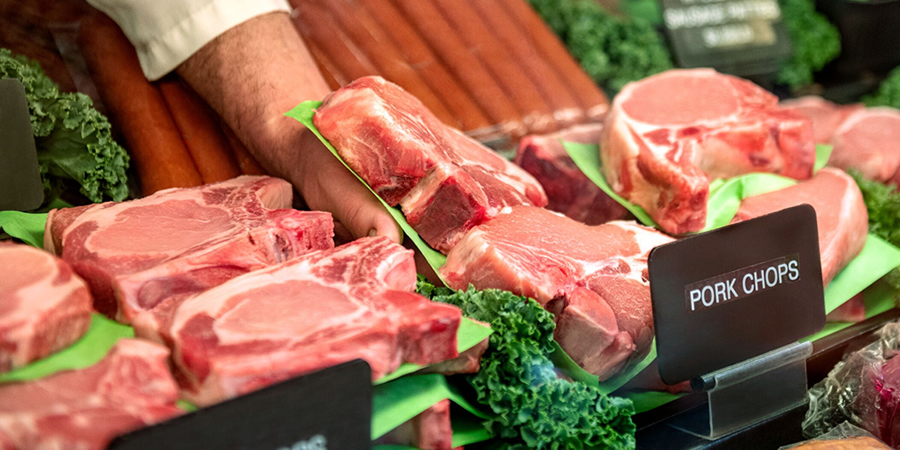
With 20 billion pounds of US pork hitting the domestic market each year, it's essential pork is relevant to consumers.
However, as Kiersten Hafer, National Pork Board's (NPB) vice president business intelligence notes, consumers have changed more in the last five years than in the last 15 years.
"It used to be everyone around the table and pork playing a critical role in being the centrepiece of the meal. Well, today, people are on the move. Lifestyles have changed," Hafer says. "There's a lot of things that we have to solve for. There's a lot of noise in the marketplace and consumers are eating different, which means pork has to show up different."
The National Pork Board has been on a path to change consumer perceptions of pork and increase pork's relevance for quite some time, which Hafer says comes down to listening to the consumer.
"We continue to listen to them to understand what their challenges are, what their barriers to consumption are, and what they quite honestly need from us over the next 10 years and we monitor that," Hafer says. "And all of that is in an effort to help us position pork in the most favorable way, in the most relevant way."
The NPB team has also put a lot of work into consumer segmentation, identifying the path forward for pork and how to sell more. That strategy will need to go beyond US pork's current consumer base, Hafer says.
"Our core pork consumer is aging out, they're consuming less, their households are smaller, they are consuming smaller portions. So, we have to replace that lost volume, and we know that that decline is reversible and it's reversible by getting to a younger generation, to Millennial and Gen Z consumers," Hafer says. "But in order to do that, we can't do what we've done before. We can't market pork and talk to consumers like we did the Boomers. Those younger Gen Z and millennial consumers need something different from us."
NPB's new consumer campaign, Taste What Pork Can Do, is focused on using pork to sell more pork and transitioning younger consumers from thinking about pork as a centre of the plate option to more as an ingredient. It's also critical to get them to stop viewing pork as an occasional product to start seeing it as a product for everyday consumption. Looking at purchasing habits from 2022, Baby Boomers accounted for 30.4 pounds and Gen X 21.3 pounds of fresh retail pork per capita, while Millennials bought only 13.8 pounds and Gen Z 5.8 pounds.
Hafer notes pork consumers are not only diverse by age but also geographically. For example, just 10 states across the country account for 50% of the US population and 50% of fresh pork consumption.
"As we think about National Pork Board's efforts to reach consumers and where they are, we are going after the consumers in those states that are high population, sometimes low production and high consumption states," Hafer says. "We are going to maximise the impact of these marketing efforts by getting to those consumers and getting to them often and getting them to a position of understanding what pork has to offer and giving them some really good reasons why they should try and repeat pork."
In addition to reaching younger generations and consumers across those 10 states, NPB has identified three segments that are core to their new marketing efforts. Confident Meat Eaters are huge pork consumers and are responsible for 20% of meat case sales. The Culinary Adventurers make up almost 17% of meat case sales and are eager to explore cultural cuisines and eating experiences with pork. Finally, the I Make Conscious Choices segment makes up 15.4% of meat case sales and care about nutrition.
According to Glynn Tonsor, Kansas State University agricultural economics professor and author of the Meat Demand Monitor, those three key consumer segments match up with some of the data found in the monthly MDM reports. For example, Culinary Adventurers have strong demand for all proteins, not just pork items. They over-index in demand and their willingness to pay is above the national average in everything. For bacon, for example, they are willing to pay 25% more than the national average at retail.
What makes the Taste What Pork Can Do different from previous NPB's campaign comes down to three things, Hafer says.
"We are unapologetic about who we are and about pork. We're celebrating processed, we're celebrating fresh, we're celebrating the entire hog. It's about everything we bring to the market, and everything we have to offer. And we're not the ‘other' anything," Hafer says. "We're stepping into the data, which is in our control. We are not asking people to tell us what we should be doing or how we should be doing it. We're owning that and we're owning the metrics that guide those decisions for success."
Those metrics include the monthly MDM monitors, which has found taste, freshness, price and safety continue to be the most important factors for consumers when purchasing protein.
"In April of 2025, which is the most recent data, 43% more of the public told us taste is a top four consideration compared to the group that said it's a bottom four," Tonsor says. "Taste is a predominant leading factor on whether I do or don't buy meat protein."
However, Tonsor says price cannot be ignored here.
"We all know price matters in a purchasing decision, but please note that taste and freshness are ahead of it," Tonsor says. "The typical US resident considers taste more important than price."
With taste being key, Hafer says the new campaign will kick off with "quick hits."
"We bring them in on pepperoni. We bring them in on some of the processed and right over to the things that pork can do for them," Hafer says. "It's creating that moment that stops them and gets them to reconsider what pork can do for them. And it really is focused on flavour-filled moments."
It's also about calling out the eating experience or the flavour profile that consumers crave, such as a ginger pork noodle bowl, or the versatility or convenience consumers need with a balsamic glazed pork tenderloin.
"It allows for us really to, again, reposition pork, lead with taste and flavor and bring what we have to offer to the consumer in a new and different way," Hafer says.
Why should hog producers care about this new campaign and building pork demand?
Tonsor notes pork demand is critical to the live hog sector and that demand stems from three sources: foreign demand and domestic demand both away from home and at home. As Lee Schulz and Ezra Butcher pointed out in a recent study, those three legs are supporting a smoking hot feeder pig market.
For example, if wholesale pork demand is bumped up by 1%, the market will see a 0.7% increase in market hog price. A 1% uptick in expected market hog prices will then result in a 1.9% increase in feeder pig price and a 1.2% increase in early weaned pig price.
Schulz and Butcher also found if wholesale pork demand would've stayed the same that it was in 2022 throughout 2023, the market would have seen 4% to 5% higher live animal prices depending on weight class and stage of production.
Tonsor refers to this as "derived demand" because the original source of demand is the end-user eating bacon and pork chops.
"Derived demand market signals are now quantified, are substantial and warrant much wider appreciation," Tonsor says.
However, Tonsor recognises that as producers are looking at this campaign and hearing about it, they are probably asking, "if we make this investment, will the pork demand boost come," and to go further, "if we have the demand boost, will I as a live animal producer be better off?"
"I'd say the answer to that is yes. I'm optimistic about that and one of the reasons I'm optimistic is the timing feels right. The timing feels right because we're in a pro-meat protein environment and this is more than just pork at the moment," Tonsor says. "Over the last 25 years on average pork expenditures in the US have gone up by about US$4.50 per year and that's great. I want to highlight this can continue to go up or go up faster by enhancing demand. And importantly, demand enhancement can either be more pounds at the same price or the same pounds at a higher price. Both of those are outcomes from an increased demand."
What about the price of beef and chicken? How does that impact pork demand? Tonsor says one of the key lessons from this work, and others that have done similar work in the last decade, is there's less sensitivity of pork demand to what's going on in the beef and chicken space as there was 20, 30 years ago.
"Pork purchasing behaviour is things that go on within the pork space. The effect of beef and chicken industry status, volume on the market, their offer prices and so forth those exist and I'll never ignore them, because we understand there's cross price effects, but those cross-price effects are not as large as a lot of people historically thought they were," Tonsor says.
Tonsor notes there's also been a decline in the self-declared rates of vegan and vegetarianism since about 2021, and there's been an increase in the self-declared regular meat consumer.
"This is a pro-meat protein environment, there's a GLP-1 effect to that. There's a younger group that's exercising more than in the past," Tonsor says. "There's a lot of reasons for that we can talk about, but the timing seems right for seizing on that for pork.
Finally, Tonsor encourages the US pork industry to focus on growing the size of its economic pie.
"And the best advice I have to do that is to grow demand for your product, which in this case is pork, rather than focusing on the size of the pie in the past and what share your industry might be getting of that. Keep in mind my comments about cross price effects and so forth, they're not as large as we think is one of the reasons for that suggestion," Tonsor says. "And the broader one is as you grow demand for an industry, you grow the economic resources of that industry and that tends to help most stakeholders, including hog producers."
- National Hog Farmer


