


May 19, 2026
India maize demand seen hitting 72 million MT by FY2031 as feed and ethanol use surge
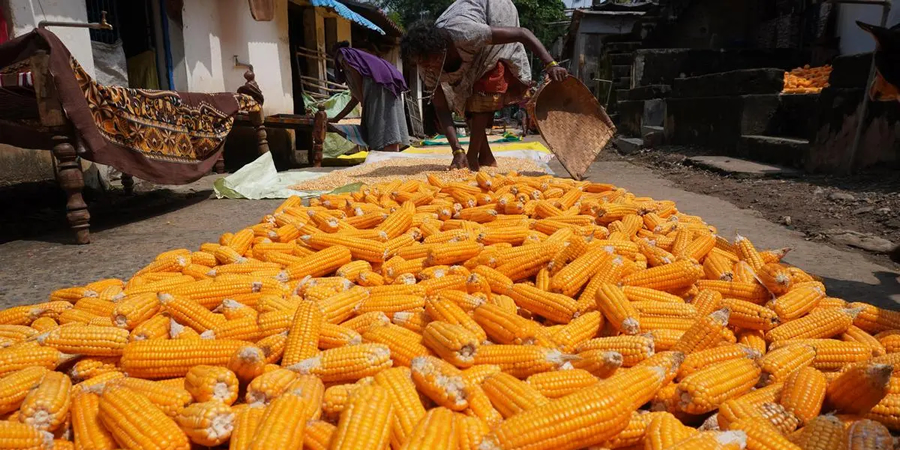
A FICCI-YES Bank report projects strong supply growth but warns of persistent post-harvest and productivity constraints.
India's domestic maize demand is projected to reach nearly 72 million MT by FY2030–31, driven by rising consumption from the feed and ethanol industries, according to a report released at the 12th FICCI India Maize Summit 2026 in New Delhi on 15 May.
The FICCI-YES Bank report, titled 'Maize Sector in India: Navigating Transformation in Demand-Supply Dynamics,' estimates that maize production will touch 50 million MT in 2025–26, more than double the 22.57 million MT recorded a decade earlier in 2015–16.
Maize has become India's third-largest food grain crop, contributing around 14% of total domestic food grain production. Nachiket Kotwaliwale, Director of ICAR-Indian Institute of Maize Research, said that approximately 26% of India's maize is now directed towards ethanol production, making it a significant contributor to the country's energy security and farm incomes.
Production growth has been driven primarily by yield improvements rather than land expansion, with output rising at a CAGR of 8.3% against acreage expansion of 4.5%, according to Bhagirath Choudhary, Minister of State for Agriculture and Farmers' Welfare. He noted that only 42% of India's maize area is irrigated, compared with 70% for rice and 95% for wheat, positioning the crop as relevant to freshwater conservation and income diversification for rain-fed farmers.
The government recently raised the minimum support price for maize to Rs 2,410 per quintal (approximately US$29) for the 2026–27 marketing season.
Globally, maize production grew at a CAGR of 1.98% over the decade to 2025, reaching 1,261.5 million MT from 1,036.9 million MT in 2015, the report noted.
Despite the positive outlook, the report flagged persistent structural challenges, including farm-level productivity gaps, climate vulnerability, and post-harvest inefficiencies in drying, storage, aggregation and processing. Risks from fungal contamination and aflatoxin incidence were also identified as constraints on marketability and industrial usage.
— FICCI / YES Bank


