


INDUSTRY NEWS
China's appetite for salmon has grown tremendously over the years, with its annual imports now totalling US$300 million. The dramatic rise is best illustrated when Scotland's salmon exports to China increased 194,080% from a measly 5 tonnes in 2009 to 9,709 tonnes in 2013, or in just four years.
US$300M ANNUAL IMPORTS
China's salmon appetite on dramatic rise
China's demand for salmon has grown tremendously over the past decade, its annual imports now totalling US$300 million.
According to an industry news release posted on the website of the World Seafood Shanghai exhibition (which will be held on Aug. 19-21), the dramatic rise in Chinese consumers' growing appetite for salmon is best illustrated when Scotland's salmon exports to China increased 194,080% from a measly 5 tonnes in 2009 to 9,709 tonnes in 2013, or in just four years.
Salmon farmers in the Los Lagos region of Chile, China's biggest supplier of Atlantic salmon, has also seen a 73.9% rise in their exports to China.
Between January and July 2016 Chile experienced a 72% year-on-year rise in salmon exports to China. These exports came to a total of 31,000 tonnes.
Norway, the biggest exporter of salmon to China prior to 2010, has had its export volumes nosedive after a half-decade-long diplomatic tussle. The tail end of 2016 saw a re-normalisation of relations between the two states, and Chinese ports reopened to Norwegian salmon. Before their dispute, Norway accounted for 90% of all salmon on the Chinese seafood market.
With relations between Norway and China back to normal, export levels are expected to increase exponentially this year and beyond. The Norwegian Seafood Council has assigned $1.15 million for marketing throughout China this year—around 10 times its usual China-focused marketing budget, the news release said.
Besides Chile, Scotland and Norway, China's stocks of salmon come from Canada and the US. Chile is now the largest individual supplier in value terms, shipping produce worth $96.5 million in 2016.
'WE RELY ON TRADE'
New Zealand seafood industry backs TPP ratification
New Zealand's seafood industry has come out in support of the Trans-Pacific Partnership (TPP) following the announcement that the country's Cabinet had decided to ratify the trade agreement.
In expressing their support, Seafood New Zealand chief executive Tim Pankhurst said the industry relies on trade, as does wider New Zealand.
"We exported NZ$1.8 billion (US$1.24 billion) of seafood last year and free and open access to markets is critical for the industry", he said.
He added, ""The ratification of TPP by the New Zealand government sends a strong signal that we continue to support the agreement despite the withdrawal of the United States".
Pankhurst noted that there were still very valuable markets for New Zealand among the remaining TPP countries as he commended Trade Minister Todd McClay and the Cabinet for continuing to support exporters with access to global markets.
The proposed TPP include the US (which has backed out), Australia, Brunei Darussalam, Canada, Chile, Japan, Malaysia, Mexico, New Zealand, Peru, Singapore and Vietnam.
FOR CHINA, INDIA, THAILAND, VIETNAM
US extends shrimp antidumping duties for another 5 years
The US International Trade Commission (USITC) on May 2 decided to extend for another five years the imposition of antidumping duties on imports of frozen warm-water shrimp from China, India, Thailand and Vietnam, saying that doing away with the duties would continue to harm the US shrimp industry.
The USITC, however, revoked the existing antidumping duty order on imports of the shrimp product from Brazil.
In their unanimous decision, the USITC said "revoking the existing antidumping duty orders on imports of frozen warm-water shrimp from China, India, Thailand and Vietnam would be likely to lead to continuation or recurrence of material injury within a reasonably foreseeable time".
In the case of Brazil, it said "revoking the existing antidumping duty order on imports of this product (frozen warm-water shrimp) from Brazil would not be likely to lead to continuation or recurrence of material injury within a reasonably foreseeable time".
Therefore, it said, "the existing antidumping duty orders on imports of this product from China, India, Thailand, and Vietnam will remain in place", while that "on imports of this product from Brazil will be revoked".
Several federal and state elected officials had batted for a five-year extension of the antidumping duties on "unfairly traded shrimp imports" from the five countries including Brazil.
Three congressmen had testified in a hearing, voicing their support for the trade remedy.
The domestic shrimp industry had contended that the return of unfairly traded imports into the US market would once again lead to a collapse in prices and more fishermen leaving the commercial fishery.
The USITC's action came under the five-year (sunset) review process required by the Uruguay Round Agreements Act, which mandates the Department of Commerce (DOC) to revoke an antidumping duty order after five years unless both the DOC and the USITC determine that revoking the order would likely lead to the continuation or recurrence of dumping and of material injury within a reasonably foreseeable time.
WORTH US$2.3 BILLION
Indonesia's aquaculture production grows 3% in 1st quarter
Indonesian aquaculture production in the first quarter increased 3.11% to 3.90 million tonnes of fish compared with the same period in 2016.
According to a news report by the Jakarta Times, the value of aquaculture fish reached Rp30.90 trillion (US$2.31 billion), or a 37% increase from Rp22.5 trillion.
"The achievement is a result of the budget spending policy, which was 'money following function' and 'money following prioritised programs'", said the Maritime Affairs and Fisheries Ministry's aquaculture directorate general, Slamet Soebjakto, according to Jakarta Post, citing a report by kontan.co.
Slamet said the production of decorative fish increased 7.4% from 326.10 million fish to 350.45 million worth Rp2.48 billion.
The government plans to develop aquaculture in 34 provinces this year, covering 173 regencies and cities, Slamet said, adding that it would distribute some 100 million young fish to farmers to revitalise 250 units of floating nets to grow fish and distribute insurance premium for 3,300 hectares of fish farms.
The government is reported to also revitalise fishponds in 20 regencies/cities, develop fishponds for catfish in 60 regencies/cities and open offshore aquaculture in Sabang, Aceh; Pangandaran, West Java; and Karimunjava, Central Java.
"Aquaculture has a strategic function, economically, socially and geopolitically, particularly because it has great potential to improve welfares of the people. It is our job to make this business more effective and efficient so that it will greatly affect the national economy soon", Slamet was quoted as saying.
AQUACULTURE BENEFITTED
EU to boost sustainable blue economy
The EU maritime ministers have signed a declaration on blue growth, reaffirming their political commitment to further grow EU's sustainable blue economy.
The signing came a day after the European Commission (EC) launched on April 19 a new initiative for the sustainable development of the blue economy in the Western Mediterranean region, which covers economic hubs like Barcelona, Marseille, Naples and Tunis. It also includes tourist destinations like the Balearic Islands, Sicily and Corsica.
The declaration was also adopted on Thursday at the "Informal Ministerial Conference on Blue Growth, Ocean Governance in the EU and the Mediterranean, Innovation and Nautical Tourism" in Malta.
It aims to give an additional boost to the sustainable development of key sectors including aquaculture, ocean energy and biotechnology. According to the EC, blue growth could contribute more than €500 billion (US$536 billion) a year to EU's economy and represent 5.4 million jobs.
A recent report by scientists from the Joint Research Centre indicates that 50% of the sea's biodiversity has been lost in the last 50 years.
On the new initiative covering the Western Mediterranean region, Environment, Maritime Affairs and Fisheries Commissioner Karmenu Vella said, "Millions of holiday makers have a happy association with the Western Mediterranean. Like the millions more who live across the region, they understand the fragile link between conserving national habitats and traditions and ensuring economic viability. Blue economy is important for each of the countries involved and they have recognised the strength of working together", said Karmenu Vella, commissioner for environment, maritime affairs and fisheries.
Johannes Hahn, commissioner for European neighbourhood policy and enlargement negotiations, also said: ''This new regional initiative recognises and taps into the economic potential of the Mediterranean Sea and its coast lines to further enhance economic growth, contribute to job creation and eventually the stabilisation of the region".
EFFECTIVE SUBSTITUTE FOR CROPS, TOO
US firm finds replacement for fish protein in salmon feed
A US-based biotechnology company reports that a single-celled protein contained in bacteria has been found to be an effective replacement for wild-caught fish and agricultural crops as an ingredient in the manufacture of salmon feed.
KnipBio said it did a study in collaboration with the New England Aquarium, the University of Massachusetts at Boston, Roger Williams University and the USDA Agriculture Research Service to test whether a diet consisting of between 30% and 100% of the bacterium Methylobacterium extorquens in pellet form would sustain fish and shrimp.
M. extorquens is cultured by conversion of methanol through fermentation in tanks. Instead of beer, the fermentation produced a bacterium, which the company calls KnipBio Meal. It has a composition of protein and amino acids very similar to the protein found in wild fish, it said.
"The results of the study indicate that a diet made up of single-cell protein can serve as a high-quality alternative in aquaculture feeds. Our work since studies were conducted shows that the genetic optimisation of single-cell proteins also further improves these results," said Larry Feinberg, KnipBio chief executive.
KnipBio said the study, entitled "A Transdisciplinary Approach to the Initial Validation of a Single Cell Protein as an Alternative Protein Source for Use in Aquafeeds", found that white shrimp, Atlantic salmon and smallmouth grunts fed a diet containing KnipBio Meal had similar or better growth and survival rates than fish given a diet of conventional commercial feed.
"The results of the study suggest that a diet consisting of single-cell protein can be a high-quality alternative fish feed. Our work since the study was completed indicates that genetic optimisation of the single-cell protein can further improve these results," Feinberg said.
The company, moreover, pointed out the disadvantage of a soy-rich feed in that it "can lead to inflammation in the intestines of various aquaculture species", which it said could be avoided using M. extorquens.
TiLV
Asia's tilapia farmers threatened by emergent virus
Tilapia farmers in Asia-Pacific are facing the threat of a disease that has started to manifest in Thailand.
In a disease advisory, the Network of Aquaculture Centres in Asia-Pacific (NACA) identified the disease threat as Tilapia lake virus, or TiLV, an aetiological agent causing the mass die-offs of farmed fish including tilapia in Israel and Ecuador.
"This has been reported as a newly emerging virus that causes syncytial hepatitis of tilapia (SHT)," NACA said, adding that as of last year, countries affected by this emerging tilapia disease included Israel, Ecuador, Colombia and Egypt.
It said that recently, disease outbreaks among cultured tilapias occurred in Thailand, wherein high cumulative mortalities (20-90%) were observed and recorded. It added that TiLV was putting at risk the US$7.5-billion global industry, especially in the top tilapia-producing countries in the Asia-Pacific region including China, the Philippines, Thailand, Indonesia, Laos and Bangladesh.
"Thirty-two outbreaks were investigated during 2015-2016 involving large number of deaths of unknown cause among farmed tilapia (Oreochromis niloticus) and red hybrid tilapia (Oreochromis spp.). Histopathology (of the liver showing similar signs to SHT), transmission electron microscopy, in-situ hybridisation and high nucleotide sequence identity to TiLV from Israel confirmed that these outbreaks were caused by TiLV", NACA stated.
Tilapias are an increasingly important and inexpensive source of fish protein and are one of the most popular species for aquaculture in several regions including the Asia-Pacific. The top 10 producing-countries include China, Egypt, Philippines, Thailand, Indonesia, Laos, Costa Rica, Ecuador, Colombia and Honduras.
'DUE TO A SHIFT IN EASTER'
Norway seafood exports decline in volume, value in April
Norwegian seafood exports in April decreased 23% to 151,000 tonnes, valued at NOK6.8 billion (US$786.43 million), down 7% or by NOK529 million compared with April 2016, according to the Norwegian Seafood Council.
In the four months through April, Norway exported 886,000 tonnes of seafood worth NOK31 billion ($3.58 billion). Year-to-date export volumes were at the same level as last year, while the year-to-date value of Norwegian seafood exports increased 8% or by NOK2.3 billion.
"The decline in seafood exports in April is mainly due to a shift in Easter, which again explains some of the decline in export volumes for our important seafood products such as salmon and clipfish", said Asbjørn Warvik Rørtveit, director of market insight, Norwegian Seafood Council.
Salmon exports in April declined 11% or by 8,800 tonnes to 60,000 tonnes, worth NOK4.9 billion. The value of Norwegian salmon exports was at the same level as April 2016. From January to April, Norway exported 305,000 tonnes of salmon with a total value of NOK21 billion.
Just as in the first quarter, Poland, France and the US were the largest export markets for salmon from Norway in April.
"Strong price growth compared with the same period last year has led to a value added of NOK2.7 billion or 15 percent for Norwegian salmon exports so far this year. A trend we have seen over time is that exports to the EU are reduced, while exports to overseas markets have increased", said Norwegian Seafood Council Analyst Paul Aandahl.
In April, Norway exported 2,480 tonnes of trout worth NOK199 million. Volume fell by 5,400 tonnes or 69%, while the value of trout exports fell by NOK204 million or 51%, compared with April last year.
In the four months through April, Norway exported 11,100 tonnes of trout worth NOK874 million.
Japan, Belarus and the US were the largest trout export markets in April.
Norway's king crab exports in April decreased by 15 tonnes or 24% to 46 tonnes, while export value (NOK44 million) remained at the same level as in April last year.
Norway exported 646 tonnes of prawn (down 12% or by 86 tonnes) valued at NOK44 million in April (down 30% year-on-year or by NOK19 million).
MARCH LANDINGS HIGHER THAN 16-YEAR AVERAGE
Shrimp landings in Gulf of Mexico slightly down in March, Q1
Landings of shrimp in the Gulf of Mexico in March showed a slight decline in volume of shrimp harvested this year (3.46 million pounds) compared with March 2016 (3.51 million pounds), as per the US National Oceanic and Atmospheric Administration (NOAA).
However, the amount of shrimp landed by fishermen in the Gulf in March was 52.1% higher than the prior 16-year historical average for the month (2.28 million pounds).
Similarly, total shrimp landings in the region for the first quarter (10.16 million pounds) were slightly below those of the first quarter last year (10.42 million pounds). However, they were 10.3% above the prior16-year historical average for the Gulf (9.21 million pounds).
In total, shrimp landings in the first quarter of the year are a small portion of annual harvests. Over the last 15 years, shrimp landed in the first three months have ranged from 5 to 11% to the total amount of shrimp landed in the region.
Despite the relative lack of overall importance of first-quarter landing figures, the data released by NOAA showed a couple of interesting trends:
-- Landings in 2017 have been spread more broadly amongst the states, with the exception of Mississippi. Texas (2.99 million pounds) has accounted for 29.4% of all shrimp landed in the Gulf so far in 2017, while Louisiana (2.61 million pounds) has claimed 25.7% of landed shrimp this year, Alabama (2.31 million pounds) 22.7%, and the west coast of Florida (1.91 million pounds) 18.8% of landings.
-- Ex-vessel prices for small-count sizes increased significantly in March compared with March 2016. Ex-vessel prices for 41-50 count shrimp jumped from $1.74 per pound in March 2016 to $2.30 per pound last month in the Northern Gulf, from $1.71 per pound in March 2016 to $2.69 per pound in March 2017 on the west coast of Florida, and from $1.54 per pound in March 2016 to $3.11 per pound last month in the Western Gulf.
VIETNAM UP AND DOWN
Vietnam aquaculture output up 2% in first 4 months…
Vietnam's aquaculture output in the first four months reached 865,000 tonnes, up 2.1% year-on-year, including 335,300 tonnes of tra fish raised in the Mekong Delta region, according to the Ministry of Agriculture and Rural Development (MARD).
It said tra fish price was increasing due to high demand. The MARD said the price of tra fish for processing in the Mekong Delta region was higher in April compared with the previous month, fluctuating between VND24,000 (US$1.06) and VND26,000 ($1.14) per kilogramme, while supply remained limited.
Brackish tiger prawn production in Mekong Delta localities was estimated at 55,600 tonnes, up 3.4% year-on-year, along with 32,400 tonnes of white-leg shrimps.
According to the Vietnam Fisheries Society, aquaculture contributed 3% to the country's gross domestic product in 2016.
Export turnover of aquatic products in the year increased 7.4% year-on-year, reaching us$7.05 billion.
The figure is expected to rise 5% this year, hitting $7.5 billion, 65% of which would come from aquaculture.
…shrimp exports slightly down in first 2 months...
Vietnamese shrimp export in the first two months fell slightly, by 0.1%, in value compared with the same period last year, the Vietnam Association of Seafood Exporters and Producers (VASEP) said.
It said exports in the two-month period reached nearly US$378 million. Export value in January reached $198.7 million, down 12.6% over the same period in 2016, while in February, it increased 18.7%.
Several factors attributed to the decrease in shrimp exports included the increase in technical barriers from importing markets, the decrease in the demand for shrimps in the world market, limited supply of raw shrimp, and increased price of raw shrimp that caused factories to scale down purchase of raw materials for production.
The top 10 markets during the first two months were Japan, the EU, the US, China, South Korea, Canada, Australia, ASEAN, Taiwan and Switzerland, in that order. They accounted for 95.4% of Vietnamese shrimp exports.
Japan accounted for 21.4% of total shrimp exports, the EU 19.5% and the US 18.6%.
In the first two months, Vietnamese shrimp exports to Japan were valued at $81 million, up 33.6% from last year. Exports to the EU grew 16.2% to $73.7 million; South Korea 18.8%; and Canada 16.6%.
Value of exports in the first two months to the US was down 25% at $70.4 million and to China by 8.6%.
…as US shrimp refusals in April total 7
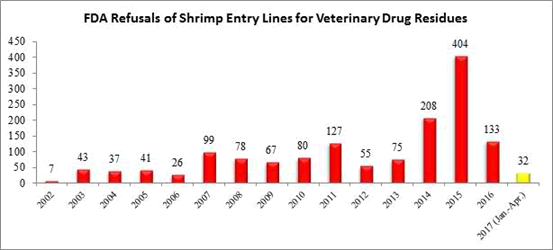
For the month of April through April 17, the US Food and Drug Administration (FDA) has issued a total of 46 entry line refusals, seven of which (15.2%) were of shrimp for reasons related to banned antibiotics, the Southern Shrimp Alliance said.
The seven shrimp entry lines refused by the FDA for banned antibiotics were from China, India, and Vietnam and were reported by four different FDA districts:
• Minh Phu Seafood Corp. (Vietnam), a company that was added to Import Alert 16-124 for sulfamethoxazole in its shrimp on Feb. 22, after its affiliate Minh Qui Seafood Co. Ltd. had been added to that Import Alert for sulfamethoxazole in its shrimp on July 22, 2016, had four entry lines refused for shrimp contaminated with chloramphenicol in the Florida District;
• Suryamitra Exim Pvt Ltd (India), a company that was added to Import Alert 16-129 for nitrofurans in its shrimp on March 15, had one entry line refused for shrimp contaminated with nitrofurans and veterinary drug residues in the New England District;
• Bluepark Seafoods (India), a company that is not currently listed on Import Alert 16-124, Import Alert 16-127, or Import Alert 16-129, had one entry line refused for shrimp contaminated with veterinary drug residues in the New York District; and
• Donggang Tianquan Aquatic Food C (China), a company that has not been exempted from Import Alert 16-131, had one entry line refused for shrimp contaminated with veterinary drug residues in the Los Angeles District.
This is the fourth straight month that the FDA has reported refusals of entry lines of shrimp from Minh Phu Seafood Corp. for reasons related to banned antibiotics.

ISSUE OF CERTIFICATION BEING RESOLVED
China agrees to resume live crab imports from Ireland
China is poised to resume importation of live crabs from Ireland following the adoption by both countries of a methodology designed to resolve the issue of certification of Irish live crab exports.
The agreement of an export certificate to accompany Irish live crabs was reached during the recent visit to Ireland by a Chinese delegation from the General Administration of Quality Supervision, Inspection and Quarantine (AQSIQ), Chinese news agency Xinhua reported.
Irish Agriculture Minister Michael Creed said the export certificate would permit the resumption of Irish crab exports to the Chinese market.
Based on the Xinhua report, the agreement is built around the implementation of a national monitoring program of live crab intended for export to China. Ireland's Sea Fisheries Protection Authority (SFPA) will implement the monitoring program and will liaise with the Irish industry to apprise seafood exporters of specific requirements to restart live-crab trade with China.
China's AQSIQ, on the other hand, will monitor consignments arriving in China.
Ireland secured market access in China for live crab through bilateral cooperation in 2010. In 2015, however, China claimed that the levels of the heavy metal cadmium in live crabs coming from Ireland exceeded Chinese limits.
INDONESIA, INDIA PLAY KEY ROLES
Asia world's fastest-growing market for processed fish
Asia is the world's fastest-growing retail markets for processed fish, with Indonesia and India playing key roles, according to global market intelligence agency Mintel.
India was found to be one of the fastest-growing retail markets for processed fish and seafood globally, growing at a CAGR (compounded average growth rate) of 24.9% between 2011 and 2015, while Indonesia saw a CAGR of 19.5%, Turkey 11.8%, South Africa 11.2% and Russia 10.8%. These four countries round out the top five growth markets.
In 2016, Mintel estimates India's processed fish and seafood market reached a value of INR2.422 billion ($37.68 million), while Indonesia is estimated to have hit IDR32 trillion ($2.4 billion), Turkey 372 million lira ($104.68 million), South Africa 3 billion rand ($224.68 million) and Russia 148 billion rubles ($2.6 billion).
In the five years between 2011 and 2015, Thailand also experienced a positive CAGR of 9.4% for the processed fish and seafood market. In terms of retail market value for 2016, Thailand's processed fish and seafood market was estimated to have reached 65 billion baht ($1.88 billion).
GOLD STANDARD' REFERENCE
FAO OKs new fish tracking system
The FAO has approved a new set of guidelines on fish traceability schemes, which is now poised for adoption by all FAO members at the UN agency's upcoming bi-annual governing conference in Rome on July 3-8.
The guidelines will serve as a "gold standard" reference for governments and businesses looking to establish systems that can trace fish from their point of capture through the entire supply chain--from "sea to plate"--to stop illegally caught fish from entering the marketplace.
Globally 91-93 million tonnes of fish are captured each year, and seafood products are among the world's most widely traded food commodities, with an export value of $142 billion last year.
On top of that, illegal, unreported and unregulated (IUU) fishing is estimated to strip the oceans of as much as 26 million additional tonnes of fish, damaging marine ecosystems and sabotaging efforts to sustainably manage fisheries.
According to the Food and Agriculture Organisation, catch documentation schemes (CDS) offer a way to cut down on trade in illegal fish. It explained that the basic concept behind CDS involves the certification of shipments of fish by national authorities that the fish were caught legally and in compliance with best practices.
The duly certified fish are processed and marketed nationally or internationally. Only fish with valid documentation can be exported or traded to markets that necessitate a CDS requirement.
Until recently, only a few such schemes had been established, mostly focusing on high-value species whose overexploitation prompted particular concern, such as Chilean seabass harvested in Antarctic waters, or Atlantic and Southern bluefin tuna, FAO said.
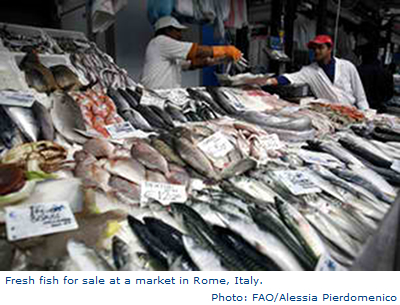 With seafood trade at record highs and consumer demand continuing to rise, catch documentation schemes are increasingly seen as a tool that could be more widely applied. Thus, the EU, since 2010, has used a CDS that covers all fish shipments imported into the bloc from overseas; and the US last year announced its own scheme, the Seafood Import Monitoring Programme.
"CDS will only succeed if there is strong, international coordination", said Audun Lem, deputy director of FAO's fisheries and aquaculture policy and resources division and concurrent secretary of FAO's sub-committee on fish trade.
"Although they are voluntary, the process of negotiation that led to the new guidelines means they enjoy a high level of buy-in by governments, while endorsement at the FAO Conference will send a clear signal of commitment to adhere to them. So, going forward, new catch documentation schemes established at the national, regional or international level will be in sync, reducing barriers to their wider use," he added.
Fishing without permission, exceeding catch quotas, catching protected species and using outlawed types of gear are among the most common IUU fishing offenses.
AMID GOV'T 'NEGLECT' OF AQUACULTURE
Blue economy pushed for the Philippines
Filipino scientists and academicians lamented that their government has neglected the mariculture and aquaculture sector, even as they pushed for a blue economy for the country. Blue economy aims for the sustainable management of marine resources.
At the two-day scientific forum of the National Academy of Science and Technology (NAST) in Cebu City in central Philippines, experts, who discussed the potentials and challenges in the aquatic and fisheries industries, noted that the Philippines does not invest enough in the maritime sector, the Philippine News Agency (PNA) reported.
.
This is despite the fact that, according Ronald Mendoza of the Ateneo de Manila University, the Philippines is the second-largest archipelagic country and 60% of the country's population live in coastal areas.
Also, NAST acting President Fabian Dayrit cited data from the Philippine Statistics Authority showing that in 2012 the fishing sector had the highest poverty incidence. "Thus, this sector deserves better from the government and from the society", he said.
Dayrit, moreover, said the Philippines is among the top producers of aquatic products, adding that aqua resources are also used in pharmaceutical products.
Dayrit noted that there are many untapped areas in the aquatic and fisheries industries.
Academician Rafael Guerrero III cited the need for a Department of Fisheries and Aquatic Resources to attain a "blue economy".
He explained that this department would give more emphasis on sustainable fisheries, particularly mariculture, which he described as the cheapest source of protein.
OVER 100 PARTICIPANTS
Confab discusses socio-economic impact of Common Fisheries Policy
The 23rd European Association of Fisheries Economists (EAFE) conference, hosted by Ireland's Seafood Development Agency, or BIM, was participated in by over 100 economists, academics, fishermen and policy makers.
The event was held at the Dublin Castle on April 25–27.
The conference tackled the latest reform of the Common Fisheries Policy, which introduced measures such as the Landing Obligation, maximum sustainable yield for all species by 2020 and regionalisation of fisheries management, among others. These policies, along with other events such as Brexit, are seen to significantly impact the viability of fishing fleets and fishing communities across Ireland and Europe.
The conference also provided a forum for Irish and international fisheries economists to assess the impact of these events in order to find examples of best practice in adapting to global challenges and the new institutional setting within EU fisheries.
The third day of the conference featured sessions including on aquaculture management and commercialisation, and a special discussion focusing on European small-scale fisheries, sponsored by the European Commission.
Key talks from the conference was to be made available later on BIM's website, http://www.bim.ie/.
EUROPEAN BACKLASH
Vietnam tries to repair damaged image of its pangasius
Vietnam hopes that its participation in the 25th Seafood Expo Global in Brussels, Belgium, held April 25-27, will somehow repair the damaged image of Vietnamese pangasius in Europe.
At the exhibition, the Vietnamese pavilion, with the theme "Vietnam—Asia's Home of Seafood", displayed products of 25 seafood companies including processors o pangasius, shrimp, tuna, tilapia, octopus and squid.
The Vietnam Association of Seafood Exporters and Producers (VASEP) and the Ministry of Agriculture and Rural Development held a press conference at the exhibition in an effort to provide clear information about Vietnamese pangasius processing and exports to European partners.
Vietnamese pangasius has suffered a backlash in Spain following a damaging expose that aired on Spanish television last January, and the Carrefour supermarket chain has ceased selling Vietnamese pangasius.
According to VASEP General Secretary Truong Dinh Hoe, the press conference also aimed to help increase the export of Vietnamese aquatic and seafood products to Europe.
Vietnam also held other trade promotion activities at the Brussels event, including a dialogue for shrimp value chains and a programme for visitors to try Vietnamese seafood.
Alfons van Duijvenbode, a Dutch consultant, said that European consumers had a bad impression of Vietnamese pangasius due to what he said was wrong information in social media.
He suggested that the Vietnamese aquaculture industry interact more with consumers to provide them with exact information about the products' quality.
A HUGE STEP FOR THE COMPANY
Royal De Heus opens aquaculture R&D centre in Vietnam

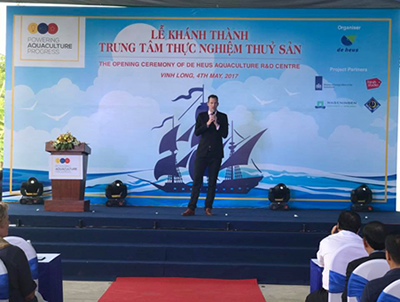 On May 4, Royal De Heus formally opened the Aquaculture Research & Development Centre in Vinh Long, Vietnam.
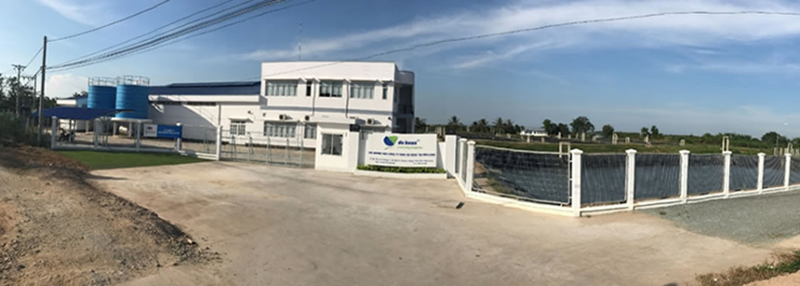
 This De Heus R&D centre is supported by three organisations: Fresh Studio, Vietnam's Can Tho University and the Netherlands' Wageningen University. This state-of-the-art centre enables De Heus to test innovative feed formulas and new farming techniques.
The opening was preceded by an aquaculture feed workshop on May 3 and attended by international aquaculture feed specialists.
During this workshop, attendees learned more about the global trends in sustainable aquaculture production, selective breeding, with a special emphasis on aquaculture nutrition and feed management.
During the opening and after the ceremony on May 4, all attendees visited the six-hectare Aquaculture R&D Centre with its 111 indoor tanks and 25 outdoor ponds, as well as the two pumping stations, two water treatment ponds, bio-filter tanks, laboratory, storage buildings, offices and the facilities for the employees. The opening of the centre is one of the initiatives visible to realise De Heus "Powering Aquaculture Progress" ambition.
Gabor Fluit, business group director of De Heus Asia, said that the R&D facility was a huge step for De Heus locally, regionally and globally.
He noted: "Due to the growing world population and the need for food, we are expecting a growth in the consumption of aquaculture protein. This unique R&D facility gives the aquaculture sector the ability to develop more sustainable and efficient ways for the production of aquaculture, especially fish. It will increase the knowledge of fish farmers, fish processors and fish feed distributors. The facility will be used by De Heus to conduct aqua R&D activities. The new facility can also be used by other public and private organisations for their (contract) research activities. This means our facility will contribute to the further professionalization of the total Aquaculture sector".
Fluit added: "This facility, in the centre of the Mekong delta, is equipped to test the nutritional value of ingredients, innovative feed formulas and innovative farming techniques. We will also use it to train farmers in farming management and best practices."
The aquaculture R&D facility will first focus on pangasius and tilapia farming systems, but will also be used for other species.
The indoor operation of this aquaculture R&D centre has been in operation since September 2015. The outdoor operation started in March 2017. The project was established with a project contribution from the Dutch Ministry of Foreign Affairs.
COMPANY'S LONG-TERM COMMITMENT
Cargill in Vietnam inaugurates new aquaculture feed line

Cargill in Vietnam marked a milestone with the opening of its 10th aqua feed line at its feed mill in Ha Nam, Vietnam, in late April.
This new line strengthens the company's long-term commitment to contribute to the development of the local agricultural economy. It is Cargill's second aquaculture feed line in northern Vietnam. With a production capacity of 3,000 tonnes/month, this modern line focuses on high-quality extruded feed for tilapia and other local species to serve the local demand for floating fish feeds.
Thanks to its strategic location in Ha Nam province, the new aquaculture feed line will improve access to customers in the major agricultural areas of Ha Nam, Hanoi, Thai Binh and the broader North Central Vietnam region where farmers are rapidly switching from extensive to intensive farming practices. It will help reduce delivery time to customers and enable fish farmers to grow healthy seafood, increase their output, and lower their production costs per kilogramme while reducing their impact on the environment.
"Vietnam is a critical aquaculture market for Cargill, and we are excited to be expanding our aquaculture feed capability to our sixth plant location to continue our growth in Vietnam and in Asia South," said Chad Gauger, managing director of Cargill Aquaculture Nutrition Asia South.
Cargill's first aqua feed facility in Vietnam was inaugurated in Bien Hoa in 1998.
Upon the acquisition of EWOS in 2015, its manufacturing facilities in Vietnam were integrated into Cargill's plant network in the country.
5 FOCUS AREAS
Cermaq releases 2016 sustainability report

The UN Sustainable Development Goals (SDGs) were integrated into Cermaq's strategy in 2016, and form a central part of the framework for Cermaq's annual sustainability report.
From this year forward, the company's performance on five focus areas are reported, where each area is linked to a specific SDG that Cermaq can significantly impact.
The company's sustainability report this year is centered on five concrete focus areas which are aligned with the SDGs, and through its reporting, Cermaq present its approach to contribute to the realisation of the SDGs, Wenche Grønbrekk, head of sustainability and risk in Cermaq Group, says.
The five SDGs that are presented in Cermaq sustainability report are SDG 14: Life below water, SDG 2: Zero Hunger, SDG 8: Decent work and economic growth, SDG 12: Responsible consumption and production, and SDG 13: Climate action.
In addition, Cermaq have identified five of the 17 SDGs where it can truly make a difference, the company adds.
For each of these goals, Cermaq explain its approach and how salmon farming can positively contribute to achieving them, Grønbrekk says.
As to Cermaq's sustainability results in 2016, progress is made on several areas, including a tripling of the number of ASC certified sites from six to 18 during the year, with new certifications in all regions.
The figures also show that it is necessary to continue significant efforts on certain areas, including on fish escape management, where the target is zero escapes.
A total of 426 fish escaped Cermaq's operations in 2016. This is 426 too many – however, the number should be related to the total of 45 million fish contained in the sea at all times, the company states.
Partnerships are needed to achieve the greatest impact. Cermaq's partnerships spans from the industry cooperation to enhance sustainability (Global Salmon Initiative) to partnership with eight of the world's largest seafood companies in the seafood sector (the Seafood Business for Ocean Stewardship initiative), to the wider food sector (e.g. FReSH initiative). Through these partnerships, Cermaq aims to drive progress on sustainability in the industry and the food sector as a whole.
Cermaq is currently the world's only seafood company to have not only annual but also quarterly sustainability reporting.
The 2016 sustainability report is the company's seventh GRI-report and is written in accordance with the new GRI Standards.
As previous years, the report has been externally audited.
UNLOCKING THE COUNTRY'S POTENTIAL
Skretting opens first dedicated fish feed plant in Zambia

Skretting becomes the first global fish feed company to open a dedicated plant in Zambia.
The first dedicated fish feed plant in Zambia has been constructed by Skretting Africa to assist the country's fast-growing aquaculture industry reach its full potential. The investment is part of Skretting's 75/25 joint-venture with African Century Foods (ACF) for the production, sale and distribution of tilapia feed that was announced last year.
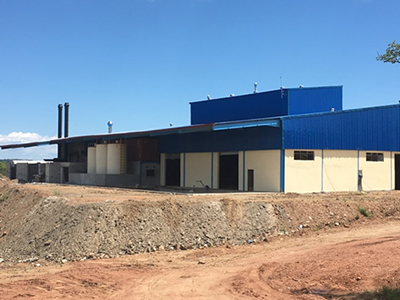 Within the African continent, there are a handful of regions where aquaculture is developing very quickly: Egypt is leading the way, followed by Nigeria. Also making its mark is Zambia, despite being constrained by irregular access to high-quality feeds, said Rob Kiers, managing director of Skretting Africa.
"What Zambia does have is a tradition of eating fish and a shared ambition by government and industry to locally produce fresh fish for the domestic market thereby reducing the market's reliance on imports of frozen products. There is a clear vision from the country to become self-sufficient or at least largely self-sufficient for fish through aquaculture," Kiers said.
The new plant, which has a capacity of 35,000 tonnes of feed, is located at Siavonga on Lake Kariba, close to the main fish farming areas in both Zambia and Zimbabwe. The facility houses a dedicated line for extruded tilapia feed and a mash feed line for other animal species. A part of the capacity will be used to supply ACF's tilapia farms (Lake Harvest) with the remaining supply going to the wider southeast African region.
Test production at the new plant began in March with feeds being made available to the market in April.
In addition to hiring many locals to work at the plant, Skretting Africa has hired an experienced general manager and a technical specialist who has a history of fish farming in Zambia and is tasked with helping progress the country's aquaculture development, while ensuring that the same robust standards, support and ways of working that are in place at all other locations operated by Skretting and parent company Nutreco are applied in the African country.
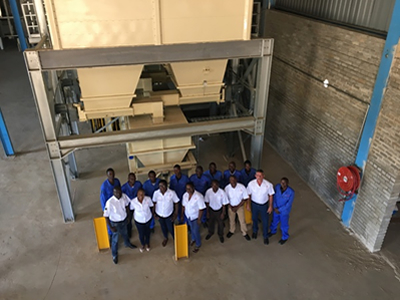 "Zambia will share the same Skretting philosophy: We will make good quality feed; make best use of our R&D; we will have local validation of those feeds; and we will also heavily invest in providing technical support to the industry," Kiers said. "We see this as a long-term investment. Because the Zambian aquaculture market is relatively small compared with some other markets, it is absolutely right that momentum should come from serious players like Skretting on the feed side and large fish farming companies like African Century Foods—together picking up the challenge to drive the market forward by investing in equipment, farming, training and management to really help the Zambian community produce sufficient volumes of fish."
Kiers is also pleased that since the announcement was made that Skretting Africa would be constructing a new plant in Zambia, other fish and animal feed companies have confirmed investment plans for the country.
"These markets have the potential to grow, but it takes more than one good player to unlock that potential in a sustainable way. I am very happy that other international companies are now also investing in African markets to really take them forward," Kiers said. "It is widely expected that the population of the African continent will double in size in the coming decades so it will need to at least double its food production, which presents a huge challenge that can only be overcome by investing locally and producing food locally."


