



INDUSTRY NEWS
When one talks about aquaculture, Egypt is hardly mentioned as among the world's leaders in this sector. But didn't you know it is ranked No. 10 worldwide and No. 2 in tilapia production? A consultant from the US Soybean Export Council recently went on a trip to this African country that straddles a part of Asia, and says he was impressed with the rapid growth of Egypt's aquaculture industry, whose aquafeed requirements are projected to reach 2,600,000 tonnes by 2028.
'RAPID GROWTH'
US soybean group exec impressed with Egypt aquaculture
Aquaculture in Egypt, the world's second-largest producer of tilapia, is growing rapidly.
This is according to Tim O'Keefe, aquaculture and feed milling consultant at the US Soybean Export Council (USSEC), who was impressed with the country's culture of high-value species such as sea bass, sea bream and mullet during a three-day visit last month.
O'Keefe said Egypt, which is a market for US soy, "is on the move", adding that its aquafeed requirements are projected to be 2,600,000 tonnes per year by 2028.
Egypt's current average inclusion rate of soy in aquafeed is 20%, with more than 90% US soybean meal or meal that is locally produced from US beans, USSEC said.
At this rate, aquafeed will require at least 500,000 tonnes of soybean meal per year.
O'Keefe said this average inclusion rate of soy could easily increase to 35%, equal to more than 900,000 tonnes per year.
According to the USSEC, Egypt currently has 34 small- to medium-sized mills producing aquafeed, with annual aquafeed production at 511,000 tonnes. Sixty percent of this feed is extruded and 40% is pelleted.
ONE MORE HEALTH BENEFIT
New research finds fish could prevent Parkinson's disease
A new study further giving credence to the benefits of fish to one's neurological health has given added boost to the seafood sector.
Researchers from Chalmers University of Technology in Sweden has shown that the protein parvalbumin, which is very commonly found in many fish species, may be contributing to improved long-term cognitive health, even preventing Parkinson's disease.
Fish has long been considered a healthy food, linked to improved long-term cognitive health, but the reasons for this have been unclear. The fatty acids mega-3 and -6, which are commonly found in fish, are often assumed to be responsible, and are commonly marketed in this fashion. However, the scientific research regarding this topic has drawn mixed conclusions.
The Chalmers researchers have discovered that parvalbumin prevents the formation of a particular human protein called alpha-synuclein, which is closely associated with Parkinson's disease.
They said parvalbumin effectively "scavenges" the alpha-synuclein proteins, using them for its own purposes, thus preventing them from forming their own potentially harmful amyloids later on. Amyloids are aggregates of proteins, which have been linked to the development of various diseases.
"Parvalbumin collects up the 'Parkinson's protein' and actually prevents it from aggregating, simply by aggregating itself first," explained Pernilla Wittung-Stafshede, professor and head of the chemical biology division at Chalmers, and lead author of the study.
The study said that since the parvalbumin protein is highly abundant in certain fish species - such as herring, cod, carp and redfish including sockeye salmon and red snapper - increasing the amount of fish in our diet may be a simple way to fight off Parkinson's disease. The levels of parvalbumin can also vary greatly throughout the year.
"Fish is normally a lot more nutritious at the end of the summer, because of increased metabolic activity. Levels of parvalbumin are much higher in fish after they have had a lot of sun, so it could be worthwhile increasing consumption during autumn," said Nathalie Scheers, assistant professor in the Department of Biology and Biological Engineering, and researcher on the study.
The research team is keen to do further research and see if their discovery relating to Parkinson's disease has implications for other neurodegenerative diseases including Alzheimer's, ALS and Huntington's disease.
5% CAGR BETWEEN 2016 AND 2021
Global aquaculture market to reach US$209.42B by 2021
The global aquaculture market is expected to reach the value of US$209.42 billion by 2021 from just $156.27 billion in 2015, growing at a CAGR (compounded annual growth rate)of 5% between 2016 and 2021. In terms of volume, the global demand for aquaculture stood at 71,190 kilotonnes (71.19 million tonnes) in 2015, according to a report published by Zion Market Research.
The report said that the demand for aquaculture in the near future is likely to be boosted by the use of fish oil for various industries such as dietary supplements, food industry, healthcare and pharmaceutical. However, the adverse climatic conditions are the major restraint that may hinder the growth of aquaculture market.
The market report said that new developing trends in aquaculture, such as the adoption of rice-fish culture, are likely to open new avenues for the major manufacturer of the global aquaculture market in the near future.
Freshwater farming was the leading culture for global aquaculture market in 2015, the report said, adding that it is the most preferred culture for fish farming in which concrete ponds are used and different fish species are cultivated. It is predicted to grow at strong CAGR in the near future.
Marine culture is also expected to grow in the coming years due to the growing demand for saltwater species among consumers, while brackish water (a mixture of salt and fresh water) farming is likely to grow at the decent rate within the forecast period.
Based on product segment, carp dominated the global aquaculture market in 2015, accounting for over 32 % share of the entire market and is also predicted to continue its dominance. Moreover, mollusks are expected to be the fastest-growing product segment of global aquaculture market owing to the penetration of rice-fish culture within the forecast period.
Asia Pacific dominated the market of aquaculture in 2015, with China as the largest country within the region, accounting for over 58% shares of the entire market in 2015. Moreover, the report said that North America and Europe are likely to have lucrative growth due to the high penetration of advanced techniques and tools. In addition, Latin America is expected to witness gradual growth in market size in the next few years.
IN WAKE OF MP.BOVIS OUTBREAK
Biosecurity guidelines for NZ dairy graziers released
In the wake of the Mycoplasma bovis outbreak, New Zealand's beef and sheep sector has released a set of biosecurity guidelines specifically for farmers offering dairy support.
The one-page information sheet contains farm-management recommendations that will help farmers protect their stock from contracting or spreading Mp.bovis and other diseases, including creating two-metre buffer zones along all fence-lines to prevent cattle contact.
According to the guidelines released by Beef + Lamb New Zealand and DairyNZ, yards can be a source of contamination through fluid from the noses and mouths of cattle. Well-maintained yards are easier to keep clean and dry and are less of a contamination risk.
The guidelines suggest getting herd owners to do tasks such as tagging, vaccinating and drenching at home to reduce use of the grazier's yards.
They state that the disinfection of surfaces is less important than preventing direct cattle contact. A delay between the arrival of different groups of cattle will allow sunshine and wind to do much of the work.
What to do with unwell animals
The guidelines suggest graziers work with the herd owners to reach an agreement on how to deal with skinny, lame and unwell animals.
While the risk of Mp.bovis transmission by machinery at grazing is low, the recommendations include parking farm bikes outside of paddocks and avoid leaving tractors and wagons sitting in paddocks. This will stop curious cattle licking their surfaces.
For the same reason, feeders and troughs should be kept with the same herd for the entire grazing season.
Since visitors, gumboots, dogs and vehicles are potential sources of many diseases and pests, the guidelines include recommendations on how to manage this risk, such as having a clean-on and clean-off policy for all visitors.
Read guidelines here.
NEW STUDY FINDING
Atlantic salmon-related virus may also cause disease in Chinook salmon
For the first time, a new study has found that the Piscine orthoreovirus (PRV), which causes disease in farmed Atlantic salmon, may cause a related disease in Chinook salmon, a species of Pacific salmon, in British Columbia, Canada.
"The results of this study are significant because they show - for the first time-strong evidence that the same strain of PRV that causes heart and skeletal muscle inflammation disease (HSMI) in Atlantic salmon is likely to cause disease in at least one species of Pacific salmon", said Dr. Brian Riddell, president and CEO of the Pacific Salmon Foundation, one of the partners constituting the Strategic Salmon Health Initiative (SSHI), of which the study is part of.
Riddell added that these findings add to the existing concerns about the potential impacts of open net salmon farming on wild Pacific salmon off the coast of BC.
Before this study, there was a debate as to whether PRV posed a risk to migratory salmon, especially in British Columbia where commercially important wild Pacific salmon are in decline.
PRV was previously known to cause HSMI - a significant cause of mortality and economic loss in the salmon-farming industry - in Atlantic salmon. HSMI has been reported in Norway, UK/Scotland, Chile and British Columbia.
But until the study findings, the PRV-1 strain that causes HSMI, and the only strain detected in BC, had not been shown to be directly affiliated with disease in Pacific salmon.
"Our study used novel molecular tools to show that PRV-1 was intimately involved in the development of jaundice/anemia in Chinook salmon", said Dr. Kristi Miller-Saunders, lead scientist in the SSHI and who works for Fisheries and Oceans Canada, another SSHI partner.
"The study also reveals a difference in PRV-1 sensitivity between species that could easily explain why the virus causes inflammation in Atlantic salmon and cell death in Chinook salmon. Based on the results, we concluded that Chinook salmon may be at more than a minimal risk of disease from exposure to PRV occurring on salmon farms", she added.
BREAKTHROUGH CHALLENGES COMMON BELIEF
Molluscs, other aquatic invertebrates discovered to produce omega-3
An international team of scientists has found for the first time that omega-3 fatty acids can be created by many invertebrates inhabiting marine ecosystems, including corals, worms and molluscs.
The breakthrough challenges the generally held principle that marine microbes, such as microalgae and bacteria, are responsible for virtually all primary production of omega-3.
Lead scientist Dr Oscar Monroig, of the University of Stirling Institute of Aquaculture in Scotland, said the findings strongly suggest that aquatic invertebrates may make "a very significant contribution to global omega-3 production".
"Our study provides a significant paradigm shift, as it demonstrates that a large variety of invertebrate animals including corals, rotifers, molluscs, polychaetes and crustaceans possess enzymes called 'desaturases' of a type that enable them to produce omega-3, an ability thought to exist almost exclusively in marine microbes", Monroig said.
First author of the study, Dr Naoki Kabeya, of Tokyo University of Marine Science and Technology, described the contribution of invertebrates to the overall omega-3 production as "remarkable", especially since invertebrates represent a major component of the biomass in aquatic ecosystems such as coral reefs, abyssal plains and hydrothermal vents.
Certain omega-3 fatty acids are considered essential for human health, particularly in western countries with high prevalence of cardiovascular and inflammatory diseases, for which omega-3 oil supplements are commonly prescribed.
"These findings can revolutionise our understanding of omega-3 long-chain polyunsaturated fatty acids production on a global scale," Dr Monroig said.

'UNSUSTAINABLE, HARMFUL'
Groups air demand vs Scottish salmon farm expansions
Salmon & Trout Conservation (S&TC) Scotland, a registered charity and Scotland's voice for fish and water conservation, is leading a call for an immediate moratorium on any new open-cage marine salmon farms in Scotland or any expansion of existing sites.
It claimed that any expansion of the industry now would be unsustainable and might cause irrecoverable damage to the environment.
"The all-party ECCLR [environment, climate change and land reform] committee of the Scottish Parliament unanimously agreed their report in March and concluded that the current consenting and regulatory framework for the salmon farming industry is inadequate to address the environmental issues", said Andrew Graham-Stewart, director of S&TC Scotland.
Graham-Stewart was referring to the committee's report that looked into the current state of the aquaculture industry in Scotland and which released its report expressing concern about the sector's alleged full lack of understanding on the importance of the impact it has on the environment.
The report added that the committee was not convinced the sector was being regulated sufficiently, and that "this requires urgent attention".
S&TC Scotland claimed that its call was supported by 26 other environmental NGOs and other bodies including Atlantic Salmon Trust, Fish Legal, National Trust for Scotland, Scottish Anglers National Association, Salmon Aquaculture Reform Network Scotland, Scottish Creel Fishermen's Federation, Scottish Sea Angling Conservation Network, Sustainable Inshore Fisheries Trust, Scottish Salmon Think-Tank and Whale and Dolphin Conservation.
Moratorium on fish biomass increase
Their demand included a moratorium on any increases in farmed fish biomass at existing sites.
S&TC Scotland also claimed that earlier this month alone, the Highland Council granted planning permission for two new salmon farms on Skye and the Argyll. Likewise, the Bute Council permitted an increase in biomass of farmed fish on two farms on Loch Fyne, where the record of sea lice control and mortalities on The Scottish Salmon Company farms over the last two production cycles "has been amongst the worst in Scotland".
"As it stands, these issues remain completely unresolved and, as the oral evidence given on April 18 to the Rural Economy and Connectivity Committee by the Scottish Environment Protection Agency, the Crown Estate, Scottish Natural Heritage and the Highland Council shows, we are a very long way from addressing them", Graham-Stewart stressed.
Scotland has also been bugged by sea lice issues. Late last year, it was reported that sea lice numbers were running out of control for extended periods in much of the Scottish salmon industry.
S&TC accused individual farms of failing to operate with lice numbers below the Scottish government's trigger levels, citing uncovered information.
IMPORTATION OF EGGS NIXED
US production of GE salmon receives approval
The US has approved the application of the producer of the genetically engineered AquAdvantage Salmon to raise the fish at a land-based contained facility near Albany, Indiana, it was announced Thursday.
The Food and Drug Administration (FDA), however, said company will be prohibited from importing the eggs necessary for producing the GE salmon at the facility because of a requirement in the current appropriations law.
In November 2015, the FDA approved the consumption of AquAdvantage Salmon, its first approval for a GE animal intended for food.
Later, however, in early 2016, it issued an import alert, which temporarily halted imports of the GE salmon, pending the publication of the final rules regarding product labelling.
The alert was in response to a specific provision in the 2016 Omnibus Appropriations Act, which states that the FDA may not allow the introduction or delivery for introduction into interstate commerce any food that contains GE salmon, until final labelling guidelines for informing consumers of such content are published.
The FDA said it considers salmon eggs as food under the Federal Food, Drug and Cosmetic Act.
In 2016, after FDA issued the alert, Congress passed the National Bioengineered Food Disclosure Law, which charged the Department of Agriculture with promulgating regulations regarding the labelling of food derived from "bioengineered" sources, which has implications for this import alert and the labelling of this salmon product.
At this time, the FDA's import alert continues to remain in effect, which mean AquaBounty cannot import AquAdvantage Salmon, including its eggs or any food from the salmon, into the US.
AquAdvantage Salmon, which is an Atlantic salmon that reaches market size faster than non-GE farm-raised Atlantic salmon, is produced by Massachusetts-based AquaBounty Technologies from eggs produced in Canada. The salmon eggs are hatched at the company's grow-out facility in Panama, where fish grow to maturity.
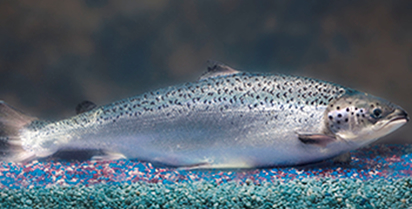
AquAdvantage Salmon PHOTO FROM FDA.GOV
IN MARCH
US refuses entry to 14 antibiotic- and salmonella-tainted shrimp imports
The US in March rejected 135 seafood entry lines, of which five or 3.7% were of shrimp for reasons related to banned antibiotics.
The Southern Shrimp Alliance (SSA) said that the total entry line refusals of shrimp for reasons related to banned antibiotics totalled nine in the first quarter of this year:
The five entry line refusals in March were all from China, involving three companies and two districts.
Also in March, the US Food and Drug Administration reported refusing another 11 shrimp entry lines because of salmonella, with all of these shipments originating in India. In January, the FDA reported refusing 14 shrimp entry lines because of salmonella, while in February, there were another 11 shrimp entry line refusals, also because of salmonella.
In the first quarter, these refusals totalled 36 entry lines of shrimp - virtually all coming from India. These refusals have been made at multiple ports throughout the country, the SSA reported.

UPWARD TREND MAINTAINED
Vietnam shrimp exporters bullish on EU market
Prospects of Vietnamese shrimp exports this year are looking good, with the EU, the country's biggest buyer, expected to ramp up its orders amid a possible ban on Indian shrimp imports.
According to the Vietnam Association of Seafood Exporters and Producers (VASEP), the EU was the "most dynamic" importing market of Vietnamese shrimp in 2017 and that in 2018, exports to this market has maintained the upward trend.
As the largest importer of Vietnamese shrimp, the EU accounts for 18.6% of Vietnam's total shrimp exports. Shrimp exports to this market in the first two months hit US$81.9 million, up 11% over the same period last year, the VASEP said.
Exports to the three main markets in the block (the Netherlands, Germany and Belgium) recorded double-digit growths at 62.6%, 42.5% and 31.8%, respectively.
It said that Vietnam's shrimp exports to the EU are quite favorable as Indian shrimp (the main competitor of Vietnam in the EU) has difficulties in the EU market and faces the risk of being banned in the EU.
GSP and EVFTA advantages
Another advantage of Vietnamese shrimp exports to the EU is the accordance in 2017 of GSP (generalised system of preferences) rights by the EU, while Thailand and China do not have this advantage.
Still another is the upcoming EU-Vietnam Free Trade Agreement (EVFTA), which will give the Southeast Asian country more opportunities to boost shrimp exports to the 28-nation bloc. Under the agreement, Vietnamese goods, including shrimp products, will enjoy special preferential tariffs.
At present, the GSP tariff for Vietnamese frozen raw shrimp (HS code 030617) is 4.2%, while that for processed frozen shrimp (HS code 160521) is 7%.
Vietnam's total shrimp exports to all markets in the first two months totalled US$440.5 million, up 16.5% over the same period in 2017.
The top 10 main importing markets of Vietnam shrimp were the EU, the US, Japan, China, South Korea, Australia, Canada, ASEAN, Taiwan and Switzerland, all accounting for 88.6% of total shrimp export value of Vietnam.


