


May 10, 2023
China's feed market as of 2022 in the late COVID period
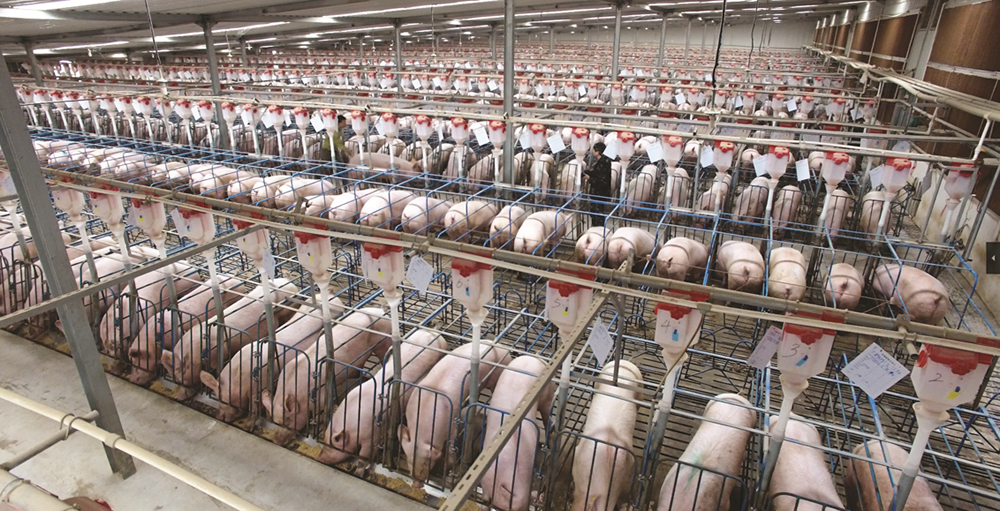
China's feed output in 2022 was 302.234 million tonnes, a 3.0% increase over 2021, according to data from the China Feed Industry Association.
The output of compound feed was 280.212 million tonnes, up by 3.7%. The output of concentrated feed was 14.262 million tonnes, a 8.1% drop. The output of premix feed was 6.522 million tonnes (a -1.6%).
The output of pig feed was 135.975 million tonnes, a 4.0% increase on-year while the output of layer feed slid 0.6% to 32.109 million tonnes. The output of broiler feed rose 0.2% to 89.254 million tonnes. The output of ruminant feed was 16.168 million tonnes (+9.2%), whereas the output of aquatic feed was 25.257 million tonnes (+10.2%).
The main reason for the increases seen in China Feed Industry Association's data was due to the expansion of pig farming. However, it is important to note that aforementioned statistics include repeated data from the industrial chain, and that of trace minerals and fermented feed raw materials may not be related to animal feed. Moreover, if concentrated feed and premix production are converted into the equivalent of compound feed, then the output data would be far higher than actual feed consumption.
Based on eFeedLink's statistics, China's feed consumption in 2022 was 256.129 million tonnes (-0.77% over 2021). Converting the output of concentrated feed and premixes into the equivalent of compound feed, total feed consumption was lower by 2.58% on-year.
eFeedLink also found the consumption and output of pig compound feed was 107.835 million tonnes in 2022 (-0.28%). Those of pig concentrated feed and pig premix decreased 13.51% and 12.84% respectively.
Currently, the market share of pig compound feed exceeds 50%. That of concentrated feed dropped to less than 20%, while premix feed's share diminished to 30%. The reduction in the production of concentrated feed and premix feed, coupled with a slight fall in compound feed production, led to a decline in actual feed consumption of live pigs by about 7%. This fall in hog feed consumption was due to lower consumption of livestock products due to COVID lockdowns.
Last year, broiler slaughter shrank from 12.792 billion in 2021 to 12.325 billion in 2022 (-3.65%). Broiler consumptions in cities with high inflow of foreigners (like Shanghai) plummeted 13.79% in 2022 as a result of lockdowns and China's weak economy.
The average monthly population of Chinese layer birds shrank from 1.110 billion in 2021 to 1.103 billion birds in 2022 (-0.63%), affecting the production and consumption of feed for laying hens.
Meanwhile, the consumption of both aquatic and ruminant feed continued to grow last year.
The increase in the number of high-yielding Holstein dairy cows sparked a 14% increase in China's ruminant feed consumption. However, the price of feed ingredients rose sharply last year, leading to falling milk consumption.
Exiting the COVID era
Last December, China lifted its COVID lockdown measures while the government recently declared that the pandemic situation had stabilised. These developments could help stimulate a strong recovery in livestock products and, subsequently, feed consumption in 2023.
This year, pig production could expand, thus lifting hog feed consumption. Additionally, the market shares of pig compound feed will continue to rise. Hence, the growth rate of pig feed production could exceed that of consumption..
Although China's import of white-feather broiler breeders in 2022 decreased due to COVID, broiler production could remain stable with contributions by three local breeders and the high capacity of the yellow broiler industry.
China's consumption of egg is unlikely to grow significantly. Thus, the consumption and production of layer feed might be limited.
The production of China's aquatic products could grow steadily, hence supporting the growth of aquatic feed consumption.
As for the ruminant industry, milk consumption will increase this year. Increased demand will be supported by the abundance of dairy cows, translating to a steady rise in ruminant feed consumption.
The rebound in demand for livestock products was brought about by China's gradual economic recovery this year. Specifically, the structural change in the Chinese pig farming industry will result in higher hog feed production.
Consequently, China's overall feed output should witness a substantial rebound.
- Shi Tao and David Lin, eFeedLink


