


May 7, 2026
Poultry industry in Bangladesh slides into acute cost-and-price crisis
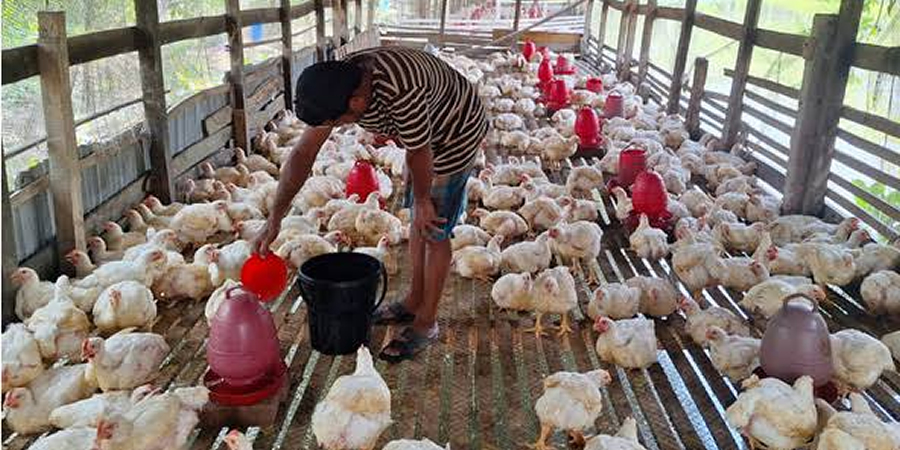
Bangladesh's poultry sector—worth an estimated Tk50,000 crore (US$4.55 billion)—and a cornerstone of affordable national protein supply—is sliding into an acute cost-and-price crisis, with industry leaders warning that soaring input costs, heavier taxation and policy neglect are pushing thousands of farmers to the brink.
Stakeholders said the sector has entered a prolonged phase of financial stress, with production costs nearly doubling over five years. Using a base index of 100, costs have surged to 115 in 2022, 145 in 2023, 170 in 2024 and 190 in 2025—an escalation driven overwhelmingly by feed prices, which account for 75–80% of total production costs.
The impact is now visible across the value chain. Producers report that the economics of both eggs and broiler chicken have turned increasingly unsustainable. Eggs currently cost around Tk10.5–11 (US$0.096–0.10) to produce, while wholesale prices frequently fall to Tk7.5–8.5 (US$0.068–0.077).
Broiler chicken production costs stand at approximately Tk146 (US$1.33) per kilogramme, yet market prices hover only marginally higher at Tk145–148 (US$1.32–1.35)—leaving farmers operating at break-even or outright loss.
For many small and medium-scale producers, the imbalance has become existential. Industry insiders warn of rising closures, particularly among family-run farms that lack the financial buffers to withstand sustained losses.
The crisis has been compounded by a steep rise in taxation across the sector. Corporate tax has increased from 15% to 27.5%, while advance income tax (AIT) has jumped from 1% to 5% and turnover tax from 0.6% to 1%.
As Bangladesh remains heavily dependent on imported feed ingredients, these fiscal measures have had a direct inflationary effect on production costs.
Industry leaders argue that the tax structure has placed local producers at a competitive disadvantage compared to regional peers. Countries such as India, Pakistan, Nepal, Thailand and Malaysia reportedly offer lower tax burdens or targeted exemptions for poultry and feed inputs, enabling more stable pricing and stronger domestic supply chains.
Beyond the balance sheets, the crisis is now cutting into rural livelihoods. Experienced farmers, including Alamgir Hossain from Bhuapur in Tangail, describe a situation in which rising feed costs have forced sales below production value, eroding savings and pushing families into deep financial distress.
The sector is not marginal. It supports an estimated 6–7 million people directly and indirectly, including feed traders, hatchery workers, transport operators and a growing cohort of young agripreneurs. Industry leaders warn that continued losses could trigger widespread job displacement and destabilise rural micro-economies.
Agricultural economists are urging urgent policy intervention to prevent structural collapse. Recommendations include reducing import duties on raw materials, incentivising domestic feed production, and easing the corporate tax burden on poultry operators.
Proposed reforms include lowering the corporate tax to 10%, reducing turnover tax to 0.2%, and restoring AIT to 1%, alongside simplified and faster tax refund mechanisms to improve liquidity in the sector.
The Bangladesh Poultry Industries Association has issued a stark warning that the continued exit of small and medium producers could accelerate market consolidation in favour of large corporate players. Such a shift, they argue, would reduce competition, weaken price stability and ultimately push up consumer prices.
Industry stakeholders are also calling for the sector to be formally recognised as a pillar of national food security. Their demands include targeted fiscal relief in the upcoming budget, subsidised electricity for farms, low-interest financing for producers, and stricter action against middlemen-driven price distortions.
Without swift policy correction, they caution, Bangladesh risks a paradoxical outcome: a sector that once made eggs and chicken the country's most affordable sources of protein could become increasingly out of reach for ordinary consumers—turning a food security success story into a looming affordability crisis.
- Daily Observer


