


May 8, 2026
Thailand targets cobia as premium aquaculture species for Andaman Sea communities
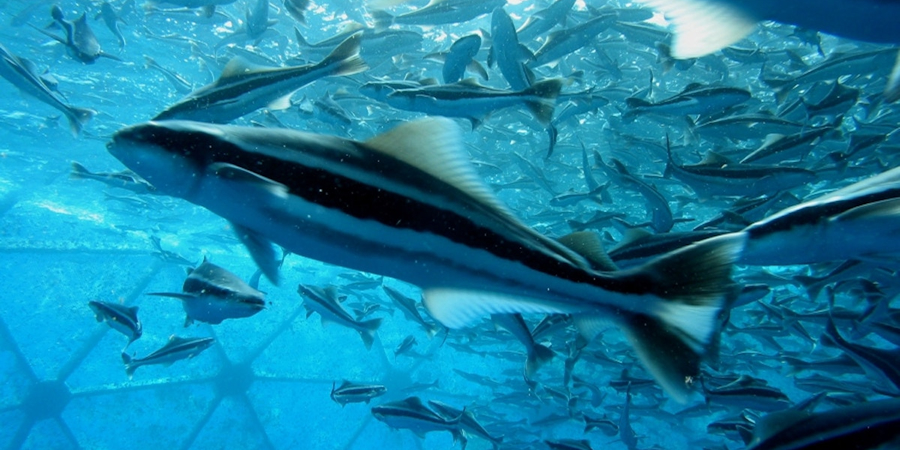
The Department of Fisheries doubles fingerling production targets and develops value-added processing to lift farm-gate returns for coastal communities in southern Thailand.
Thailand's Department of Fisheries is scaling up cobia aquaculture along the Andaman Sea coast, targeting annual fingerling production of 50,000 by 2027, as the species , marketed locally as "Black Salmon", gains traction among fishing communities as a high-value alternative income source.
Cobia, known in Thailand as pla chon talay, has attracted growing interest for its firm white flesh, high nutritional value and DHA content. The fish commands a market price of THB180 (US$5.00) per kilogramme as a whole fish, rising to THB250 (US$6.90) per kilogramme when processed using the Japanese Ikejime blood-removal technique. Sold as ready-to-eat sashimi, the price climbs further to THB1,000 (US$27.70) per kilogramme, representing a significant value-addition opportunity for small-scale producers.
Director-General Thitiporn Hlaoprasert said the department's Phuket Coastal Aquaculture Research and Development Centre has been producing fingerlings continuously for distribution to farmers and is now planning to double capacity from the current 25,000–30,000 fingerlings per year to 50,000 per year to meet rising demand.
Cage farming will be expanded to fishing communities across Phuket, Phang Nga, Krabi, Trang and Surat Thani provinces, in collaboration with Prince of Songkla University's Phuket campus. The programme operates under the government's BCG (Bio-Circular-Green) economic model, which promotes environmentally sustainable aquaculture practices.
Farmer uptake has grown steadily, rising from 30 growers in 2025 to an estimated 50 in 2026. Total production is projected to reach 90,000–100,000 kilogrammes by 2027, sufficient to supply both processing and direct sales channels.
Beyond production, the department is developing cobia cage farming sites into aquaculture tourism destinations and community learning centres, with tourists able to observe feeding operations, participate in sashimi preparation and sample cobia dishes, an initiative that has drawn strong interest from both domestic and international visitors.
- Bangkok Business News


