


May 4, 2026
Petition by consumer group calls for stricter rules for labels for farmed salmons
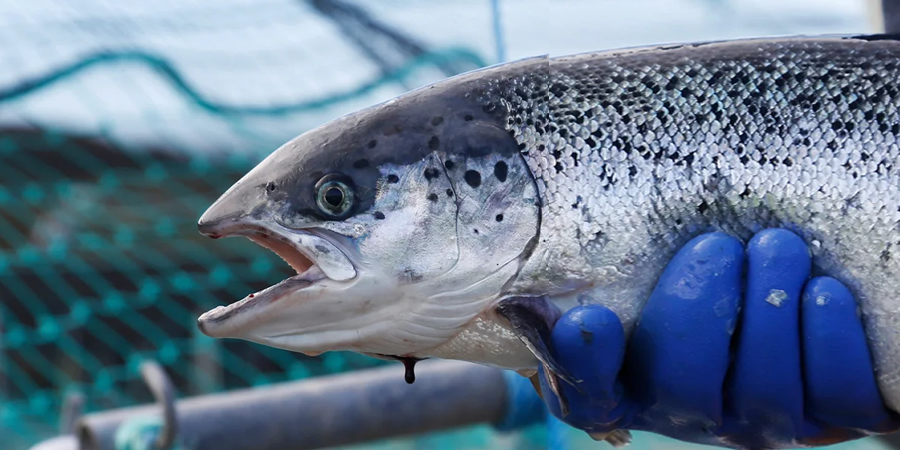
Consumer group Foodwatch has launched a petition calling for stricter rules for the Aquaculture Stewardship Council and GlobalG.A.P. labels for farmed salmon, RTL reported.
The move follows cases in which a Norwegian farm held its ASC certification despite massive fish deaths.
Nearly two million salmon died at the farm in 2023 because of poor living conditions. Nearly 500,000 died there in 2024. The certification was withdrawn only later.
Foodwatch said the labels give shoppers no real guarantee of sustainability or responsible production. It also criticises the inspection system. Most inspections are announced weeks in advance. That gives farms time to hide problems such as large-scale deaths.
Foodwatch examined farmed salmon products from Albert Heijn, Lidl, and Jumbo. For three of the products, the group identified a specific farm only after asking many questions to stores and suppliers. For three others, it received no answers at all.
Even when a farm was named, the public could not get clear information on death rates, disease outbreaks, or treatments, Foodwatch said. "The reality behind the packaging is an intensive industrial system in which massive mortality is no exception," the group stated.
About 80% of salmon sold around the world is farmed. More than half comes from Norway, the top producer. Of Norway's 761 salmon farms, only 361 hold ASC certification.
Most farmed salmon in Dutch supermarkets comes from Norway. A small share comes from other countries, such as Chile.
Salmon in these operations live in high densities inside sea pens or basins. Crowding increases stress, injuries, and the rapid spread of parasites and diseases. Sea lice, a deadly parasite that attacks young fish, pose one of the biggest risks.
Anne Hilhorst, a spokeswoman for the animal-welfare group Wakker Dier, said the ASC label "says as good as nothing about the welfare of fish; it has never done so." She noted that the label was created primarily to address environmental and labor issues. Some improvements have occurred, but it is not a strong animal-welfare standard, she added.
In 2020, Wakker Dier nominated ASC for an award for misleading claims on animal welfare. The group said people hear "responsible farming" and expect good conditions for the fish themselves. Those conditions are often not met, it said.
Foodwatch wants ASC and GlobalG.A.P. to require surprise inspections and set firm limits on deaths. Farms that break the rules should lose certification.
The group also calls on supermarkets to set their own tough supplier standards and stop buying from farms with repeated problems. "Consumers deserve real transparency," it said.
Researchers at Wageningen University offered another perspective. Marnix Poelman told RTL that traceability to the actual farm is "usually well arranged." However, the large number of farms makes the supply chain complex, leading to weak spots.
Poelman called the ASC label a minimum guarantee that meets basic sustainability rules and "raises the quality of the entire sector." He described sustainability in salmon farming as "a many-headed monster." It involves the environment, animal welfare, and feed ingredients, which matter more and more. Critical NGOs will always push for higher standards, he added.
Colleague Geert Hoekstra focuses on the sector's economics. He acknowledged that farming is often very intensive and that "sometimes there are too many fish in one system. Stress is the number one cause of death with salmon."
But Hoekstra pointed to clear progress in recent years. Farms now allegedly use better methods to fight sea lice without harmful chemicals. Feed is also more often plant-based. Some farms reportedly monitor salmon behavior on dozens of screens around the clock to improve welfare.
ASC told RTL it does not recognise the criticism. The label sets strict requirements for the environment, fish welfare, and workers' rights, the group said. Each farm receives its own certification and undergoes independent audits.
ASC uses a Chain of Custody system to keep certified fish separate from non-certified fish at every stage. The exact farm may not appear on the package, but the origin is tracked throughout, it said. When audits find problems, farms must correct them or risk suspension or loss of the label.
- NL Times


