


April 25, 2018
BioMar Chile's R&D on "right foot" for second year operations
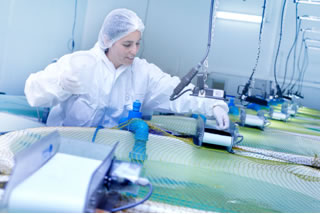 R&D work at BioMar Chile, which is carried out at the ATC Patagonia Chilean aquaculture research centre, began on the "right foot" in its second year of operations, BioMar said.
According to the company, there is progress with "the number and quality of trials carried out at the center", coupled with visits by "high-caliber researchers."
The BioMar R&D team's research capacity at ATC Patagonia reached 75% in 2017 with a total of 12 projects in three species - namely Atlantic salmon, rainbow trout and coho Salmon - which are studied at different life stages and, in some cases, near harvest size.
As part of BioMar's research network, the ATC Patagonia facility is used by researchers from the company's R&D base in Trondheim, Norway.
"The research undertaken is in accordance to the technical requirements and protocols defined in each project, independently of the target market for the research," BioMar added.
"This flexibility of the center enabled us in 2017 to unify under the same roof, research related to feed performance, fillet quality, development and control of raw materials, as well as research in the health area where the SRS and use of probiotics took up most of the activities. Around 50% of the trials were associated with improving performance while 20% was dedicated to fillet quality and the last 30% was distributed among the health and raw materials areas."
BioMar also stated that the contribution of ATC Patagonia was to the "dialogue and scientific discussion" among different stakeholders linked to aquaculture production in Chile.
"Our "Science On" programme saw 13 scientists participate and share knowledge within the salmon industry on aquaculture research topics in health, nutrition and other fields over the last year in Puerto Montt," the company said.
"Researchers belonging to BioMar's global R&D presented at four workshops their latest results and applications in diets for salmon and trout at various life stages in freshwater and seawater, as well as in the health area."
"One of the positive externalities that we hoped to achieve by increasing investment in research in Chile was to bring our researchers closer to our customers, and this expectation was achieved with success", Michael Adler, technical director of BioMar in Chile, commented.
In fact, in late 2017, BioMar Chile began construction of its own offices and general facilities in the same location where ATC Patagonia operates.
"Part of the agreement confirming our investment in our own research facilities in Chile was the creation of own spaces for BioMar Chile activities. That stage of the project has already started and we hope to see results soon," Adler added.
Eduardo Hagedorn, general manager of BioMar Chile, noted that 2017 "was a good year" for the industry, but "not without its challenges."
"This first year of operations at ATC Patagonia was also similar. It was challenging to complete the agenda for the first twelve months of work, in addition to the workshops and meetings around R&D. However there was an effort made from the technical and commercial areas that resulted in concrete actions and advances. We are proud after a positive and great year of work," Hagedorn remarked.
In addition, BioMar's facilities and resources are already allocated for the work of BioMar Chile's "technical area that will see activities in product validation, from the point of view on performance and digestibility," the company said.


