


April 18, 2023
EFSA report cautions more avian flu outbreaks hitting poultry production
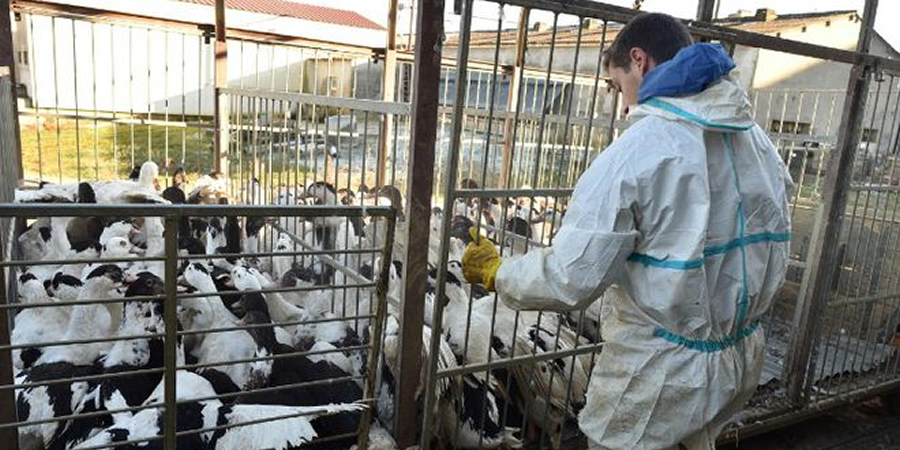
A report from the European Food Safety Authority (EFSA) warned that new avian flu outbreaks on poultry operations could increase again in the next few months.
The rising risk comes as wild birds begin their annual migration to areas with high numbers of industrial poultry and egg farms. The report suggested these operations are at especially high risk. However, the poultry industry is pushing for vaccines as a solution rather than shutting down factory farms packed with 20,000 birds at a time.
The outbreak is already responsible for over 58.3 million poultry losses in Europe — with particular losses to ducks, turkeys and chickens — and billions in public funding.
EFSA regulator Francesca Baldinelli called the current epidemic "certainly the most important and devastating epidemic we have observed in Europe" — both in terms of sheer numbers and geographic extent, as cases have been found "from the extreme north of Europe to the extreme south of the Iberian Peninsula."
EFSA has been closely monitoring avian flu since 2016, at the time the largest ever outbreak recorded in the European Union. Since then, there have been epidemics every year since 2020, said Baldinelli. "Why we are increasingly seeing very important epidemics of avian flu is a question that is very difficult to answer."
Evidence from EFSA's own reporting suggested the excessive density of intensive poultry farms is at the root of the problem. In a report published in June, the EU body asked to activate "a medium-term strategy" to reduce the density of livestock farming in high-production areas. According to the document, during late spring and early summer months, 86% of poultry outbreaks were due to farm to farm transmission.
According to Baldinelli, most of the spread occurred in certain regions, "especially in South-East France, in the foie gras industry, but also in North-East Italy, with turkeys." Baldinelli also pointed to outbreaks in Hungary where both duck for foie gras and turkeys are farmed.
For now, the livestock industry remains reluctant to adopt strategies to reduce densities in production areas, citing financial loss.
According to government data, 21.8 million animals have been slaughtered in France since the beginning of the epidemic in August 2021, leading the French government to set aside €1.1 billion for local companies.
In Italy, where 15 million animals were culled in 2022, representatives of the poultry industry said that government refunds amounted to almost €1 billion. According to the Italian Institute of Services for the Agricultural Food Market, in January 2022, every single turkey culled in Italy was paid between €9 and €20 (a broiler chicken at around €1.5).
- Sentient Media


