


Arm & Hammer: From problem to prevention - The next-generation approach to poultry litter management
Arm & Hammer: From problem to prevention — The next‑generation approach to poultry litter management
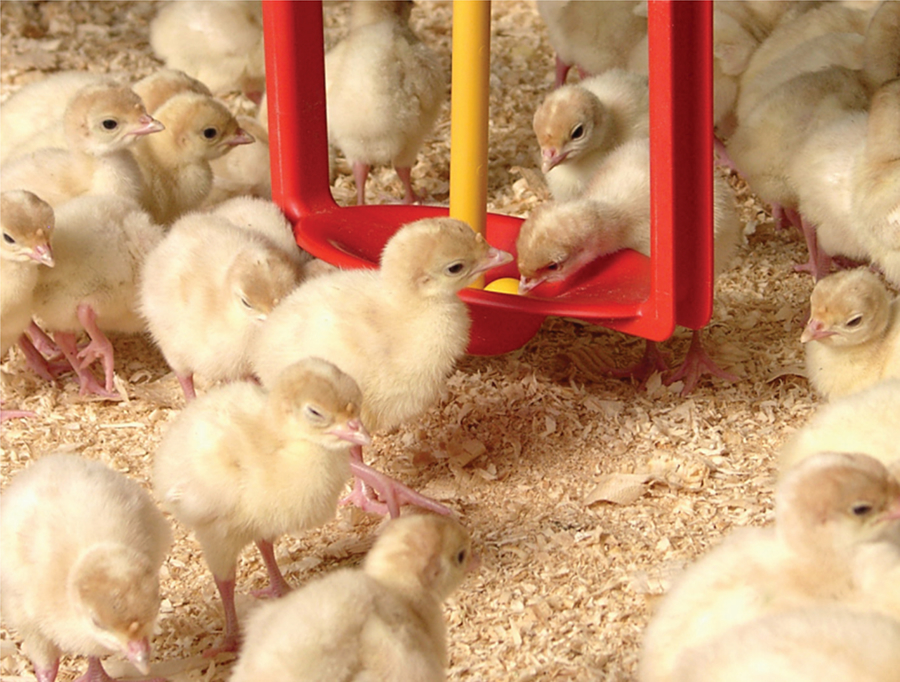
Across the poultry industry, litter management is not a single‑factor problem, but a systems challenge that intersects bird health, worker safety, environmental compliance, and economic performance.
Failures to maintain litter quality cascade into multiple risk areas simultaneously, which is why the poultry industry views litter quality as a leading indicator of overall flock success rather than a housekeeping issue.
Common litter management challenges and their impact
Ammonia (NH3) is the main air pollutant in poultry production that affects the health of chickens and workers. Ammonia originates from the microbial degradation of uric acid and undigested feed proteins excreted. The current ammonia exposure limit of 25 ppm is based on human safety. Ammonia concentration in laying hen houses should generally remain below 10 ppm and not exceed 25 ppm (UEP, 2006, 2017).
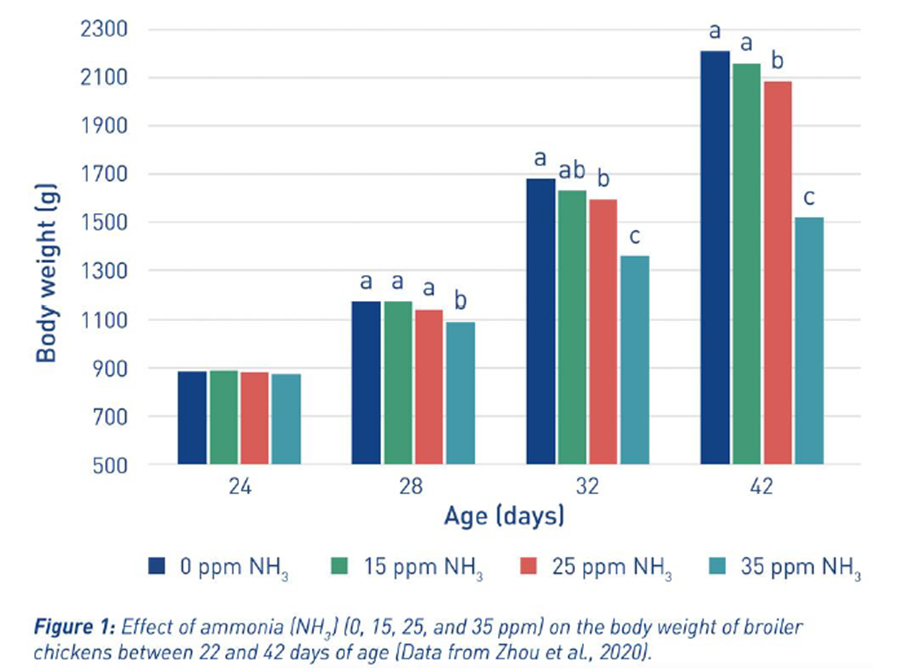
Housing and management factors, including housing style, bird density, litter conditions, handling methods, and ventilation rate, are critical to indoor ammonia levels (Dawkins et al., 2004). In addition, indoor environmental parameters such as temperature, relative humidity, manure/litter pH level, and air velocity can be correlated to the ammonia emissions directly or indirectly (Faulkner and Shaw, 2008).
Impact: Respiratory problems, eye problems, reduced growth and egg production, decreased immune function leading to infections and disease.
Management of ammonia:
- Proper ventilation and litter management
- Chemical methods include calcium hydroxide, aluminum sulfate, and ferrous sulfate
- Often unsustainable in commercial production due to economic feasibility
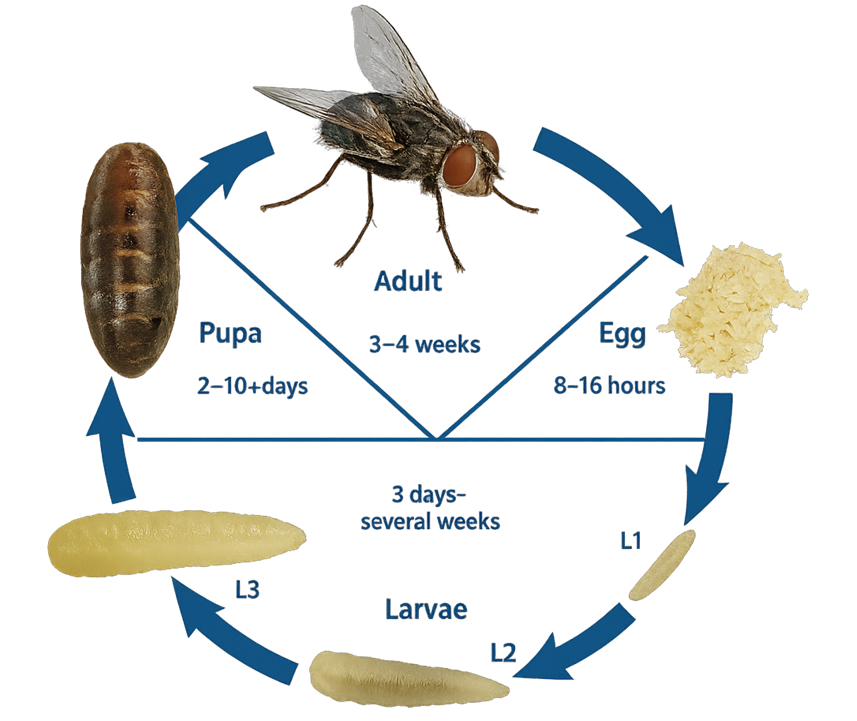
Flies carry pathogens on their bodies and in their feces, and can contaminate food and transfer food-borne illnesses.
Flies can create a challenging work environment when present in high numbers.
Birds can be infected with pathogens by ingesting flies, their larvae, or through direct contact, making them a potential reservoir for disease-causing organisms on poultry farms. Environmental regulations of fly populations in specific regions have directly led to decreased profitability for poultry farms through fines and shutdowns.
Optimal conditions for fly development include temperatures between 25°C and 30°C, high moisture, and a source of food. The smell of ammonia is a strong signal for fly attraction and potential breeding.
Often, several flies will deposit their eggs in close proximity, leading to large masses of larvae and pupae. Eggs must remain moist, or they will not hatch. Moisture, in combination with warmer temperatures, leads to faster growth of these populations. Fresh poultry manure makes an ideal environment for fly growth.
Scientists have calculated that a pair of flies beginning reproduction in April may be progenitors, under optimal conditions and if all were to live, of 191,010,000,000,000,000,000 flies by August.
Impact: Disease outbreak, negative performance impact, poor working conditions for employees, fines, and risk of shutdown
Management to control flies:
- Sanitation: Removal of wet manure, removal of spilled feed, keep dung dry, thorough washing during downtime
- Fly traps
- Larvicides, adulticides (drawbacks: resistance, little impact directly on litter quality; treating the outcome of poor litter quality as opposed to treating the source of the problem)
Poultry Eco's scientifically selected strains of stable Bacillus were identified from ARM & HAMMER's culture collection of over 82,000 probiotic strains.
Poultry Eco offers a three-pronged, comprehensive approach to effective litter management. This natural biological solution contains strains selected for their ability to degrade common substrates present in poultry fecal material and litter. By degrading the environmental substrates, these Bacillus strains have been proven to result in a drier litter environment in poultry production systems.
The Bacillus strains in Poultry Eco prevent the growth of urease-producing bacteria, blocking the conversion of uric acid to ammonia, leading to a decrease in ammonia levels in the barn. They can also inhibit other common poultry pathogens present in the litter. In addition, newly discovered Bacillus strains in Poultry Eco can break down a major structural component of the exoskeleton of the different developmental stages of flies, directly impacting the fly development and decreasing fly populations.
This combination of microbial strains has been proven to reduce fly larvae and adult fly populations, reduce ammonia volatilisation, reduce litter moisture, and improve fecal consistency. These outcomes have been validated in several field trials in different geographical locations to ensure successful outcomes for ARM & HAMMER customers.


