


April 12, 2023
China launches campaign to reduce soybean imports
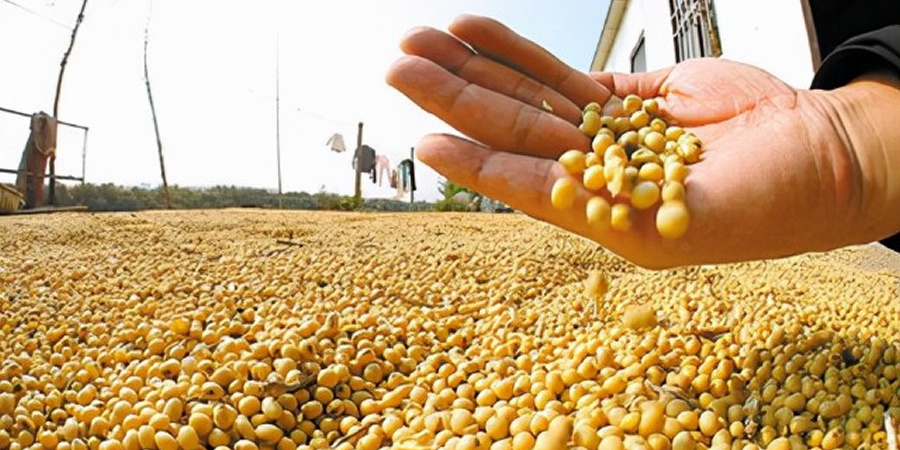
The Chinese government has launched a campaign to reduce soybean imports, which will have profound implications for the entire global supply chain, Western Producer reported.
Soybean meal inclusion rates in feed rations are expected to decline from 15.3% in 2021 to 13.5% in 2025. According to a new Rabobank report, they are expected to fall to 12% by 2030.
Imports will be reduced as a result.
Because China accounts for 60% of global soybean imports, its actions have a significant impact on soybean prices, which in turn affect canola prices.
According to Rabobank, the country's soybean imports peaked in 2020 and are expected to fall to 87 million tonnes by 2025, down from 94 to 95 million tonnes in 2022.
Rabobank's low-soybean meal scenario showed China's soybean imports will continue to fall to 84 million tonnes by 2030.
Arlan Suderman, StoneX's chief commodities economist, agrees with Rabobank. He said they may have seen peak (Chinese) soymeal demand.
As China's population shrinks, so will its consumption of pork and other animal proteins.
African swine fever (ASF) also turned some people off pork due to higher commodity prices.
Government efforts to alter feed rations in order to reduce the country's reliance on imported soybeans are also yielding positive results.
Rabobank said a few factors will influence overall feed demand in China in the coming years. Animal protein consumption is expected to slow in the coming decades. In middle- to upper-income households in the country, demand for pork and eggs has already reached saturation.
Commercial feed penetration is increasing in the post-ASF environment. Due to the shift away from backyard operations, it is expected to reach 80% in swine rations over the next decade, up from 75% today.
Improved feed conversion ratios means that less feed will be required to produce the same amount of animal protein.
Taking all of these factors into account, Rabobank predicts that total animal feed consumption will rise to 486 million tonnes in 2025, up from 450 million tonnes in 2021.
By 2030, it is expected to reach 523 million tonnes.
Meanwhile, the China Feed Industry Association has established upper limits for the use of soybean meal in swine, layer, broiler, aquaculture, and other feed rations.
The policy appears to be effective. The industry-average inclusion ratio fell from 17.7% in 2020 to 15.3% in 2021.
As a result, soybean meal consumption is expected to fall by 9 million tonnes by 2025 and 17 million tonnes by 2030.
Rabobank said converting these drops into crushed soybeans represents a reduction in soybean usage of 11 million metric tonnes in 2025 and 22 million in 2030.
China is investigating the possibility of substituting soybean meal with insect and microbial proteins.
China also set a target of increasing domestic soybean production to 23 million tonnes by 2025, up from 19.5 million tonnes last year, in its 14th Five-Year Plan.
In order to achieve that goal, the country is considering allowing the planting of genetically modified crops.
- Western Producer


