


April 9, 2024
World Bank's private sector arm slammed for financially supporting factory farming
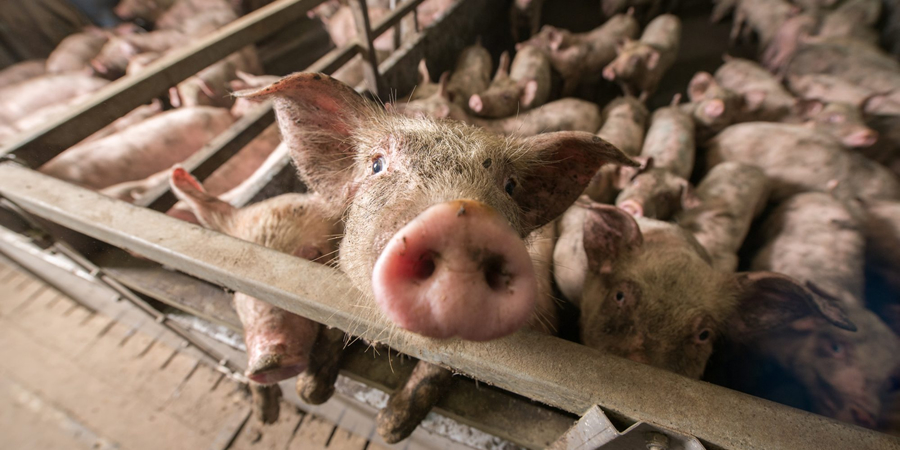
The private sector arm of the World Bank is facing claims that it contributes to global warming and the undermining of animal welfare by providing financial support for factory farming, including the building of pig farming tower blocks in China.
A coalition of environmental and animal welfare groups is calling on the World Bank to phase out financial support for large-scale "industrial" livestock operations. More than $1.6 billion was provided for industrial farming projects between 2017 and 2023, according to an analysis by campaigners.
The International Finance Corporation (IFC), part of the World Bank Group, is owned by 186 member countries.
Kelly McNamara, a senior research and policy analyst at Friends of the Earth US, said there was a "mismatch" between the World Bank's commitments on the climate crisis, sustainable development and animal welfare, and its financing of intensive farming. "Expanding industrial livestock production is a threat to climate, sustainable development and food security," she said, adding that investing in such projects put smallholders out of business and increased meat consumption, fuelling global warming.
In June last year, the IFC approved a US$47.3 million loan to Chinese company Guangxi Yangxiang, providing capital for four multistorey industrial pig-rearing complexes and a feed mill. "There are big advantages to a high-rise building," a company manager told Reuters during early construction of the blocks at Yaji Mountain in southern China in 2018. "The land area is not that much, but you can raise a lot of pigs."
The farms, known as hog hotels, can be 13 floors high.
Peter Stevenson, chief policy adviser at Compassion in World Farming (CIWF), said: "I'm appalled by some of these developments, which have limited space and barren conditions. They are not just damaging for animal welfare, but also for food security and the environment."
Stevenson added that intensive agriculture undermined food security as animals converted cereal feed inefficiently into meat and milk. He said it would be better to produce more crops for direct human consumption and reduce the amount of cereals used for animal feed.
Other IFC-funded projects include intensive chicken production in India and Uganda, pig production in Ecuador and dairy production in Pakistan.
In June 2022, the IFC granted a loan of up to US$200 million to agribusiness giant Louis Dreyfus Company to purchase soy and corn in Brazil. IFC said it would only source crops from farmers committed to zero deforestation, but campaigners said it should "stop funding the wasteful use of such crops as animal feed".
World Bank officials said the environment and animal welfare are central to the IFC's financing of farming projects, with policies and guidelines to ensure sustainable businesses. They added that large-scale projects can be used to develop more efficient, environmentally friendly practices.
Officials added that they strive to reduce greenhouse emissions in every project for which finance is provided.
- The Guardian


