


April 5, 2023
US to see lower 2023 red meat, poultry production for first time in nine years
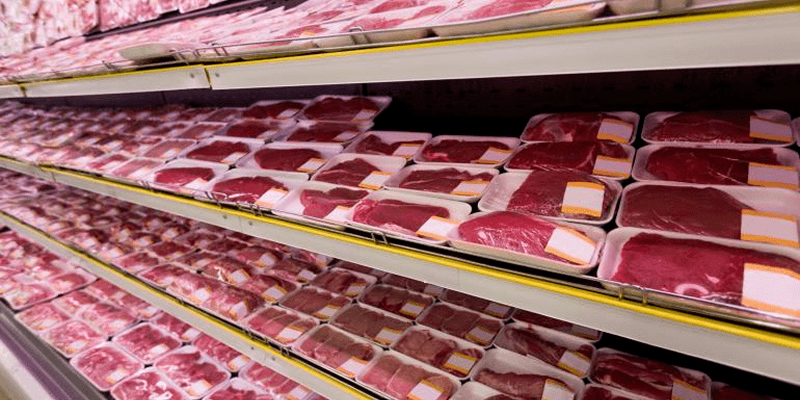
Sharply lower beef production in the United States this year is expected to more than offset higher pork, broiler and turkey output, resulting in lower total red meat and poultry production for the first time in nine years.
The United States Department of Agriculture (USDA), in its March 14 Livestock, Dairy and Poultry Outlook, forecast total red meat and poultry production in 2023 at 107,144 million lbs, down 323 million lbs, or 0.3%, from 107,467 million lbs in 2022. If realised, it would be the first decrease in total red meat and poultry production since a 1.2% drop in 2014.
The drop from 2022 was attributed to significantly lower beef production. The USDA forecast 2023 beef production at 26,665 million lbs, down 1,625 million lbs, or 6%, from 28,290 million lbs in 2022, the lowest since 2017 and the first year-over-year drop since 2015. In contrast, 2023 pork production was forecast at 27,410 million lbs, up 1.5% from 2022, broiler production at 46,750 million lbs, up 1.2%, and turkey output at 5,585 million lbs, up 7%. Although up from 2022, pork production still would be the lowest since 2018 after two consecutive years of declines in 2021 and 2022.
The drop in beef production wasn't a surprise as other data have been indicating falling cow and slaughter cattle numbers.
Cattle in feedlots of 1,000 head or more on March 1 were down 0.5% from February 1 and were down 4.5% from a year earlier, the USDA said in its latest Cattle on Feed report. The number of cattle placed on feed during February was down 7% from February 2022, while the number sold during the month was down 4.9%, indicating tighter cattle and beef supplies in the coming months.
In its annual Cattle report issued on January 31, the USDA said the total US cattle inventory on January 1 was 89.3 million head, down 3% from January 1, 2022, the lowest since 2015 and the third lowest since 1952. The number of beef cows that had calved was down 4% from a year earlier, and the number of beef replacement heifers was down 6%.
Drought across major cattle raising areas contributed to the decrease in cow numbers, the USDA said. Its analysis of the March 14 US Drought Monitor showed 46% of cattle inventory was in areas experiencing some level of drought. Although improved from 62% on March 1, 2022, "low hay stocks are likely contributing to stronger-than-expected beef cow slaughter," the USDA said.
Meanwhile, federally inspected dairy cow slaughter exceeded beef cow slaughter during the week ended February 11 for the first time since April 2021. Dairy farmers have faced declining milk prices amid high feed prices for some time.
Higher beef and dairy cow slaughter briefly boosted beef production, and the USDA raised from February its forecast of beef production for the first three quarters of 2023. However, the full-year forecast was still well below the year-ago level. The longer- term effect is fewer cows having fewer calves, ultimately reducing beef supplies.
USDA price forecasts for 2023 were mixed compared with 2022. Cattle prices were forecast higher, with slaughter steers up 12%, feeder steers up 23% and slaughter cows up 22%. In comparison, slaughter hog prices were forecast 8% lower from 2022, broilers down 10% and turkeys up 5%.
Prices of eggs were forecast 25% lower than in 2022 when prices soared to record highs amid a year-long outbreak of highly pathogenic avian influenza that sharply reduced laying hen populations.
- Supermarket Perimeter


